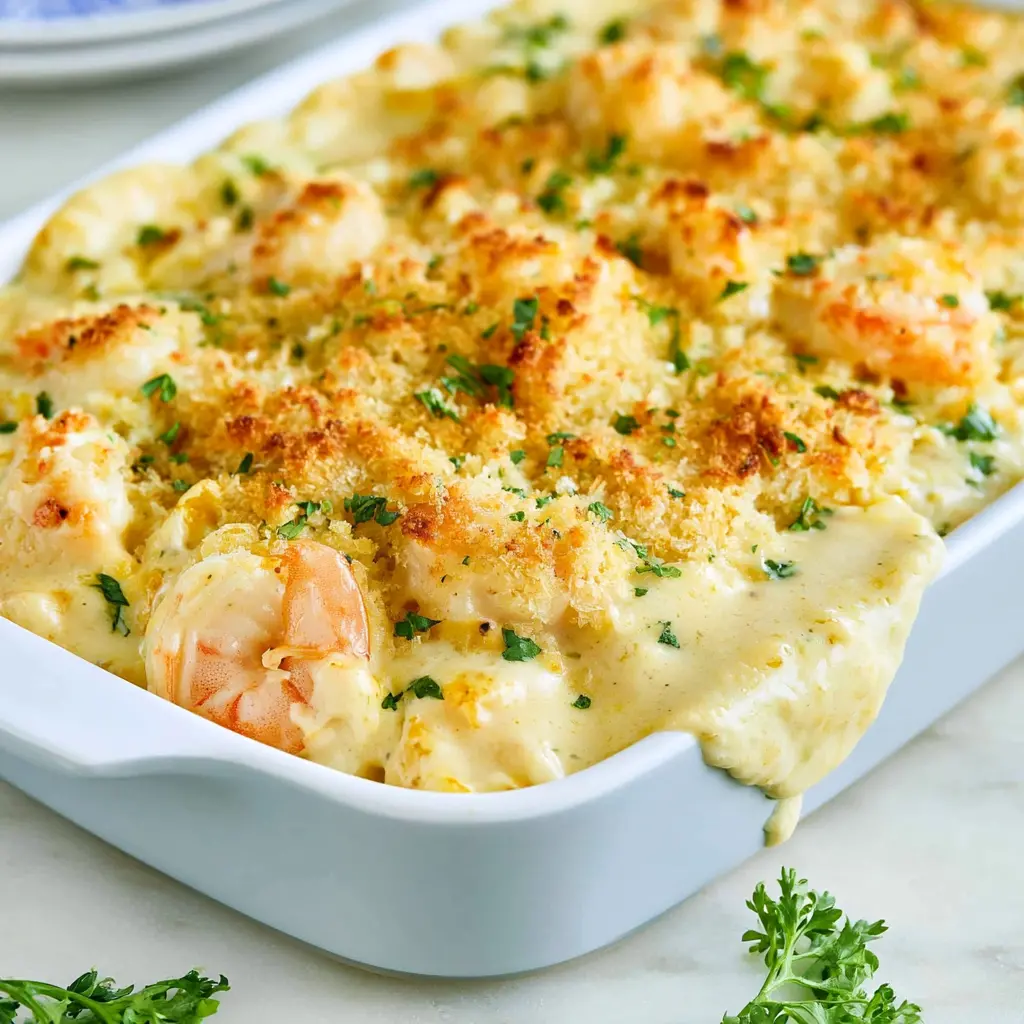
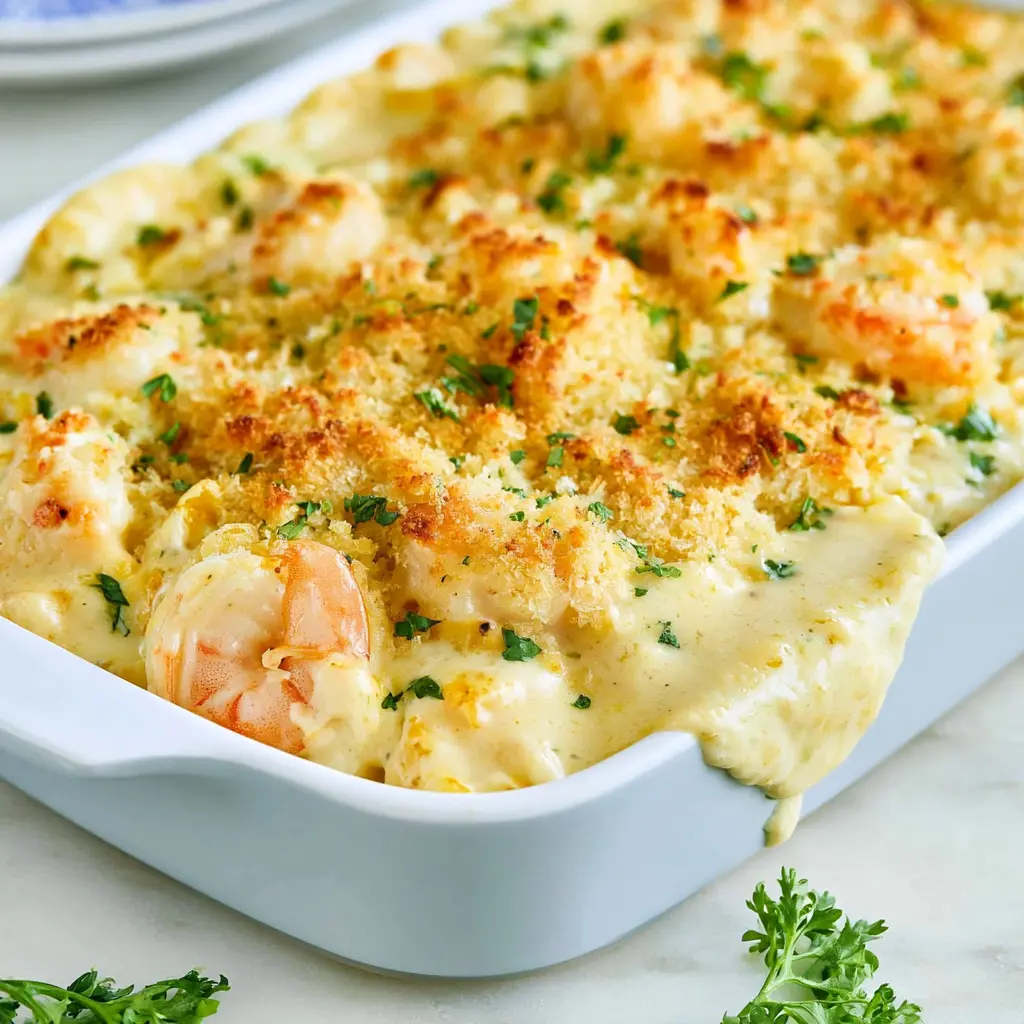
Creamy Shrimp and Crab Au Gratin Casserole with Crispy Panko Topping
Ingredients
Method
- Preheat the oven to 350°F (175°C). Lightly butter a 9x9-inch baking dish or coat it with nonstick spray.
- If using raw shrimp, poach them in boiling water until pink, about 2 to 3 minutes. Drain, then chop into bite-size pieces. Pat the crab meat dry with paper towels and remove any shell bits.
- Melt the butter in a medium saucepan over medium heat. Whisk in the flour and cook for about 2 minutes, stirring constantly, until the mixture turns pale golden and smells nutty.
- Slowly pour in the room-temperature milk while whisking vigorously to keep the sauce smooth. Continue whisking until the sauce thickens and coats the back of a spoon, about 5 to 7 minutes. Add a splash more milk if it becomes too thick.
- Remove the saucepan from the heat. Stir in the cheddar, Parmesan, and softened cream cheese until fully melted and smooth. Season with garlic powder, onion powder, seafood seasoning, salt, black pepper, and cayenne if using. Taste and adjust the seasoning.
- Gently fold the crab meat and chopped shrimp into the sauce. Add the Meyer lemon juice and chopped parsley, stirring just until combined so the crab stays in nice chunks.
- Pour the seafood mixture into the prepared baking dish and smooth the top into an even layer.
- Sprinkle the panko breadcrumbs evenly over the casserole. For extra richness, toss the crumbs with a little melted butter or olive oil before adding them on top.
- Bake for 25 to 30 minutes, until the topping is golden brown and the sauce is bubbly around the edges.
- Let the casserole rest for 5 minutes before serving. Garnish with additional chopped parsley if desired.
Nutrition
Notes
Tried this recipe?
Let us know how it was!Why This Shrimp and Crab Au Gratin Casserole Works
Look, I get it. Seafood casseroles can be a gamble. You’ve been burned before by rubbery shrimp, or a sauce that split into a grainy mess, or crab that completely disappeared into the mix. That’s why this shrimp and crab au gratin casserole is the one I keep coming back to. It’s forgiving, it’s rich, and it doesn’t require a culinary degree to pull off.
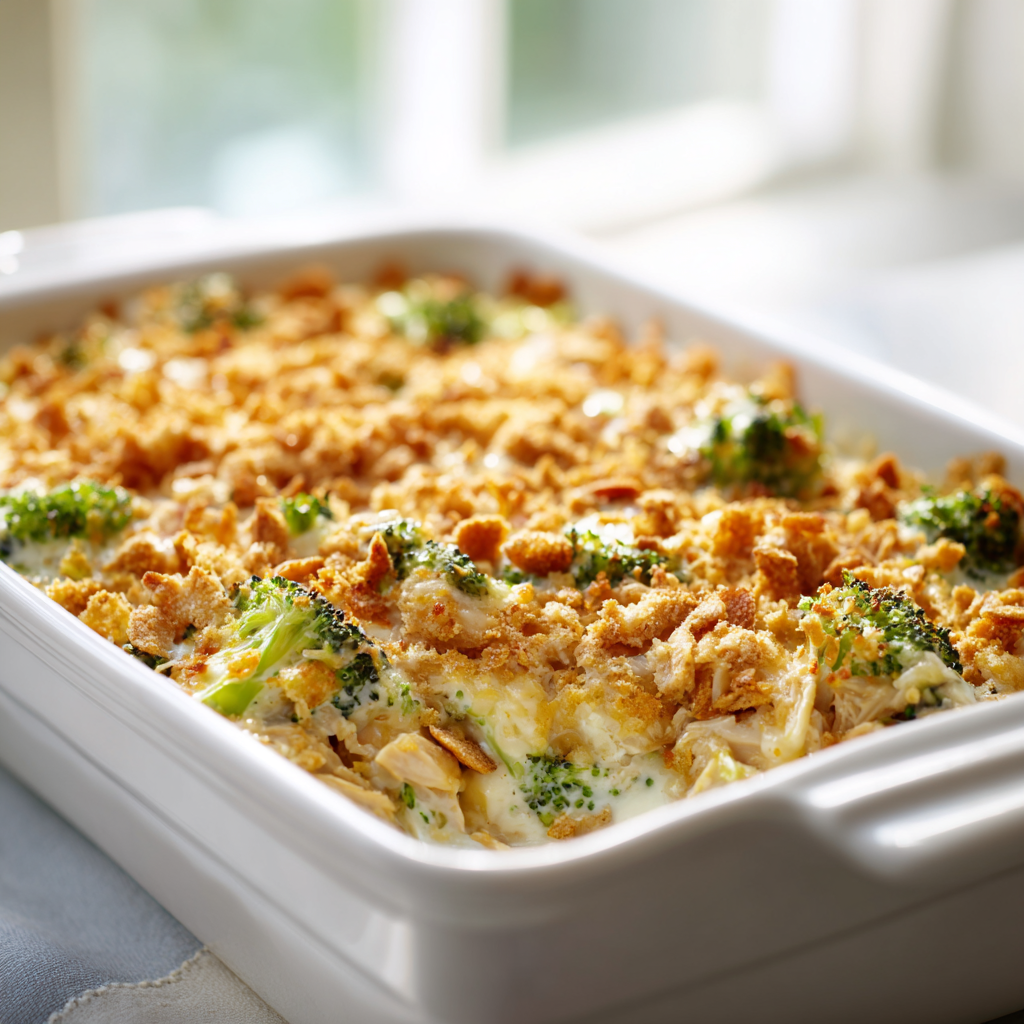
There’s something deeply satisfying about a bubbling baking dish coming out of the oven. The top is golden, the edges are blistered and brown, and it smells like butter, Old Bay, and pure comfort. This isn’t fancy restaurant food. It’s better. It’s the kind of meal you make on a Tuesday and feel like you’ve won the day.
The secret? It’s the technique, not the complexity. We’re using a classic béchamel-style base, the cozy base, which we’ll build slowly with a roux. That’s the foundation. Then we fold in jumbo lump crab and tender shrimp and let a crispy panko topping do the heavy lifting for texture. Simple, elegant, and honestly foolproof if you follow a few key steps.
I’ve tested this enough times to know where people stumble. Overcooked seafood. A lumpy sauce. The dreaded watery casserole. I’m going to walk you through each stage so you can avoid those pitfalls entirely.
What Is ‘Au Gratin’?
Let’s demystify the name, because it sounds fancier than it is. Au gratin is simply a French culinary term for a dish that gets a browned crust on top, usually from breadcrumbs, cheese, or a combination of both. Think of your favorite mac and cheese with that golden, crispy crown. That’s the au gratin magic.
In this shrimp and crab au gratin casserole, we’re applying that technique to a creamy seafood filling. The result is a textural contrast that keeps every bite interesting. You get the silky, rich sauce, the sweet delicate crab, the snappy shrimp, and then that crunchy, buttery panko finish. It’s a symphony of textures, honestly.
The technique itself dates back to French cuisine, but Americans have wholeheartedly adopted it, especially in the South and along the coasts where seafood is king. This version is a bit of a California take, if I’m being honest. It leans on the brightness of Meyer lemon and stays away from the overly heavy cream-heavy versions you might find elsewhere. It’s indulgent, but it doesn’t put you in a food coma.
Ingredient Essentials & Substitutions
Before you preheat the oven, let’s talk about what goes into this dish and why each ingredient matters. A few smart swaps won’t ruin anything, but you’ll want to think about texture and flavor.
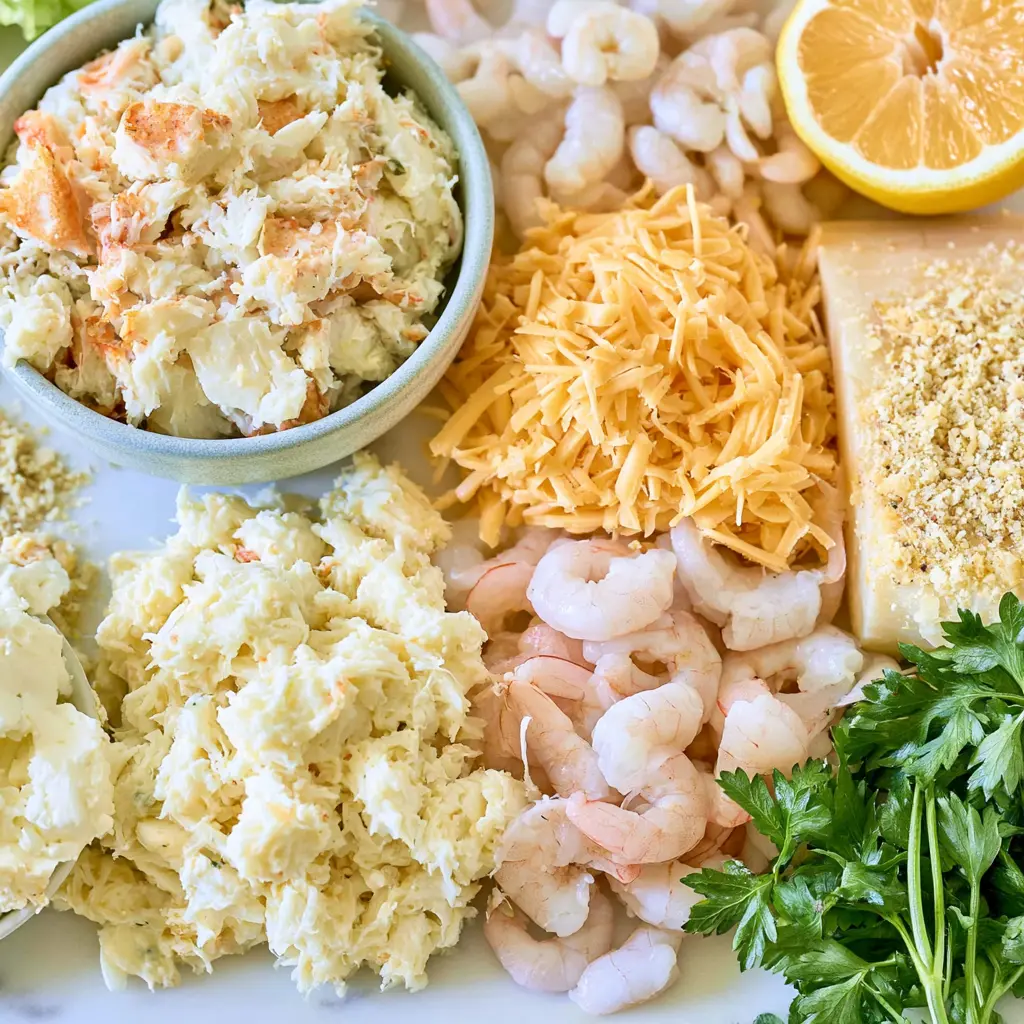
The Seafood
Dungeness lump crab meat is my first choice. It’s sweet, delicate, and holds its shape beautifully. If you’re on the East Coast, blue crab works great too. In a pinch, canned lump crab is absolutely fine. Just be sure to drain it well and pick through it for any pesky shell bits. We’ve all bitten into one of those, and it ruins the whole experience.
For the shrimp, I use cooked small shrimp that I chop into bite-size pieces. If you can only find raw shrimp, just poach them in boiling water for a couple of minutes until they turn pink. Simple as that. The goal is to have them just cooked before they go into the sauce, so they don’t turn rubbery in the oven.
The Cozy Base
This is where the magic happens. The sauce starts with a classic roux, butter and flour cooked together until it smells nutty. Then we whisk in room-temperature milk. Key tip here: don’t use cold milk straight from the fridge. It’s more likely to make the sauce seize up and turn lumpy. Room temperature is your friend.
The trifecta of cheeses, sharp cheddar, Parmesan, and cream cheese, gives us the flavor depth and that luxurious, velvety texture. The cream cheese is the unsung hero here, making the sauce extra stable and glossy.
The Topping
Panko breadcrumbs are my go-to for that ultra-crisp, airy topping. They stay crunchy even after a stint in the fridge. If you’re feeling a little more rustic, coarsely ground sourdough breadcrumbs are a fantastic California-style twist that adds a bit more substance.
- Crab: Dungeness, blue crab, or canned lump (drained well)
- Shrimp: Cooked small shrimp, chopped, or raw poached quickly
- Milk: Whole milk at room temperature for the smoothest sauce
- Cheeses: Sharp cheddar, Parmesan, and softened cream cheese
- Topping: Panko or coarse sourdough crumbs
How to Make Shrimp and Crab Au Gratin Casserole
I’m going to break this down into four stages so you can see the flow. It’s a simple process, but understanding the why behind each step will make you a better cook, promise.
Stage 1: Prep Your Seafood and Baking Dish
Start by getting your ingredients ready before you even turn on the heat. This is the mise en place thing, and it truly matters here. Preheat your oven to 350°F and lightly butter a 9×9-inch baking dish. Pat the crab meat dry with paper towels. Excess moisture is the enemy of a creamy casserole, it’ll water down your sauce. Pick through the crab for shells. Gently. You want to keep those lumps intact.
If you’re using raw shrimp, poach them in boiling water for just 2 to 3 minutes. They’ll finish cooking in the oven. Then chop them into bite-size pieces. This is also the time to soften your cream cheese if you haven’t already. Cold cream cheese will give you a lumpy, spotty sauce, and nobody wants that.
Stage 2: Build a Silky-Smooth Base
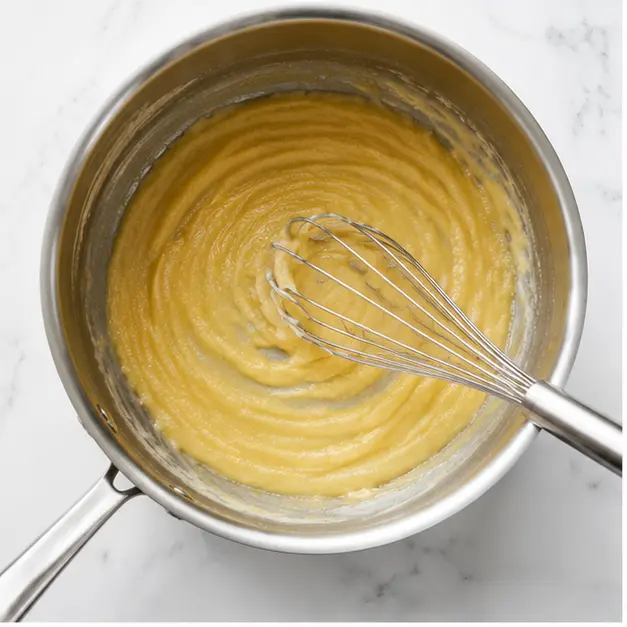
Now for the part that scares people. Melt the butter in a medium saucepan over medium heat. Once it’s foaming, whisk in the flour. Cook this for about 2 minutes, stirring constantly. You’re looking for a pale golden color and a nutty aroma. This is your roux, and it’s the backbone of the sauce. Don’t rush this step. Cooking the flour removes that raw taste.
Here’s where the slow whisking comes in. Slowly pour in the room-temperature milk while whisking vigorously. Don’t dump it all in at once. Keep whisking until the sauce thickens and coats the back of a spoon, about 5 to 7 minutes. It should feel like a velvet blanket in your pan. If it gets too thick, just splash in a little more milk to loosen it up.
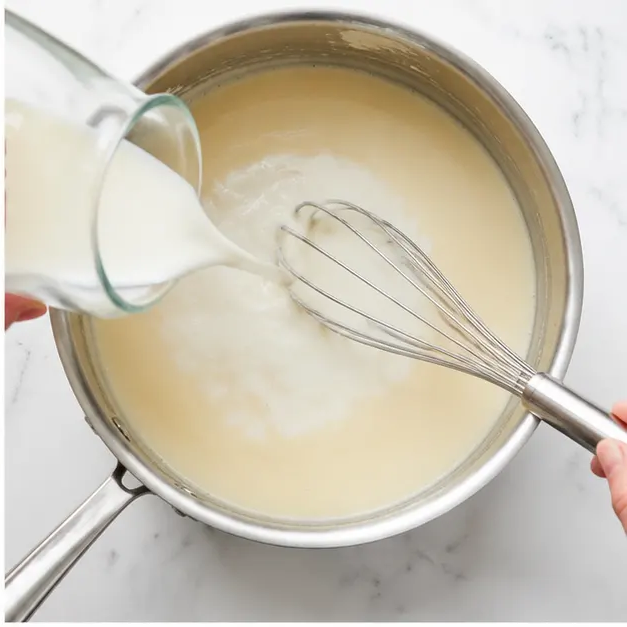
Stage 3: Add the Cheeses and Fold in the Seafood
Turn off the heat. This is important, you don’t want the residual heat to break the emulsion. Stir in your sharp cheddar, Parmesan, and the softened cream cheese. Keep stirring until everything is fully melted and the sauce is completely smooth. Season it with garlic powder, onion powder, seafood seasoning, salt, pepper, and a pinch of cayenne if you want a little warmth.
Taste it. Does it need a bit more salt? Maybe another grind of pepper. This is your moment to adjust. Then, gently fold in the crab meat and chopped shrimp. The word ‘gently’ is key. You want to stir just until combined, so those beautiful crab lumps stay intact. Add the Meyer lemon juice and chopped parsley for that final vibrant touch.
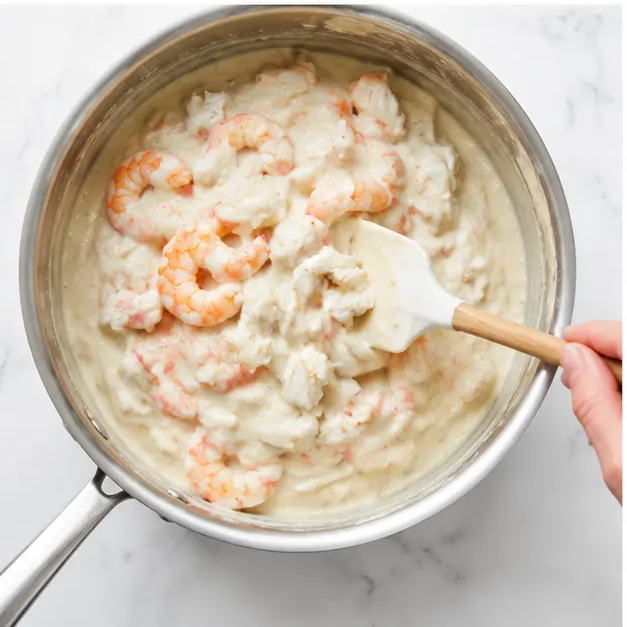
Stage 4: Top, Bake, and Rest
Pour the entire seafood mixture into your prepared baking dish and smooth the top. Now for the fun part, the crispy crown. Sprinkle the panko breadcrumbs evenly over the casserole. Here’s a little chef’s trick: toss the breadcrumbs with a little melted butter or olive oil before adding them. It helps them toast up to a deep golden brown instead of just turning pale and dry.
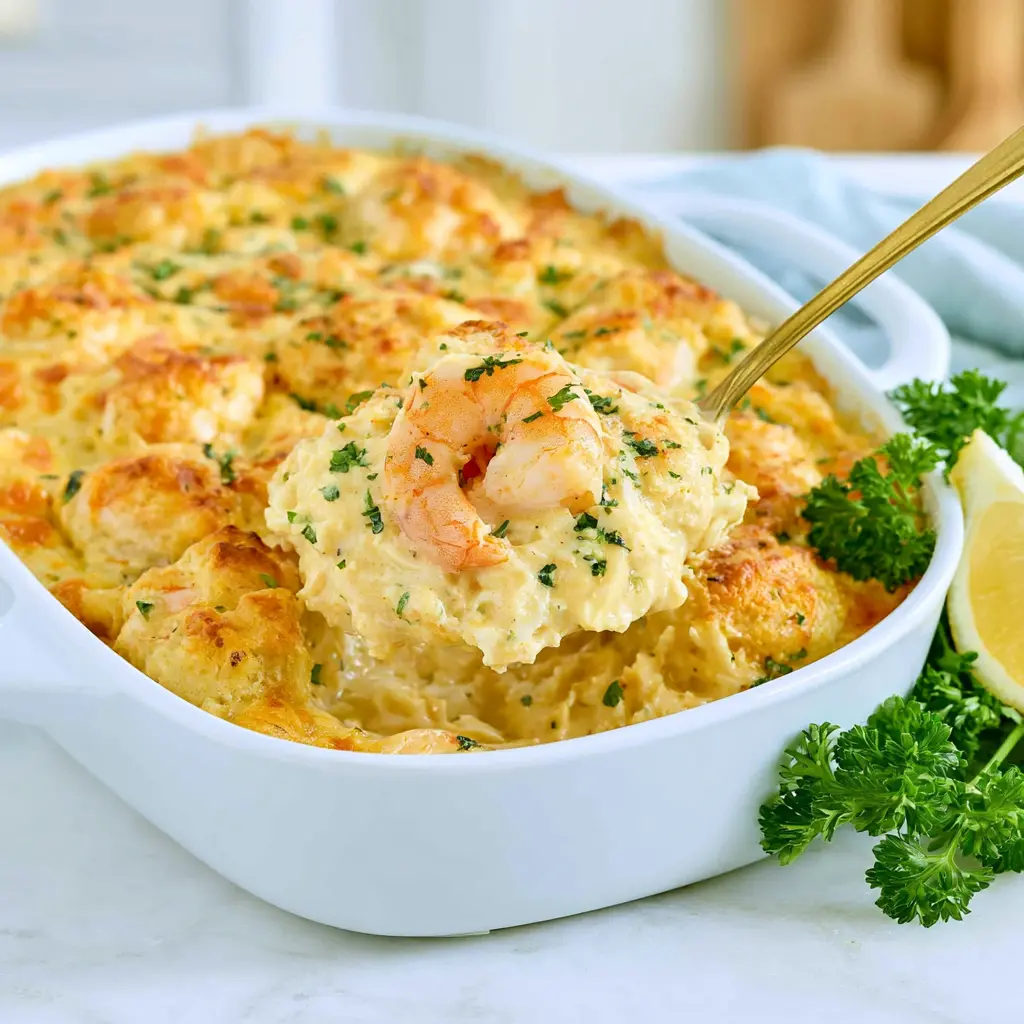
Bake for 25 to 30 minutes. You’re looking for the topping to be golden brown and the sauce to be visibly bubbling at the edges. That bubbling tells you it’s hot all the way through. Resist the urge to dig in immediately. Let it rest for 5 minutes. This allows the sauce to settle and thicken slightly, making it easier to serve.
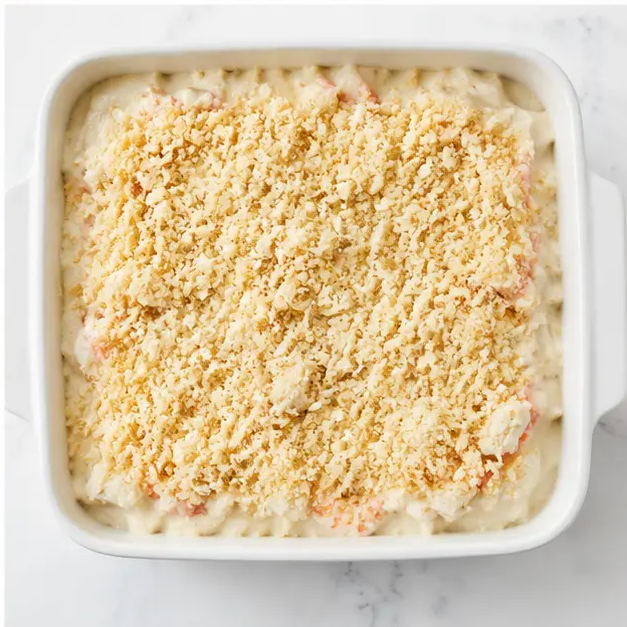
Tips for the Best Seafood Casserole
Over the years, I’ve learned a few things the hard way so you don’t have to. Here are the non-negotiables for a perfect shrimp and crab au gratin casserole.
First, don’t overcook the seafood. Since both are pre-cooked before going into the oven, you’re really just reheating them in the sauce. That 25 to 30 minute bake is about thickening the sauce and getting the topping golden, not cooking the shellfish.
- Room-temp dairy is key: Cold milk or cold cream cheese will break your sauce. Period.
- Fold, don’t stir: Use a spatula and a gentle hand when adding crab. Those lumps are precious.
- Season in layers: Don’t rely on the seafood seasoning alone. Taste the sauce before adding the seafood and adjust.
- Dry your crab: Patting it dry is non-negotiable. It prevents a watery casserole.
Pro Troubleshooting
❌ Mistake → ✅ Solution: Your sauce is grainy, which means it broke. You probably added cold milk or left the heat too high. Slowly whisk in a splash of warm milk off the heat.
❌ Mistake → ✅ Solution: Shrimp are rubbery. You likely cooked them too long. Start with just-cooked shrimp and rely on the oven to finish them.
Variations to Try
One of the best things about this recipe is how easy it is to tweak. I’m all about giving you a solid base and then letting you make it your own. Here are a few ideas you can play with, depending on your mood or what’s in your fridge.
For a spicier kick, you could double down on the seafood seasoning or even add an extra pinch of cayenne. Some folks like a Cajun twist with a bit more heat and a little smoked paprika, though I keep the base recipe classic. The lemon really cuts through and keeps it bright.
Not a fan of panko? Crushed buttery crackers are a nostalgic addition, like good old Ritz crackers. It changes the texture, but in a wonderful, buttery, salty way. You could also swap the sharp cheddar for a Gruyère or even a smoked gouda for a deeper, nuttier flavor profile.
If you only have a little crab and a lot of shrimp, or vice versa, just adjust the ratio. The dish is very forgiving. You can even add some diced red bell pepper to the sauce for a little crunch and sweetness, if you like.
Storage & Reheating
If you’re lucky enough to have leftovers, you’ll be happy to know that this casserole stores surprisingly well. That said, the topping won’t be quite as crispy, but the flavor will still be there.
Store any leftovers in an airtight container or cover the baking dish with foil and pop it in the fridge. It’ll keep for up to 3 days. The key to reheating is to do it gently to avoid breaking the sauce again.
I recommend reheating in a 350°F oven for about 10 to 15 minutes, or until it’s warmed through. This helps to re-crisp the panko topping a bit. The microwave is faster, but it can make the sauce weep and the crumbs soggy, so I’d avoid it if you can.
Serving Ideas & Pairings
This dish is rich, that’s part of its charm. So, you’ll want to serve it alongside something that can hold its own but also offer a little contrast. A simple green salad with a tangy vinaigrette is perfect. The acidity cuts through all that creaminess beautifully.
I also love it with roasted broccoli or asparagus. The slight char from roasting adds a nice depth. And because it’s a casserole, it’s naturally great for potlucks or weeknight dinners. Just set it on the table with a few extra lemon wedges on the side. A bright squeeze of lemon right before eating with a bit of fresh parsley on top really wakes up the whole dish.
Frequently Asked Questions
Final Thoughts
This shrimp and crab au gratin casserole is the kind of dish that feels special without requiring you to spend all day in the kitchen. It’s perfect for a cozy date night in, a family dinner, or even a holiday side table. The combination of creamy sauce, delicate seafood, and crispy topping is timeless comfort food at its best.
I hope you give this recipe a try. It’s one of my favorites, and I think it’s about to become one of yours too. If you’re looking for more inspiration and want to see what else I’m cooking up, come find me on Pinterest. I’m always pinning new ideas and weeknight dinners there.
Happy cooking, friends. Make sure you grab that golden, bubbling casserole out of the oven, let it rest, and enjoy every single bite.
Source: Learn More About This Dish
Can I make shrimp and crab au gratin casserole ahead of time?
Absolutely. Assemble the casserole completely, but hold off on the breadcrumb topping. Cover and refrigerate. When you’re ready to bake, add the crumbs and pop it in the oven. You may need to add 10 extra minutes to the cook time since you’re starting from cold.
Can I freeze this casserole?
You can, but the texture will change a bit. The sauce can sometimes separate after thawing, and the crab can become slightly watery. If you must freeze it, do it before baking, and thaw it in the fridge overnight. I personally think it’s best enjoyed fresh or within a day or two.
What is the best crab meat to use for an au gratin?
Jumbo lump crab is your best bet for those beautiful, big, sweet chunks. It has the best presentation and texture. For a more budget-friendly option, claw meat has a stronger, richer flavor but smaller bits. Canned lump crab, drained well, works in a pinch.
Can I use a different cheese besides cheddar?
Yes, this is a great recipe to play with. Gruyère is a fantastic swap, it melts wonderfully and has a nutty flavor. Smoked gouda also adds a lovely smoky depth. Stick with cheeses that melt smoothly to keep the sauce creamy.