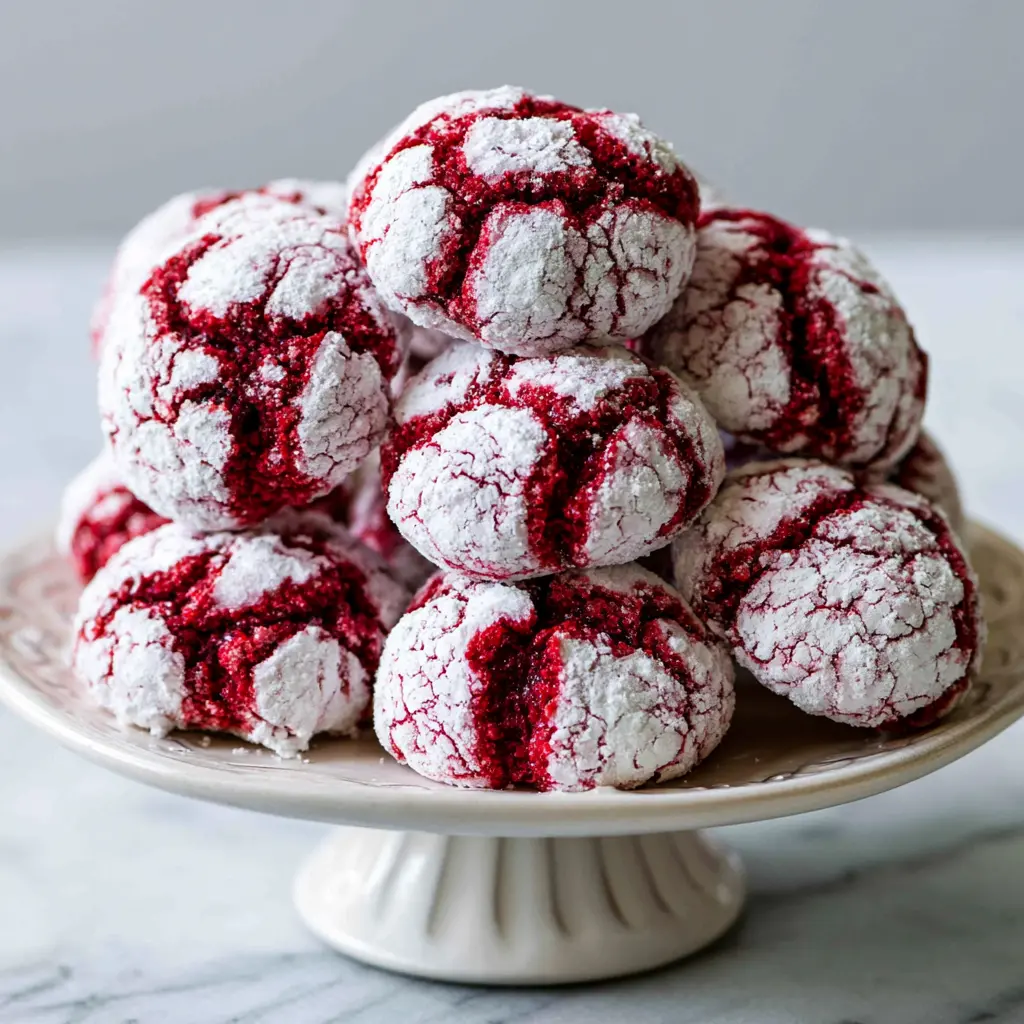
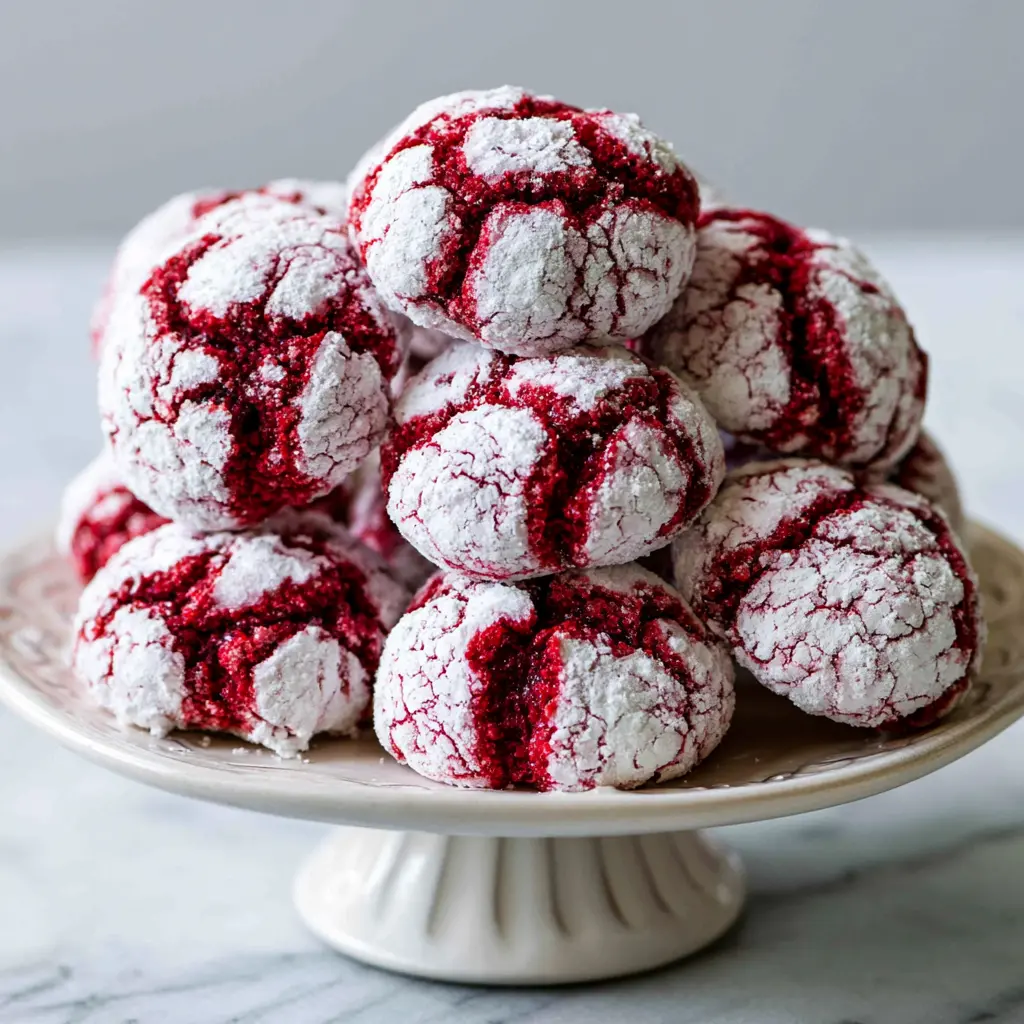
4 Ingredient Red Velvet Crinkle Cookies
Ingredients
Method
- Preheat the oven to 350°F and line a baking sheet with parchment paper.
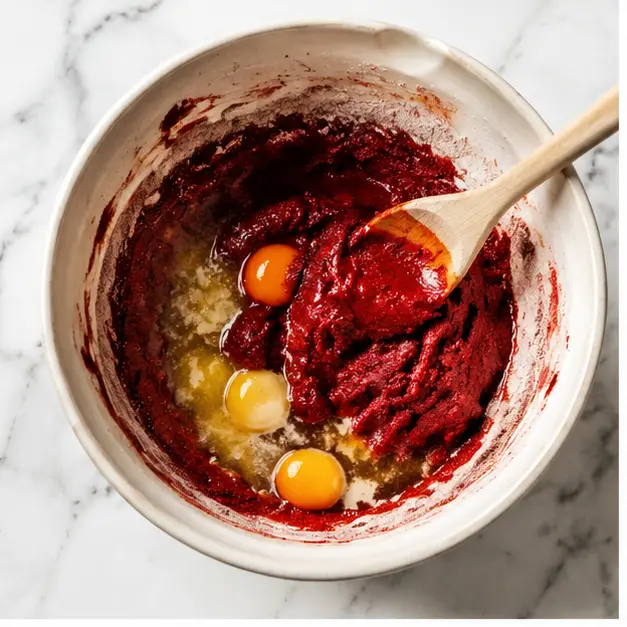
- In a large bowl, stir together the red velvet cake mix, eggs, and melted butter until a soft dough forms.
- Scoop out portions of the dough and roll each generously in powdered sugar.
- Arrange the coated dough balls on the prepared baking sheet, leaving a few inches of space between them.
- Bake for 10 minutes. Remove from the oven and let the cookies cool on the pan before serving.
Nutrition
Notes
Tried this recipe?
Let us know how it was!Why You’ll Love These Red Velvet Crinkle Cookies
Remember seeing those cracked, snow-dusted cookies in the bakery case and assuming they required a pastry degree? They don’t. These red velvet crinkle cookies are honestly one of the easiest things I’ve ever made, and I say that as someone whose first attempt came out looking like flat red pancakes. The second batch? Those looked like a professional bakery had blessed my kitchen.
Here’s what you need:
- 4 ingredients, most of which are probably in your pantry right now
- 15 minutes from bowl to oven
- Zero special equipment, no stand mixer, no piping bag, no candy thermometer
Just a bowl, a wooden spoon, and a box of cake mix doing the heavy lifting. That’s what makes this a true no-mixer red velvet cookies recipe, the kind you can throw together while the kids are fighting over the TV remote.
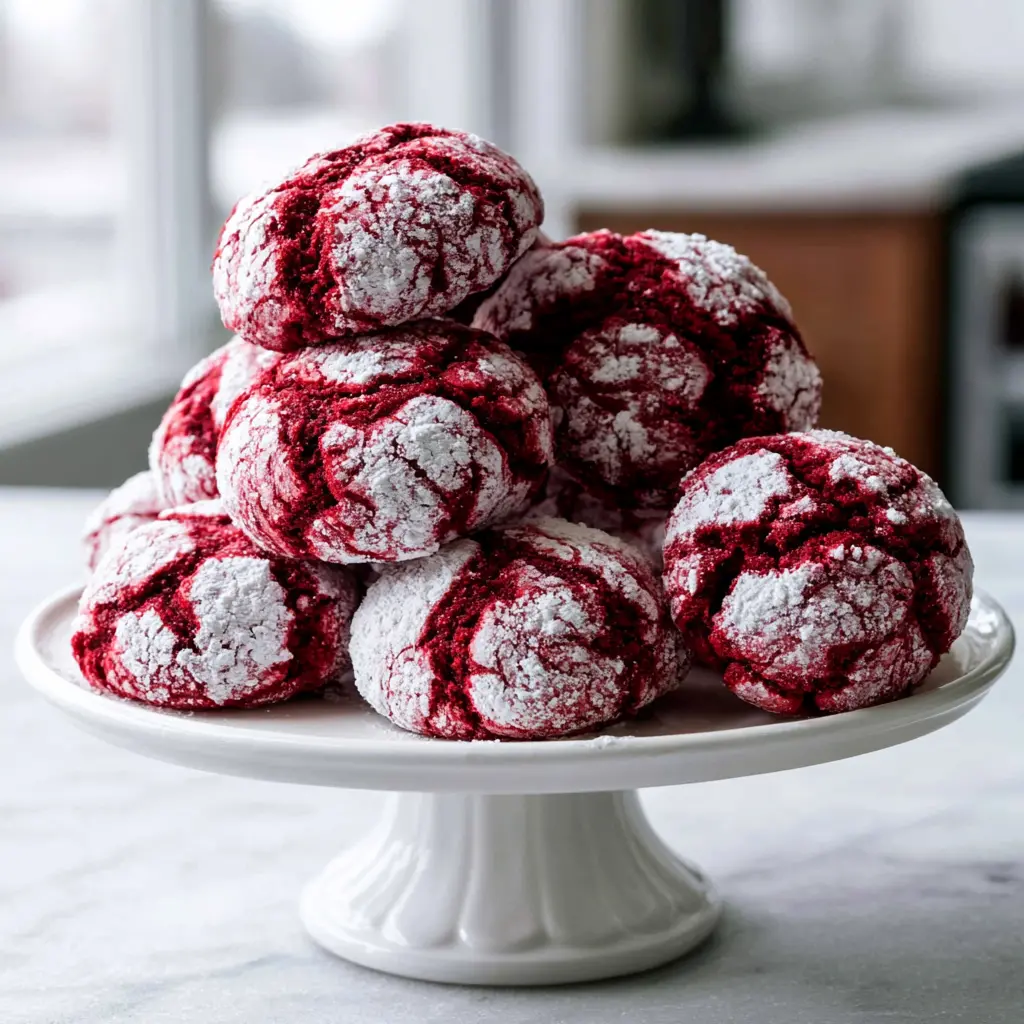
Here’s the magic: you roll bright red dough balls in powdered sugar, and when they hit the heat, the sugar crust cracks open like winter branches against a crimson sky. My kids call these “snowball cookies.” They’re not wrong.
I’ve been bringing a plate of these red velvet crinkle cookies to every end-of-summer cookout lately. Labor Day weekend is practically here, and these travel like a dream and vanish even faster. Plus, red velvet has deep roots in Southern baking tradition, so making them feels like a small nod to something bigger than a passing trend.
Ingredients for Red Velvet Crinkle Cookies
The beauty of red velvet crinkle cookies is that you probably already have everything you need. Let me walk you through what each ingredient does, because understanding your dough makes you a better baker.
- Red velvet cake mix: The backbone. It brings the color, the cocoa notes, and that classic red velvet flavor in one box. Choose one with pudding if you can find it. Mixes with pudding make a thicker dough that holds its shape better in the oven.
- Eggs: They bind everything together and give the cookies structure. Use large eggs, straight from the fridge is fine.
- Butter: Melted and slightly cooled. Melted butter gives you a thicker, chewier cookie. Salted or unsalted both work here.
- Powdered sugar: The snow coat. This is what creates that dramatic crackled top. You’ll want about half a cup for rolling, maybe more if you get as generous as I do.
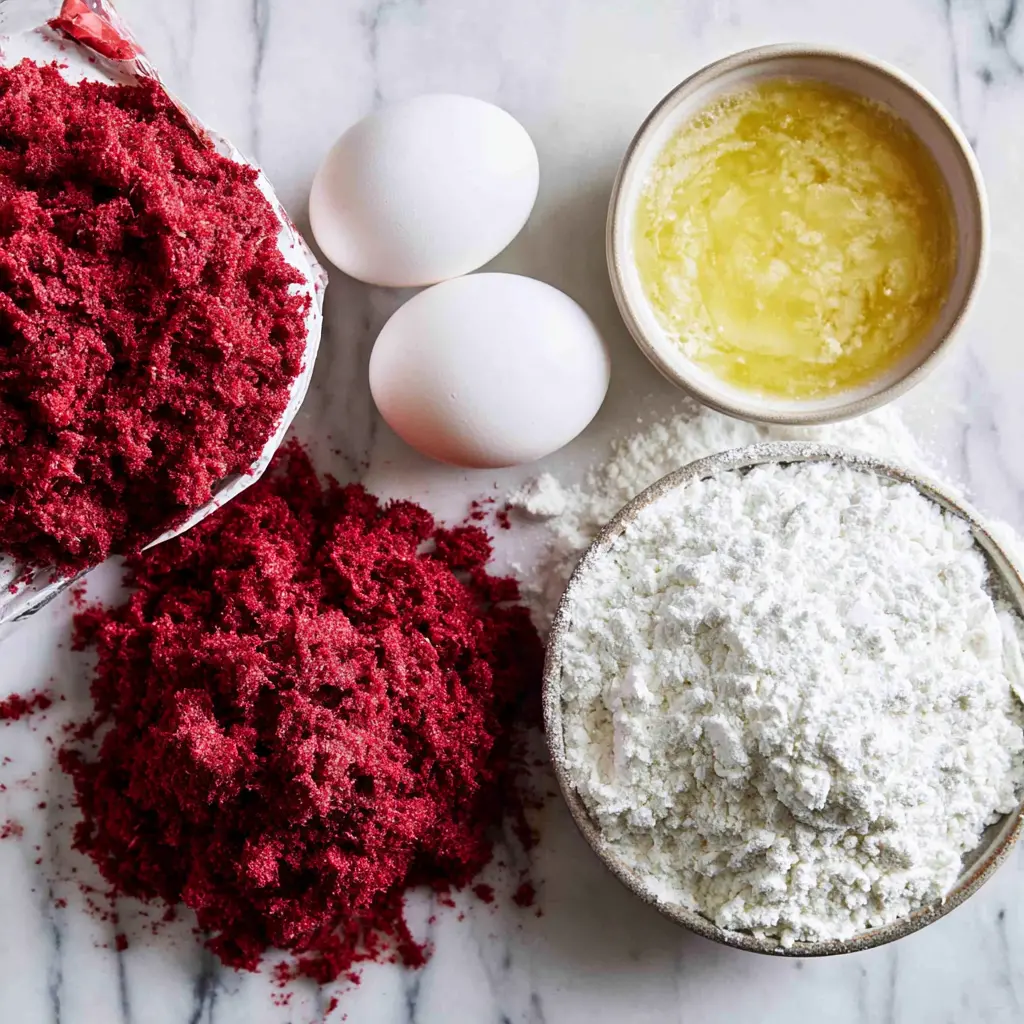
One quick note about the cake mix size. This recipe was built for a standard 15.25 ounce box. If you grab an 18 ounce box, the dough might look dry and crumbly. Don’t panic, and whatever you do, don’t add an extra egg. That makes cakey cookies. We want soft baked red velvet cookies, not little muffins.
How to Make Red Velvet Crinkle Cookies
Making red velvet crinkle cookies comes down to four simple stages. The full details live in the recipe card up top. Here’s the rhythm so you know what to expect.
Stage 1: Mix the Dough
Stir together the cake mix, eggs, and melted butter in a large bowl until a soft dough forms. It’ll be a little sticky, and yes, your hands will look like a crime scene. That’s normal. The dough is red, the powdered sugar will find its way onto your shirt, and somewhere in the kitchen there will be a fine dusting of white. Consider it part of the fun. If the dough feels too soft, that’s your cue to chill it briefly. Warm kitchens make for softer dough, and that’s a simple sticky cookie dough fix.
Stage 2: Scoop and Roll
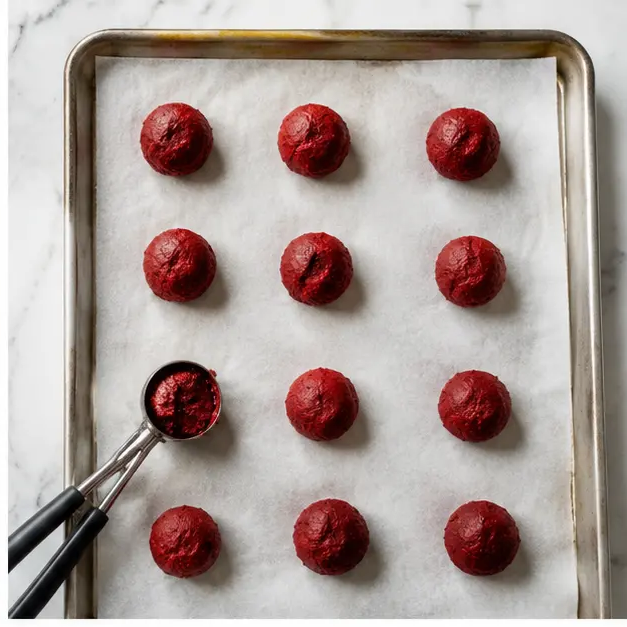
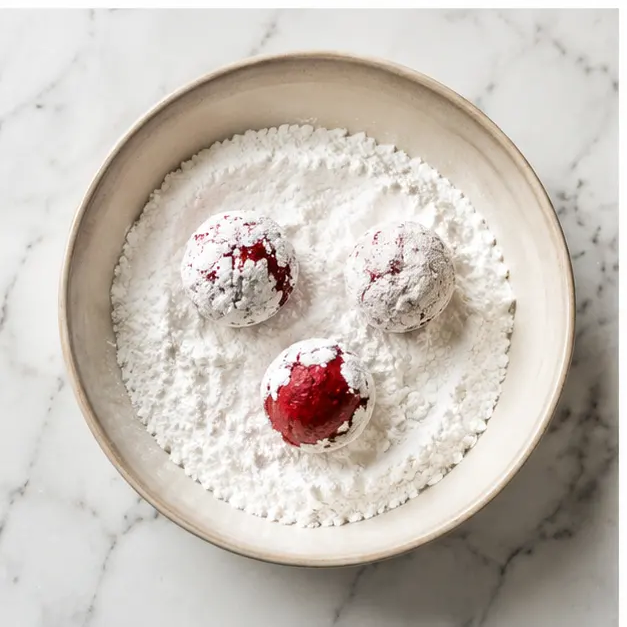
Use a cookie scoop for uniform cookies. It keeps every portion even so all your red velvet crinkle cookies bake at the same rate. Roll each dough ball generously in powdered sugar. I mean really roll it, like you’re packing a snowball. A thick, even coating is the secret to beautiful powdered sugar coated cookies with those dramatic crackle tops.
Stage 3: Bake
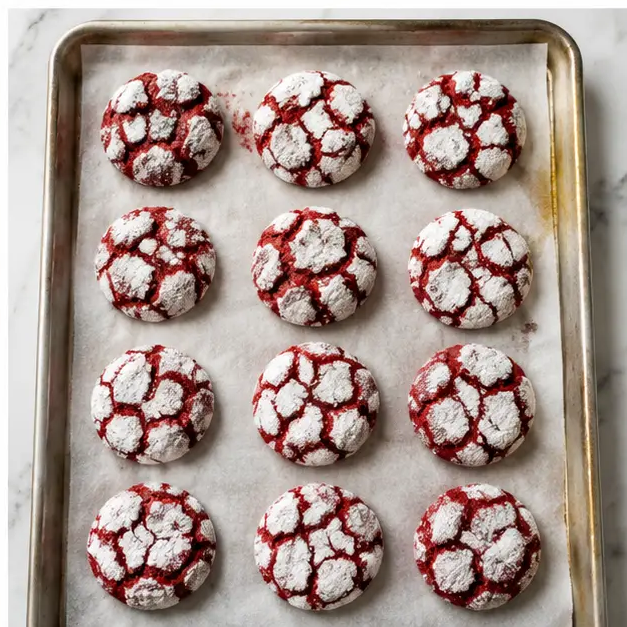
Arrange the coated dough balls on a parchment paper baking sheet, leaving a few inches between each one. Trust me on the space. Pop them in a 350°F oven for 10 minutes. Your oven is your friend here, but make sure it’s actually at 350. Ovens can run hot or cold, and a cheap oven thermometer saves a lot of heartbreak.
Stage 4: Cool and Serve
You’ll know they’re done when the cracks look set and the edges feel just firm to a gentle poke. Let them rest on the hot baking sheet for 2 to 3 minutes before transferring to a wire rack. This resting time lets the centers finish setting while staying soft and fudgy. Patience here pays off, I promise.
Tips for Perfect Red Velvet Crinkle Cookies
Getting the perfect crinkle on red velvet crinkle cookies is easier than you think. Here’s what I’ve learned from more batches than I care to admit.
One quick equipment note: a cookie scoop makes this recipe even easier. It keeps every dough ball the same size so everything bakes evenly, which matters more than you’d think. For gift plates or bake sales, it’s the difference between professional-looking cookies and a charmingly uneven mess.
Variations and Mix-Ins
The base recipe is perfect as-is, but sometimes you want to play. Here are the add-ins I’ve tested, plus a few that readers swear by.
White Chocolate Chips
Fold in 1 cup of white chocolate chips before rolling. This is the most popular variation I found across every recipe community, and for good reason. The creamy sweetness cuts the tangy cocoa and makes every bite feel a little more special. The chips melt into pockets of sweetness inside the chewy cookie.
Peppermint for the Holidays
Crush a couple of candy canes or grab a bag of Andes Peppermint Crunch baking chips and fold them in. Suddenly these are Christmas cookies. My kids start requesting this version the day after Thanksgiving, and I honestly don’t mind.
Deeper Chocolate Flavor
Stir in 1/4 cup unsweetened cocoa powder and 1/2 teaspoon vanilla extract along with the wet ingredients. It balances out the sweetness of the boxed cake mix and gives a richer, more sophisticated red velvet flavor. This is the version I make when I want to pretend I baked something from scratch.
The Lemon Zest Trick
This one came from a comment section, and I was skeptical. A teaspoon of lemon zest or a splash of lemon juice in the dough cuts the sweetness without making the cookies taste like lemons. Red velvet already has that subtle tang from the buttermilk and cocoa, so the lemon just amplifies what’s already there. It brightens the whole batch.
Bite-Sized Cookie Exchange Version
Use a melon baller instead of a cookie scoop for mini red velvet crinkle cookies. Bake them for 8 to 9 minutes instead of 10. They’re perfect for cookie exchanges, and they make a batch feel twice as big, which is never a bad thing.
Storage and Freezing
These cookies keep beautifully, which makes them a fantastic make-ahead option. Here’s everything I know about keeping them fresh.
At Room Temperature
Store baked cookies in an airtight container at room temperature for up to 4 days. Layer them with wax paper so the powdered sugar doesn’t smudge into the cookie below. Yes, that’s a real concern. The cookie on top always looks the prettiest, and now you know the trick.
Freeze the Unbaked Dough
Roll the dough into balls and leave off the powdered sugar. Freeze them in a single layer on a baking sheet, then transfer to an airtight container or zip-top bag. They’ll keep for up to 2 months.
When you’re ready to bake, you have two options. Thaw the balls for about 30 minutes, roll them in powdered sugar, and bake as directed. Or go straight from frozen, roll in sugar, and add 2 to 3 minutes to the bake time. Both work, and both taste like you made them fresh that morning.
Freeze the Baked Cookies
Cool the cookies completely, then freeze them in a single layer in an airtight container for up to 1 month. Thaw at room temperature. If you want that just-baked softness back, warm them in a 300°F oven for 3 to 4 minutes. That step brings back the chewy center like magic.
Troubleshooting Red Velvet Crinkle Cookies
I’ve made this recipe more times than I care to admit, and I’ve hit every failure mode in the book. Here’s how to fix them.
Why didn’t my cookies crinkle?
Thin powdered sugar coating, almost every time. The crackle needs a thick, even shell of sugar to crack as the dough expands. If you’re shy with the sugar, the cookie just bakes smooth. Roll those dough balls like you’re packing snowballs for a serious snowball fight.
Why did my cookies spread into flat discs?
Usually it’s warm dough, a hot baking sheet, or both. Chill the dough for 30 minutes, let your pans cool completely between batches, and confirm your oven is actually at 350°F. I’ve also learned the hard way that dark, heavy pans absorb more heat and encourage spreading. Light-colored pans with parchment are your friends here.
Why are my cookies dry?
Overbaking. If you wait until the cookies look completely done in the oven, they’ll be dry by the time they cool. Pull them at the 10-minute mark while the centers are still soft. They finish setting on the hot pan, and that’s exactly what keeps the centers fudgy.
My dough is dry and crumbly. What went wrong?
Check your cake mix weight. This recipe was built around a standard 15.25-ounce box. If you grabbed an 18-ounce box, the dough won’t come together properly. Fix it with vegetable oil, one teaspoon at a time, until the dough holds. Whatever you do, don’t add an extra egg. That bakes up cakey, not chewy.
Should I use a cake mix with or without pudding?
With pudding, if you can find it. The pudding in the mix creates a thicker, chewier cookie that holds its shape better in the oven. Without it, the cookies are still delicious, just a little flatter and slightly more delicate.
Can I use vegetable oil instead of melted butter?
Yes. Use 1/3 cup of oil for every 1/2 cup of melted butter. The cookies will come out slightly more cake-like, which some people actually prefer. They’ll also be a touch less rich. Try it once and decide for yourself.
Why Do Crinkle Cookies Crackle Anyway?
Quick science detour, because understanding the why makes you a better baker, and it also settles that argument about whether chilling matters.
When the cookie hits the oven heat, the outside sets quickly into a thin, sugar-crusted shell. Meanwhile, the center keeps expanding as the leavener kicks in and the butter melts. The shell has nowhere to go, so it cracks. That crack is the crinkle, forming in real time.
This is also why chilling works. Cold dough spreads slower, which gives the shell time to set before the cookie flattens out. And because the powdered sugar coating creates that shell, a generous roll in sugar directly controls how dramatic the crackle looks. More sugar, more crackle. Simple cause and effect.
Expert Notes & Data Insights
Before finalizing this recipe, I studied the most successful red velvet crinkle cookie recipes across the web and looked at what actually made a difference for home bakers. The pattern was unmistakable.
Two techniques showed up in nearly every successful version: chilling the dough and rolling it heavily in powdered sugar. They’re not optional embellishments. They’re the entire game. Everything else, from the cake mix brand to the exact bake time, is fine-tuning.
The data also revealed the most common failure point. Bakers who skipped or shortened the chilling step reported flat cookies. Bakers who skimped on the powdered sugar reported no crackle at all. And the single most asked question across every comment section, by a wide margin, was about cake mix box size. The 15.25-ounce versus 18-ounce confusion is everywhere, and it explains most of the complaints about dry, crumbly dough that never came together. Now you know the fix, so you can skip the disappointment completely.
One more insight worth passing along: 350°F is the sweet spot. Recipes that called for a hotter oven produced more burnt bottoms and dry interiors. The batches baked at 350°F with a slightly early pull at 10 minutes consistently delivered soft, chewy centers with perfect crackled tops.
This is one of those rare recipes where the simplest path is also the best one. Four ingredients, one bowl, and a generous hand with the powdered sugar. That’s the whole secret, and now it’s yours.
What is the secret to crinkle cookies?
The secret to perfect crinkle cookies is all in the dough and the coating. First, chill the dough for at least 1–2 hours (or overnight) — this firms up the butter so the cookies don’t spread into flat discs and makes the sticky dough much easier to handle. Second, roll each dough ball generously in powdered sugar, and for an extra classic crackle, roll the balls in granulated sugar first before the powdered sugar. That thin granulated layer acts as a barrier, keeping the powdered sugar from melting into the dough as the cookie bakes and creating those beautiful, snowy cracks.
What is an easy recipe for crinkle cookies?
This 4 Ingredient Red Velvet Crinkle Cookies recipe is one of the easiest you can make. Simply stir together one box of red velvet cake mix, 2 large eggs, and 1/2 cup melted butter or vegetable oil until a soft dough forms. For more flavor, add a teaspoon of vanilla or fold in white chocolate chips. Chill the dough for at least 1 hour, then scoop, roll heavily in powdered sugar, and bake at 350°F for 8–10 minutes for soft, chewy, crackled cookies every time. No stand mixer, no complicated steps — just classic red velvet flavor in cookie form.
How do you make crinkle cookies step by step?
Start by whisking together your cake mix, eggs, and oil or melted butter in a large bowl until fully combined. If the dough feels too dry, add oil a teaspoon at a time — but don’t add an extra egg or the cookies will turn cakey. Cover and chill the dough for at least 1–2 hours. When ready, preheat the oven to 350°F and line a light-colored baking sheet with parchment paper. Scoop the dough into 1-tablespoon balls, roll them first in granulated sugar and then generously in powdered sugar, and place them 2 inches apart. Bake for 8–10 minutes, just until the edges are set but the centers still look soft. Let them rest on the hot pan for 2–3 minutes, then transfer to a wire rack to cool.
What ingredients are in crinkle cookies?
Traditional crinkle cookies combine flour, unsweetened cocoa powder, sugar, eggs, butter or oil, baking powder, and a generous coating of powdered sugar. This easy red velvet version needs just 4 ingredients: one 18-ounce box of red velvet cake mix, 2 large eggs, 1/2 cup melted butter or vegetable oil, and about 1/2 to 1 cup of powdered sugar for rolling. You can also add optional extras like 1 teaspoon of vanilla extract, 1 cup of white chocolate chips, or a squeeze of lemon zest to balance the sweetness — but the base recipe works beautifully with just those four pantry staples.
What are the different types of crinkle cookies?
Crinkle cookies are a versatile family of cookies that all share the same signature crackled powdered-sugar coating. The classic is chocolate crinkle, made with cocoa powder or chocolate fudge cake mix. Red velvet crinkle, like this recipe, is a festive favorite with its deep red interior and mild cocoa flavor. Beyond those, you can easily make lemon crinkles using lemon cake mix and zest, or gingerbread crinkles with warm spices. Many bakers also love adding white chocolate chips, peppermint pieces, or holiday-colored morsels to turn basic crinkles into seasonal showstoppers.
What is the origin of crinkle cookies?
Crinkle cookies are widely considered a classic American cookie, most often linked to the chocolate crinkle cookies that appeared in mid-20th-century bake sale and holiday baking cookbooks. Their distinctive snowy cracks come from the powdered sugar coating on a chilled dough that expands in the oven. The red velvet version is a more modern innovation, borrowing the beloved red velvet cake flavor and pairing it with the crinkle technique. Today these cookies are especially popular during Christmas and Valentine’s Day because of their bright red color and festive appearance.
What is the texture of crinkle cookies?
Crinkle cookies are prized for their wonderfully soft, chewy, moist centers and lightly crackled exterior. The powdered sugar coating forms a delicate, slightly crisp crust that contrasts beautifully with the tender, fudgy inside. When baked just until the edges are set and the centers are still soft, they stay pillowy for days — keep them in an airtight container at room temperature and they’ll remain tender. Avoid overbaking, which turns them dry and firm, instead of that signature melt-in-your-mouth chewiness.