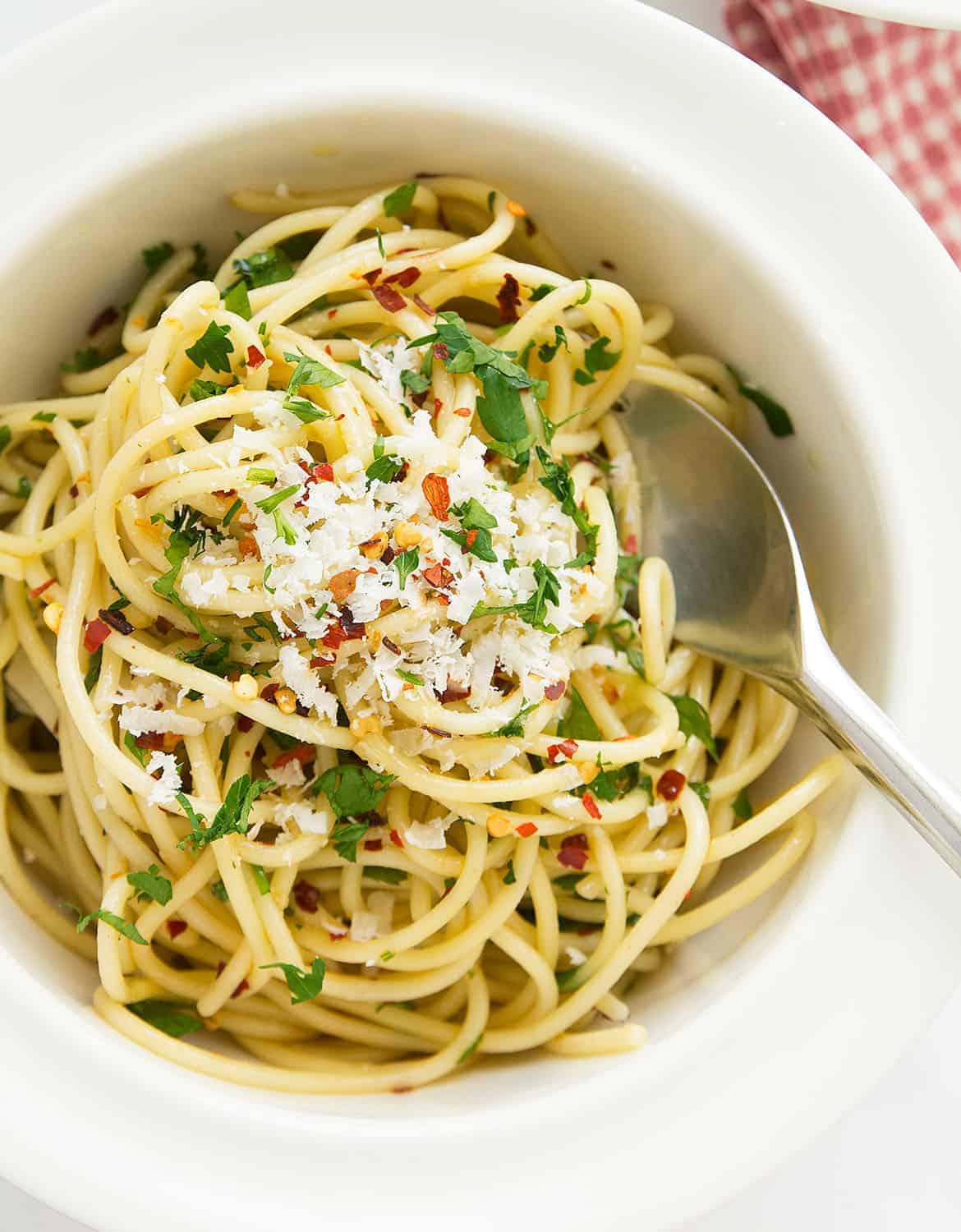
Classic Pasta Aglio e Olio with Garlic, Chili, and Parsley
Ingredients
Method
- Bring a large pot of generously salted water to a boil. Add the spaghetti and cook until al dente, tender but still firm to the bite.
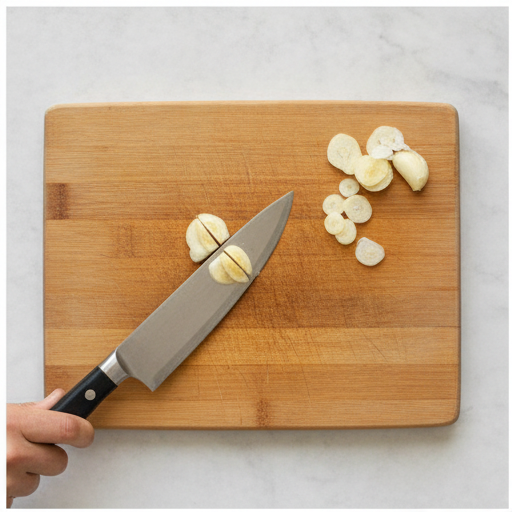
- While the pasta cooks, prepare the sauce. If using fresh chilies instead of dried flakes, remove the seeds and mince finely. Thinly slice the garlic cloves.
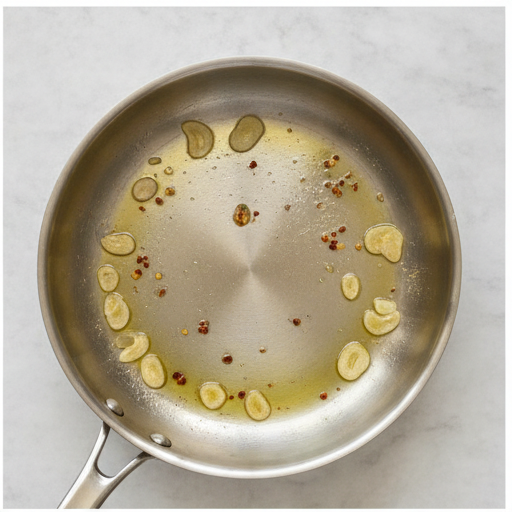
- In a large frying pan, gently warm the olive oil over medium-low heat. Add the sliced garlic and chili flakes (or fresh chili) and cook slowly until the garlic turns a pale golden color, about 2-3 minutes, being careful not to burn it. Stir in the chopped parsley.
- Drain the spaghetti, reserving 1/2 cup of the starchy cooking water.
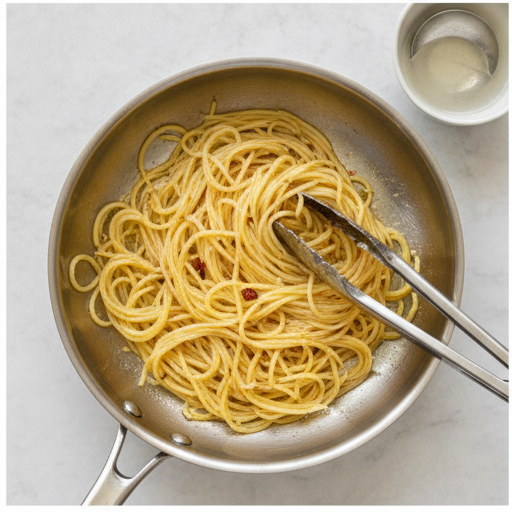
- Add the drained spaghetti to the frying pan with the garlic oil. Toss well to coat, then add a splash of the reserved pasta water—just enough to keep the pasta moist and glossy. Cook over medium heat for 30 seconds, stirring once or twice.
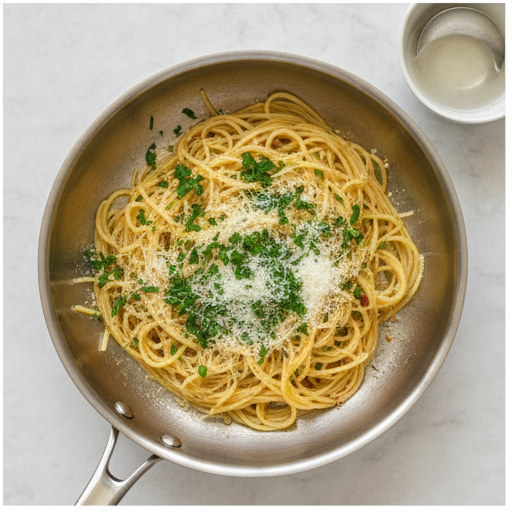
- Serve immediately, topped with extra chopped parsley and grated Parmesan cheese if desired.
Nutrition
Notes
Tried this recipe?
Let us know how it was!Why This Pasta Aglio e Olio Works
I still remember the first time I had a really good pasta aglio e olio. It was at this tiny spot in Little Italy, the kind of place with checkered tablecloths and a waiter who called everyone “boss.” I ordered it kind of on a whim, you know? I mean, how good could a pasta dish with basically just garlic and oil really be?
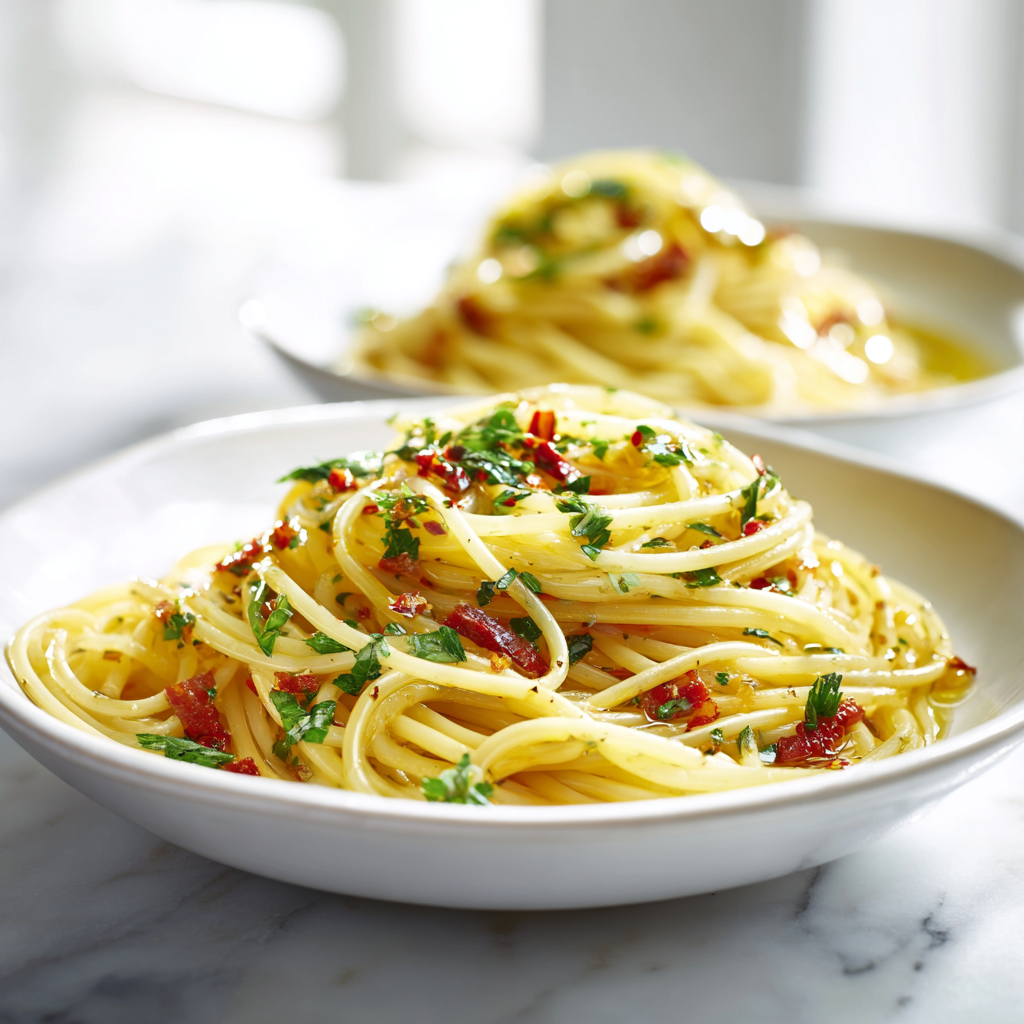
Well, let me tell you, it was a revelation. The garlic was nutty and sweet, not at all harsh. The olive oil had turned into this silky, almost creamy sauce that clung to every strand of spaghetti. And the chili flakes gave it this gentle warmth that crept up on you. I sat there thinking, “How did they get so much flavor out of so few ingredients?”
That’s the magic of this dish. It’s simple, sure, but it’s also incredibly forgiving once you know a few tricks. And it’s the ultimate weeknight dinner because it comes together in the time it takes to boil pasta. No chopping a million veggies, no long simmering, no complicated techniques. Just garlic, good olive oil, a little heat, and some pasta. That’s it.
This recipe is my go-to when I’ve had a long day and I want something that feels special but doesn’t require a trip to the store. I almost always have the ingredients on hand. And honestly? It’s cheaper than takeout and tastes a hundred times better.
Ingredients for Classic Aglio e Olio
Okay, so let’s talk about what you’ll need. The beauty of this dish is the short shopping list. But here’s the thing, because there are so few ingredients, each one really matters. You can’t hide behind a complex sauce here.
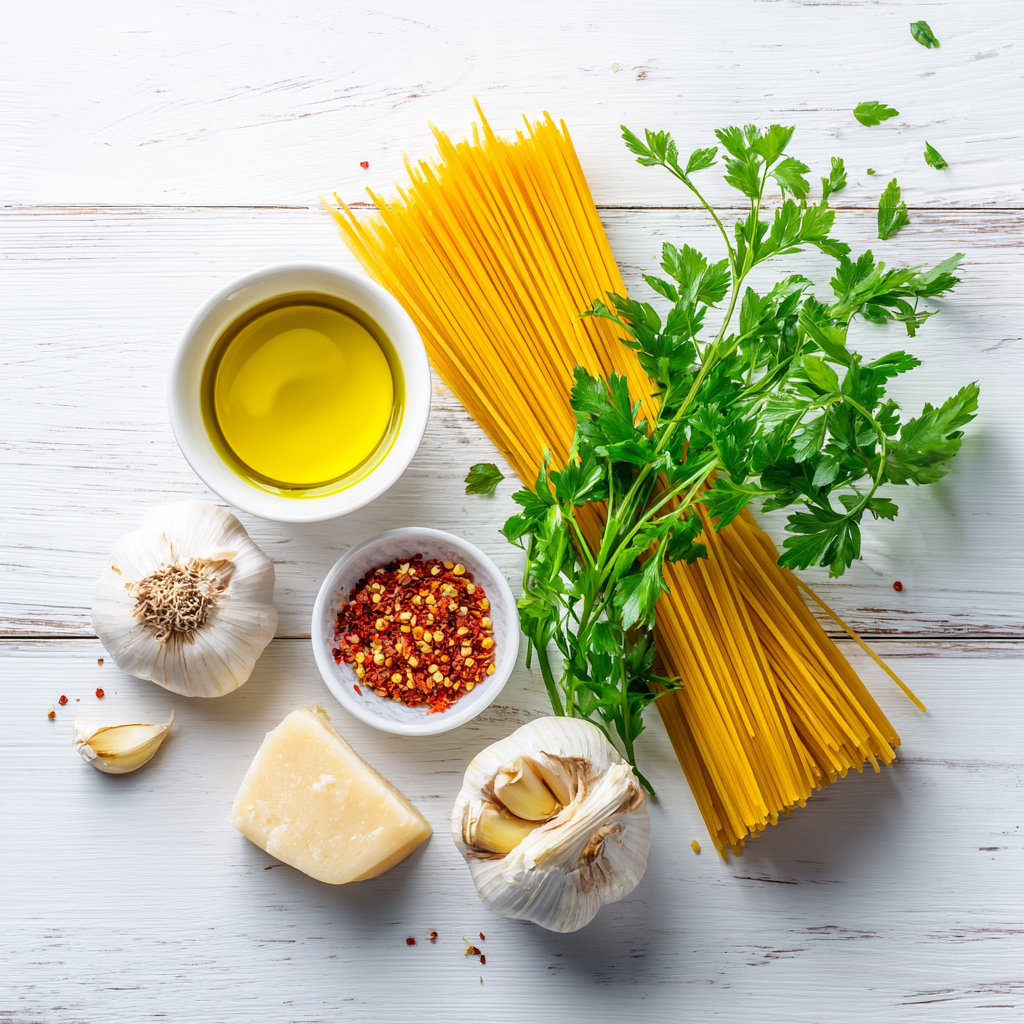
Spaghetti or other long pasta. I usually reach for spaghetti, but linguine or bucatini work great too. The key is a long pasta that twirls nicely on your fork. I’ve seen people use fettuccine, and hey, it works, but something about the thin strands just feels right for this dish.
Extra virgin olive oil. This is non-negotiable. You want a good quality oil here, something you actually like the taste of. Since the oil is the base of the sauce, its flavor will come through. I like using a California-grown extra virgin olive oil, but any good quality one will do. Don’t use the cheap stuff you save for high-heat searing. This is where you want the good bottle.
Garlic. The star of the show. You’ll need 4-5 cloves, thinly sliced. Slicing, not mincing, is important here. Thin slices toast more evenly and give you these lovely little golden bits of garlic throughout the pasta. And they’re less likely to burn than minced garlic, which is a huge plus.
Dried chili flakes. This adds the warmth. I use about a teaspoon, but you can adjust to your spice tolerance. If you’re not sure, start with half a teaspoon and taste as you go.
Fresh parsley. A quarter cup of coarsely chopped parsley adds a fresh, bright note that cuts through the richness of the oil. It’s not just for garnish, it really does add something.
Grated Parmesan cheese. Totally optional, but I love it. It adds a salty, umami kick that takes the dish over the top. If you’re keeping it vegan, just skip it, the dish is still amazing.
Salt. For the pasta water and for seasoning. That’s it. Seven ingredients. You probably have most of them right now.
Step-by-Step Instructions
Alright, let’s get cooking. The whole process takes about 25 minutes, and most of that is hands-off while the pasta boils. Here’s how it breaks down into four major stages.
Stage 1: Boil the Pasta
First things first, bring a large pot of water to a rolling boil. And I mean generously salt it. The water should taste like the sea. This is your only chance to season the pasta itself, so don’t be shy. Drop in your spaghetti and cook it until it’s al dente, tender but still with a little bite. While it’s cooking, you’ll make the sauce.
Stage 2: Toast the Garlic and Chili
In a large frying pan, gently warm the olive oil over medium-low heat. This is where patience pays off. You want the oil warm, not smoking hot. Add the sliced garlic and chili flakes. Let them cook slowly, stirring occasionally, until the garlic turns a pale golden color. This usually takes about 2-3 minutes. The smell at this point is just incredible, like the best garlic bread you’ve ever had. Watch it closely, because garlic can go from golden to burnt in seconds. Burnt garlic is bitter, and there’s no fixing it.
Stage 3: Combine and Emulsify
Once the garlic is golden, stir in the chopped parsley. Then, drain your spaghetti, but here’s the important part: reserve about half a cup of the starchy pasta water. That water is liquid gold. It’s full of starch that will help emulsify the oil into a creamy sauce.
Add the drained spaghetti directly to the frying pan with the garlic oil. Toss everything together well. Then, add a splash of the reserved pasta water, just enough to keep the pasta moist and glossy. Cook everything over medium heat for about 30 seconds, stirring once or twice. You’ll see the oil and water come together into a beautiful, silky sauce that coats every strand.
Stage 4: Serve Immediately
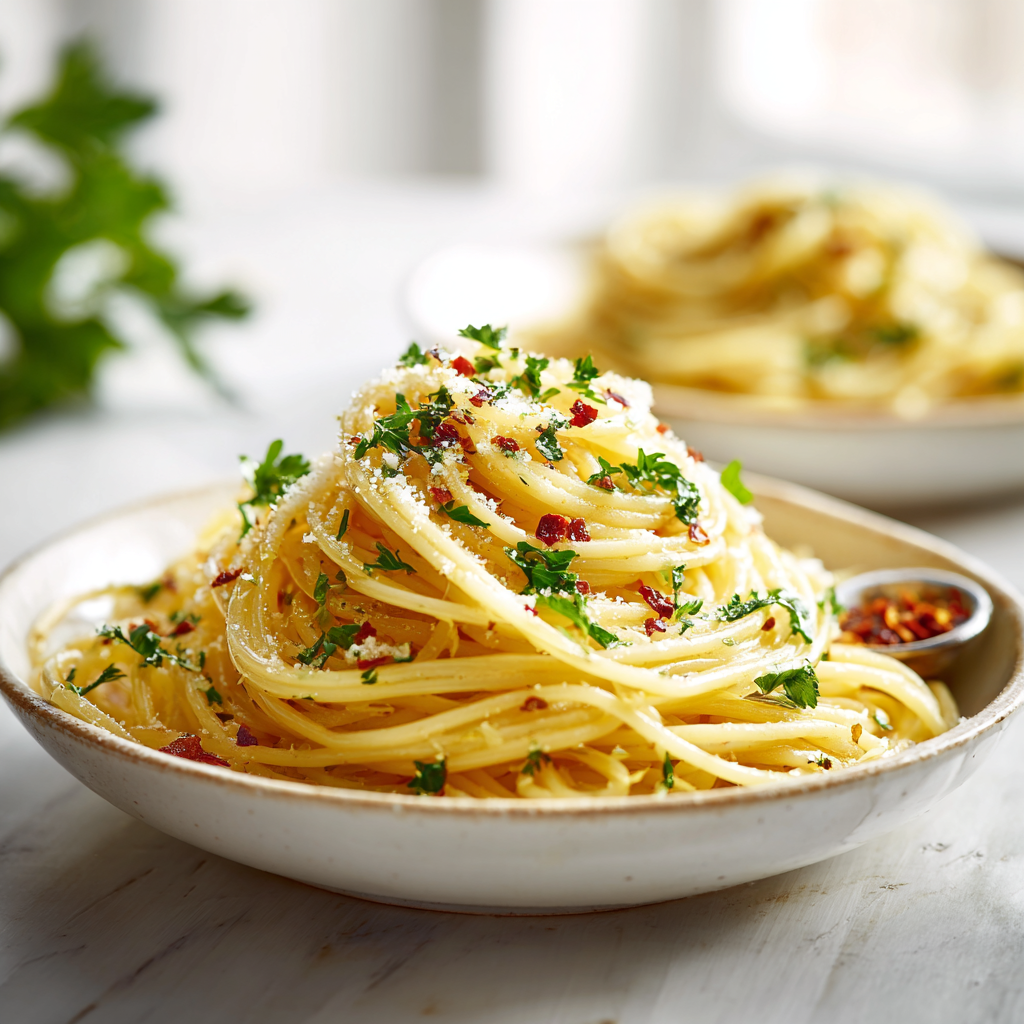
This is not a dish that waits. Serve it right away, topped with extra chopped parsley and a generous shower of grated Parmesan if you’re using it. The pasta should be glossy and hot, the garlic tender, the chili flakes giving little pops of heat. Twirl it up on your fork and enjoy.
Tips for Perfect Garlic and Oil
I’ve made this dish more times than I can count, and I’ve definitely made my share of mistakes. Here are the things I’ve learned the hard way so you don’t have to.
Keep the heat low. I know, you’re hungry and you want to speed things up. But high heat is the enemy of good aglio e olio. It will burn the garlic every single time. Low and slow is the way to go. The garlic should barely sizzle.
Use a large pan. You need room to toss the pasta with the sauce. If your pan is too small, the pasta will clump together and you won’t get that even coating. A 12-inch skillet is perfect.
Don’t skip the pasta water. I cannot stress this enough. The starchy water is what transforms the oil into a creamy sauce. Without it, you just have oily pasta. Add it a little at a time, tossing as you go, until the sauce looks right.
Taste as you go. Need more salt? More chili? Add it gradually. This is your dish, make it how you like it.
Variations to Try
Once you’ve mastered the basic recipe, feel free to play around a bit. Here are some ways to change it up.
Add some greens. A handful of fresh spinach or arugula stirred in at the end wilts beautifully and adds a pop of color. I love doing this when I have some leftover greens in the fridge.
Make it a full meal. Top the pasta with some grilled shrimp or chicken for extra protein. Or toss in some roasted cherry tomatoes for sweetness. The base is so simple that it pairs well with almost anything.
Go for breadcrumbs. Toasted breadcrumbs sprinkled on top add a lovely crunch. Just toast some panko in a dry pan until golden, then scatter them over the finished pasta. It’s a great way to use up stale bread.
Try a different pasta shape. While spaghetti is classic, this sauce works beautifully with linguine, bucatini, or even short shapes like gemelli or casarecce. The key is a shape that holds onto the sauce.
Common Mistakes to Avoid
Let’s talk about the pitfalls. I’ve fallen into every single one of these, so consider this a public service announcement.
❌ Burning the garlic. This is the number one mistake. Burnt garlic turns bitter and ruins the whole dish. The solution is simple: keep the heat low and watch it like a hawk. The moment it turns pale gold, you’re done.
❌ Using too little oil. This is a sauce that relies on olive oil. If you skimp, the pasta will be dry. Trust the recipe and use the full half cup. It looks like a lot, but it’s what makes the dish luxurious.
❌ Overcooking the pasta. Mushy pasta is sad pasta. Cook it al dente so it has some texture to stand up to the sauce. Remember, it will cook a little more when you toss it in the pan.
❌ Not reserving enough pasta water. You think you only need a splash, but then the pasta starts to dry out. Always reserve a full half cup. You might not use all of it, but it’s better to have too much than too little.
❌ Serving it cold. This dish needs to be eaten immediately. The sauce will solidify as it cools, and the pasta will clump. So get everyone to the table before you start tossing.
How to Store and Reheat Leftovers
Look, I know I just said to eat it immediately, but sometimes life happens and you have leftovers. Here’s how to handle them.
Store any leftovers in an airtight container in the fridge for up to 2 days. The pasta will absorb some of the oil, so it won’t be quite as glossy as when it was fresh.
To reheat, the best method is in a skillet over medium heat. Add a splash of water or extra olive oil to help loosen the sauce. Toss it gently until it’s heated through. The microwave works in a pinch, but it can make the pasta a bit rubbery. A skillet gives you much better results.
Honestly, though, this dish is at its absolute best right after you make it. So try to make just enough for one meal.
Frequently Asked Questions
So there you have it. My go-to recipe for pasta aglio e olio. It’s simple, it’s fast, and it’s incredibly satisfying. I hope you give it a try and make it your own. And hey, if you want to save this for later, you can pin it to your Pinterest board for easy access. Now go make this and tell me how it turns out!
Source: Nutritional Information
What is the secret to a good aglio olio?
The secret is low heat and patience. You want to toast the garlic slowly in good olive oil until it’s pale gold, not brown. And don’t forget the starchy pasta water, it’s what creates that silky, emulsified sauce that coats every strand.
What are the ingredients for aglio olio?
The classic ingredients are spaghetti, extra virgin olive oil, garlic, dried chili flakes, fresh parsley, and salt. Grated Parmesan is optional but delicious. That’s it. Seven simple ingredients that come together to make something amazing.
What are common mistakes with aglio e olio?
Burning the garlic is the biggest one, it makes the dish bitter. Other common mistakes include using too little oil, not reserving pasta water, overcooking the pasta, and not serving it immediately. This dish waits for no one.
What is the oldest pasta in the world?
The oldest known pasta is believed to be from ancient China, dating back over 4,000 years. In Italy, dried pasta has been documented since at least the 13th century. Aglio e olio itself is a more modern, simple Roman creation.
What is the best partner of aglio olio?
A simple side salad with a bright lemon vinaigrette is the perfect partner. The acidity cuts through the richness of the olive oil. Grilled vegetables or a piece of crusty bread for sopping up any leftover oil are also fantastic choices.
What are common mistakes when cooking with olive oil?
Heating olive oil too high is a common one, it can burn and become bitter. Also, using low-quality oil for finishing a dish like this is a mistake. Save your good extra virgin olive oil for recipes where its flavor will shine.
What’s the best oil for aglio e olio?
A good quality extra virgin olive oil is the only choice. Since the oil is the base of the sauce, you want one with a flavor you enjoy. Look for a bottle that tastes fruity and slightly peppery. California-grown oils are a great option.
Is eating aglio olio healthy?
It can be part of a balanced diet. It’s made with simple, whole ingredients. The olive oil provides healthy fats, and the garlic has anti-inflammatory properties. Just be mindful of portion sizes and the amount of oil and cheese you use.
How to make aglio e olio have flavor?
Use good quality ingredients and don’t rush the garlic. Toasting it slowly in olive oil releases its sweet, nutty flavor. The chili flakes add warmth, and the starchy pasta water helps bind everything together. Season the pasta water well too.
How to make aglio e olio creamy?
The creaminess comes from emulsifying the olive oil with the starchy pasta water. After tossing the cooked pasta in the garlic oil, add a splash of the reserved water and cook over medium heat while tossing. The starch binds the oil and water into a silky sauce.
Do Italians eat aglio olio?
Absolutely. It’s a classic Roman dish, often eaten as a quick and affordable meal. You’ll find it on menus all over Italy, especially in trattorias. It’s considered a staple of cucina povera, the cooking of the poor, turning simple ingredients into something special.
Why does my aglio olio not taste garlicky?
You might not be using enough garlic, or you could be burning it. Burnt garlic loses its flavor and turns bitter. Also, if you mince the garlic too finely, it can cook too quickly. Thinly sliced garlic toasted slowly gives the best garlic flavor.
How do Italians eat so much pasta and not get fat?
Portion control is key. A typical Italian pasta serving is about 2 ounces dry, much smaller than what you’d get at a US restaurant. They also eat pasta as a first course, not a main, and pair it with a vegetable or protein-heavy second course and lots of walking.
What is the hardest pasta to make?
Handmade filled pastas like tortellini or agnolotti are generally considered the most difficult. They require skill to make the dough thin enough, fill it properly, and shape it without tearing. Simple dried pasta like spaghetti is much easier to work with.
Why is breaking spaghetti illegal in Italy?
It’s not actually illegal, but it’s considered a major culinary faux pas. Spaghetti is meant to be twirled on your fork, and breaking it makes it harder to eat properly. More importantly, it’s seen as disrespectful to the pasta and the tradition.
Scusate io non ho il peperoncino fresco a casa, ma l’ho in polvere in che momento posso metterlo?
Puoi usare il peperoncino in polvere senza problemi. Aggiungilo insieme all’aglio nella padella con l’olio caldo, proprio come faresti con i fiocchi secchi. Fallo tostare dolcemente per un minuto per rilasciare il sapore, ma attenzione a non bruciarlo.