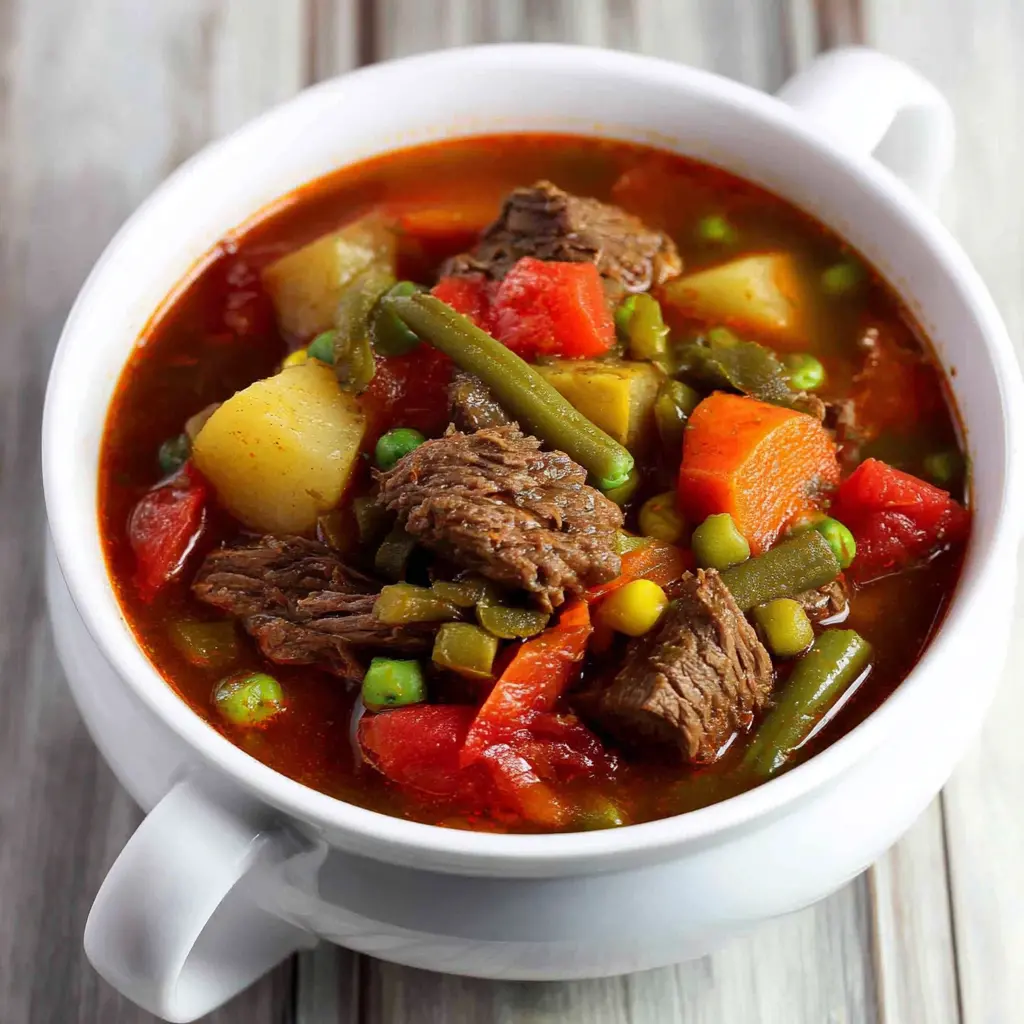
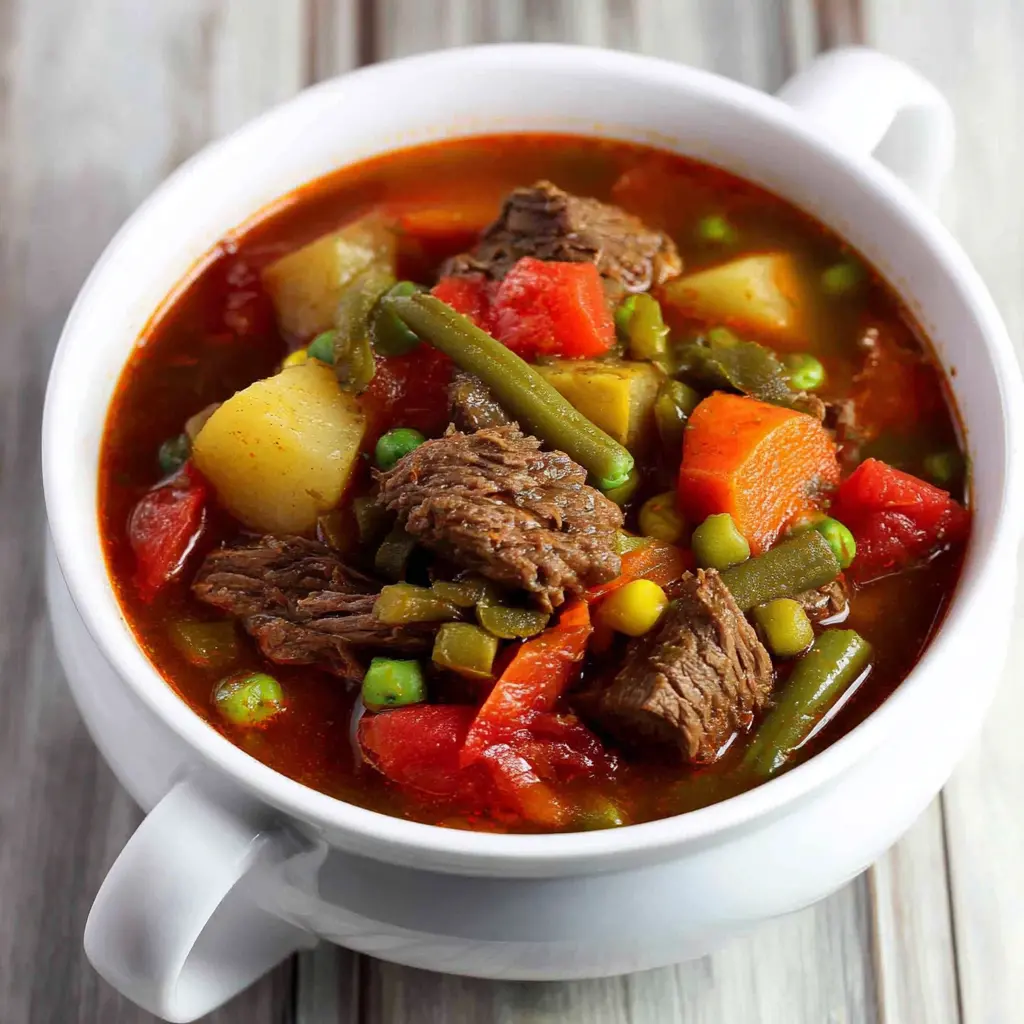
Hearty Old Fashioned Vegetable Beef Soup
Ingredients
Method
- Season the beef chuck roast generously with salt and pepper. Place it in a slow cooker with half of the beef broth (about 2 cups). Cook on LOW for 10 hours, until the meat is very tender and shreds easily with two forks. Shred the beef and set aside.
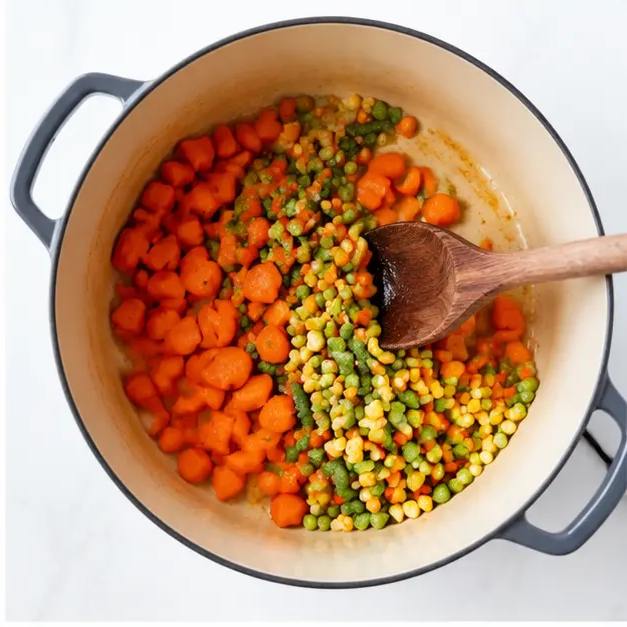
- In a very large pot, heat the olive oil over medium heat. Add the chopped carrots and the frozen seasoning blend (or diced onion). Sauté for 5-7 minutes, until the carrots begin to soften.
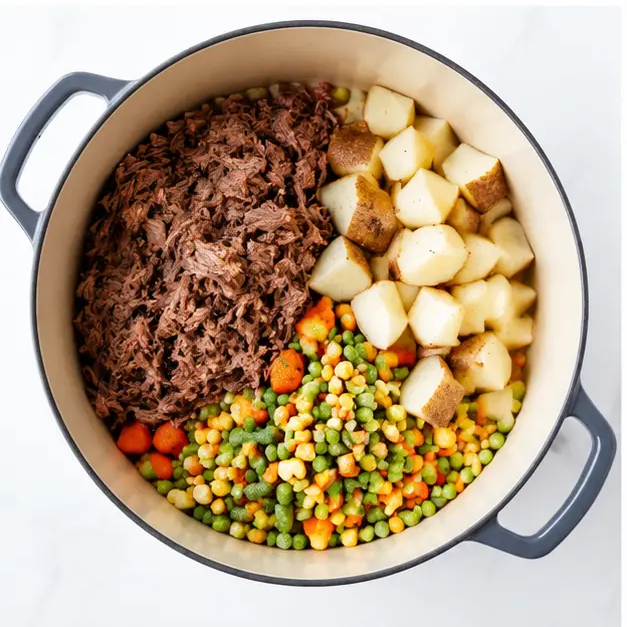
- Add the shredded beef, potatoes, remaining frozen vegetables (peas, green beans, corn), the remaining beef broth, both cans of tomato soup, and the can of water to the pot. Season with additional salt and pepper to taste.
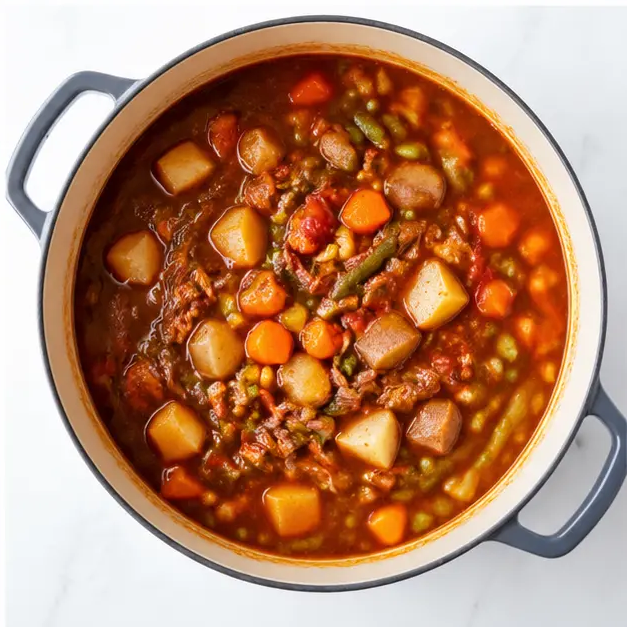
- Bring the soup to a boil over high heat, then reduce the heat to low. Cover and let it simmer for 1 hour, stirring occasionally.
- While the soup simmers, add more water if it becomes too thick for your liking. Adjust seasoning before serving.
Nutrition
Notes
Tried this recipe?
Let us know how it was!Why You’ll Love This Old Fashioned Vegetable Beef Soup
I remember my grandmother’s soup pot. It was this big, dented thing that lived on the back burner all winter long. And the smell? That rich, beefy aroma mixed with the sweetness of carrots and the earthiness of potatoes. It was the smell of coming home. That’s exactly what this old fashioned vegetable beef soup is for me.
This isn’t some complicated, fancy recipe. Honestly, it’s the opposite. It’s the kind of soup that doesn’t need a long list of exotic ingredients. It’s about using a few good things and letting them cook low and slow until they become something magical. It’s forgiving, it’s budget-friendly, and it makes your whole house smell incredible.
You know what I love most? This soup actually gets better the next day. The flavors meld together overnight, and the broth becomes even richer. So if you’re looking for a meal that feels like a hug in a bowl, you’ve come to the right place. This is the soup that will make you the family soup maker.
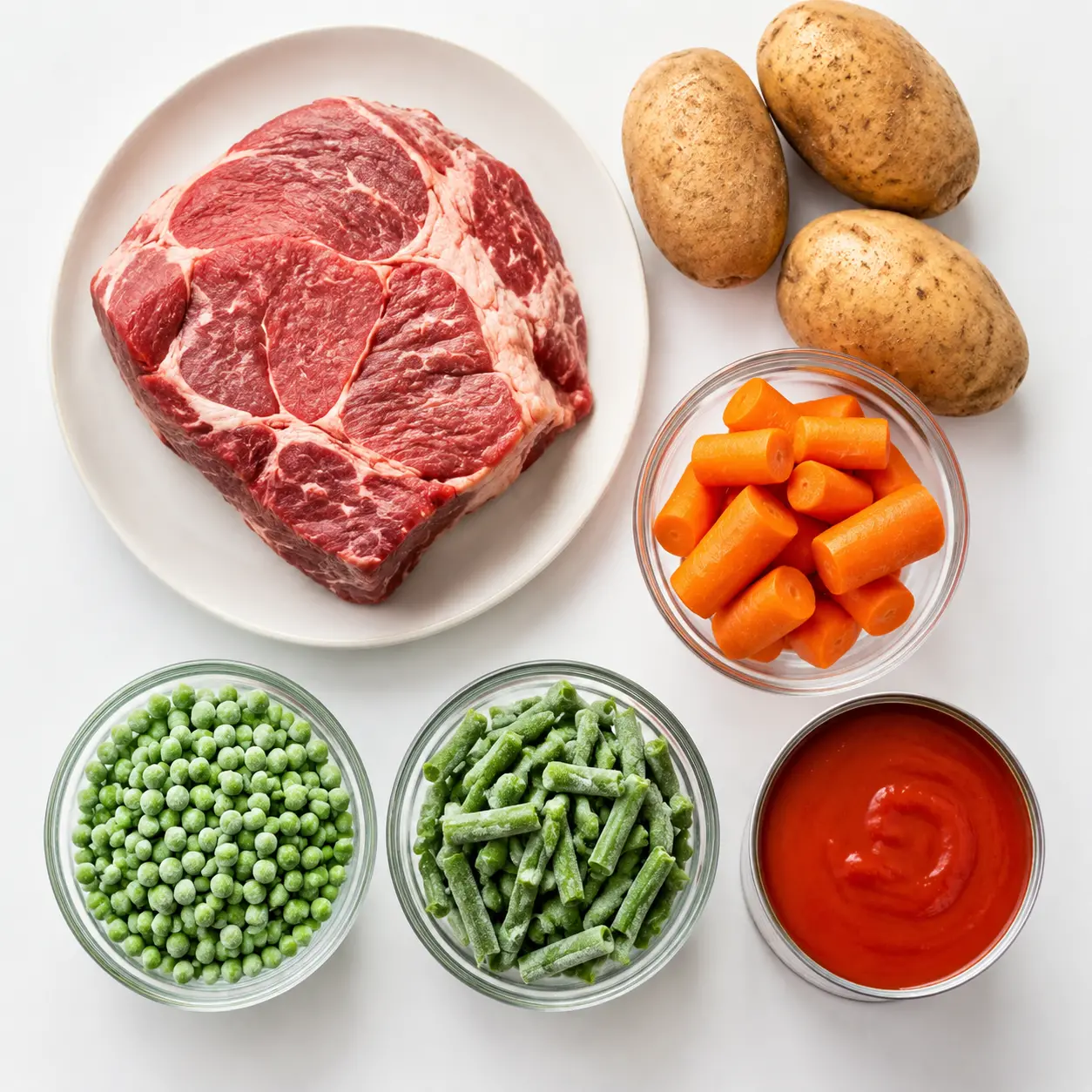
Ingredients for Hearty Vegetable Beef Soup
Let’s talk about what goes into this pot. The beauty of this recipe is its simplicity. You don’t need a pantry full of spices. Just a few key players that do all the heavy lifting.
- Beef Chuck Roast: This is your star. A chuck roast is perfect for this soup because it has enough fat and connective tissue to break down into incredibly tender, shreddable meat. Don’t use a lean cut like sirloin, it will just get tough and dry.
- Russet Potatoes: They break down just a little bit, which helps thicken the broth naturally. Plus, they soak up all that beefy flavor.
- Carrots: I use a lot of them. Four large carrots give the soup sweetness and color. Don’t skip them.
- Frozen Vegetables: This is my secret shortcut. A bag of frozen seasoning blend (onions, celery, and bell peppers), plus frozen peas, green beans, and corn. They’re convenient, affordable, and they hold their texture perfectly. I actually prefer the texture of frozen vegetables in this soup.
- Condensed Tomato Soup: This is the base of the broth. It gives the soup that classic, slightly sweet, rich tomato flavor. It’s a shortcut that tastes like you spent hours on it.
- Beef Broth: Use a good quality broth. It’s the foundation of the soup’s flavor.
Don’t stress about exact measurements. This soup is very forgiving. Use what you have on hand, and adjust the amounts to your liking. The goal is a pot full of tender beef and vegetables swimming in a rich, savory broth.
Step-by-Step Instructions
Okay, let’s get cooking. I’ll walk you through the process. It’s easier than you think, and I promise the results are worth every minute.
Stage 1: Prepare the Beef
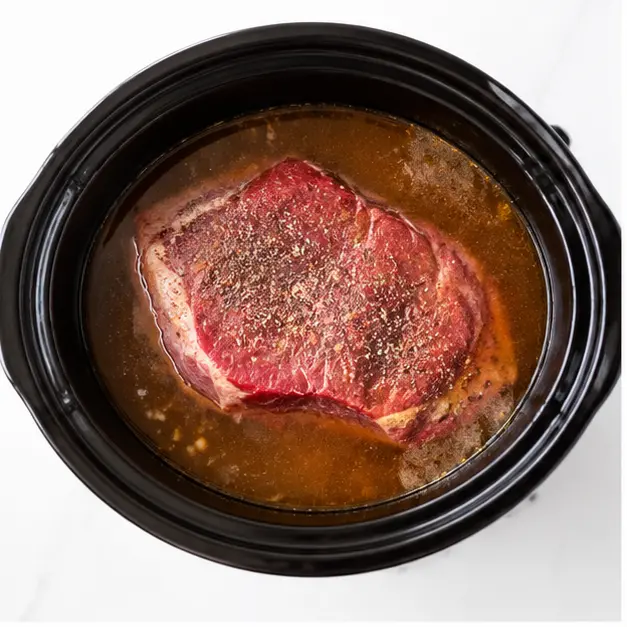
First things first, you need to get that beef tender. Season the chuck roast generously with salt and pepper. Don’t be shy. Place it in your slow cooker with about half of the beef broth. Cook it on LOW for 10 hours. Yes, 10 hours. This is the non-negotiable step for melt-in-your-mouth beef. When it’s done, the meat should shred easily with two forks. Set it aside.
Stage 2: Cook the Vegetables
While the beef is doing its thing in the slow cooker, you can get the vegetables started. In a very large pot, heat a tablespoon of olive oil over medium heat. Add the chopped carrots and the frozen seasoning blend. Sauté them for about 5-7 minutes, until the carrots start to soften and the onions become translucent. This step builds a flavor base for the whole soup.
Stage 3: Assemble and Simmer
Now, the magic happens. Add the shredded beef, the potatoes, the rest of the frozen vegetables (peas, green beans, corn), the remaining beef broth, both cans of tomato soup, and the can of water to the pot. Give it a good stir. Bring the whole thing to a boil over high heat, then reduce the heat to low. Cover the pot and let it simmer for 1 hour. Stir it every now and then. This is when the flavors really get to know each other.
Stage 4: Finish and Serve
After an hour, check the soup. The potatoes should be tender, and the broth should be a beautiful, rich red. If it’s too thick for your liking, just add a little more water. Taste it and adjust the seasoning with more salt and pepper. That’s it. You’ve made a pot of pure comfort.
Pro Tips for the Best Soup
I’ve made this soup more times than I can count, and I’ve learned a few things along the way. Here are my best tips to make sure yours is perfect every time.
- Sear the beef first (optional but amazing): If you have an extra 10 minutes, sear the chuck roast in a hot skillet with a little oil before putting it in the slow cooker. This creates a deep, savory crust and gives you those browned bits on the bottom of the pan. Deglaze the pan with a splash of broth and add that liquid to the pot. It’s a game-changer.
- Adjust the thickness: If you like a thicker soup, substitute the can of water with another can of tomato soup. For a thinner broth, just add more water or broth. It’s totally up to you.
- Don’t be scared of frozen vegetables: I actually prefer them in this recipe. They’re picked at peak ripeness and flash-frozen, so they have great flavor and texture. Plus, it saves you a ton of prep time.
- Let it rest: This soup is even better the next day. The flavors deepen and meld together. Make it a day ahead if you can.
- Season in layers: Season the beef before cooking, season the vegetables as they sauté, and season the finished soup before serving. This builds a more complex flavor profile.
Common Mistakes to Avoid
❌ Mistake: Overcrowding the pan when browning beef, causing it to steam instead of brown. ✅ Solution: Work in batches. Give the beef pieces space to develop a good crust.
❌ Mistake: Not cooking the tomato paste (if using) long enough. ✅ Solution: Cook the tomato paste for about a minute to caramelize the natural sugars and deepen the flavor.
❌ Mistake: Adding water instead of V8 juice, making the soup watery. ✅ Solution: Use V8 juice for a richer, more flavorful broth.
What to Serve with Vegetable Beef Soup
This soup is a meal in itself, but the right side dish can make it even better. I love serving it with something crusty to soak up all that delicious broth.
- Crusty Sourdough Bread: A classic. The tangy bread is perfect for dipping. A San Francisco-style sourdough would be incredible.
- Simple Side Salad: A light, crisp salad with a vinaigrette cuts through the richness of the soup.
- Grilled Cheese Sandwich: For the ultimate comfort food combo, serve this soup with a gooey grilled cheese. It’s a match made in heaven.
- Cornbread: A slightly sweet cornbread is a fantastic Southern-inspired pairing.
Storage and Freezing Tips
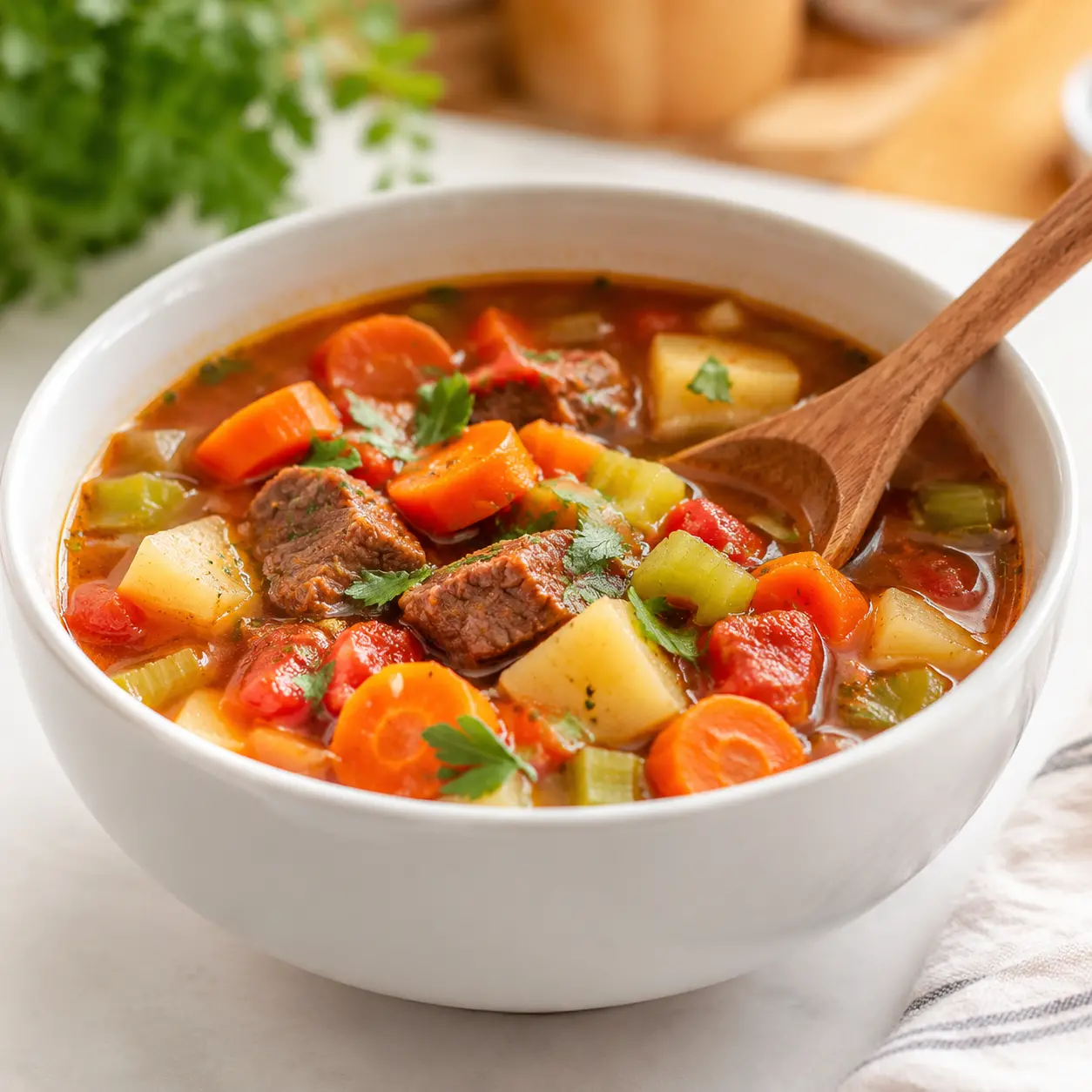
This soup is a meal prep superstar. It stores beautifully and tastes even better the next day. Here’s how to handle leftovers.
Refrigerating: Let the soup cool completely to room temperature. Then, transfer it to an airtight container and refrigerate for up to 4 days. The flavors will continue to meld, making it even more delicious.
Freezing: This soup freezes like a dream. Let it cool completely, then portion it into freezer-safe containers or zip-top bags. Leave a little room for expansion. It will keep for up to 3 months. I like to freeze it in 1-cup portions for easy reheating.
Reheating: The best way to reheat is on the stovetop in a saucepan over medium-low heat. You can also use the microwave in 30-second bursts, stirring in between. If the soup has thickened too much in the fridge, just add a splash of water or broth to thin it out.
Frequently Asked Questions
You’ve got this. Making a pot of this old fashioned vegetable beef soup is one of the most rewarding things you can do in the kitchen. It’s simple, it’s comforting, and it’s a meal your whole family will love. Let me know how it turns out! I’d love to hear about your soup-making adventures.
And if you’re looking for more inspiration, come find me on Pinterest. I’m always pinning new recipes and ideas.
What are the best seasonings for vegetable beef soup?
This recipe keeps it simple with just salt and pepper. The flavor comes from the beef, the tomato soup, and the vegetables. If you want to add more, a bay leaf or a sprig of thyme during simmering adds a lovely depth.
What are some common mistakes when making vegetable soup?
The biggest one is not seasoning enough. Also, overcooking the vegetables until they are mushy is a common issue. Another is using a lean cut of beef that gets tough. Stick with a chuck roast for the best results.
What cut of meat is used for vegetable beef soup?
Beef chuck roast is the best choice. It has enough marbling to become incredibly tender and flavorful when cooked low and slow. You can also use stew meat, but chuck roast is ideal for shredding.
How to make beef soup soft and tender?
The secret is low and slow cooking. Cooking the chuck roast in the slow cooker on LOW for 10 hours breaks down the connective tissues, making the meat melt-in-your-mouth tender. Don’t rush this step.
How to give beef soup more flavor?
Searing the beef before slow cooking adds a deep, savory flavor. Also, sautéing the carrots and onions before adding the liquid builds a flavorful base. Using good quality beef broth is key.
What’s a good spice to add to vegetable soup?
While this recipe is simple, a bay leaf adds a subtle herbal note. Thyme is also a classic pairing with beef and vegetables. A little smoked paprika could add a nice warmth if you want to experiment.
What not to put in soup?
Avoid adding delicate herbs like fresh parsley or cilantro at the beginning of cooking, as they will lose their flavor. Also, don’t add pasta or noodles if you plan to have leftovers, as they will become mushy.
What is the secret to a good vegetable soup?
The secret is building layers of flavor. Start by seasoning the beef, then sauté the aromatics. Use a good broth and let the soup simmer long enough for the flavors to meld. Don’t be afraid to taste and adjust seasoning.
Should I cook onions before adding to soup?
Yes, absolutely. Sautéing the onions (and carrots) in a little oil before adding the liquid softens them and brings out their natural sweetness. This step is crucial for building a flavorful base for the soup.
How do you keep beef soup from being bland?
Season in layers. Season the beef before cooking, season the vegetables as they sauté, and taste the finished soup before serving. Don’t be shy with the salt and pepper. A good quality beef broth is essential.
How do I thicken beef vegetable soup?
You can mash some of the potatoes against the side of the pot. This releases their starch and naturally thickens the broth. You can also substitute the can of water with another can of tomato soup for a thicker consistency.
Why is my beef tough in my soup?
You likely used a lean cut of beef or didn’t cook it long enough. Tough cuts need time to break down. Using a chuck roast and cooking it on LOW for 10 hours ensures it will be fork-tender.
Can you overcook beef in a soup?
Yes, you can. If you cook the beef for too long after it’s already tender, it can become dry and stringy. That’s why we cook the chuck roast separately first, then add it to the soup only for the final simmer.
Is it better to thicken a soup with flour or cornstarch?
This recipe doesn’t use either. It relies on the natural starch from the potatoes and the condensed tomato soup to create a perfect consistency. If you need to thicken, mashing a few potatoes is the best method.
Will stew beef get more tender the longer you cook it?
Yes, but only up to a point. Low and slow cooking breaks down connective tissue, making it tender. However, if you cook it for too long after it’s already tender, it can start to dry out and become stringy.