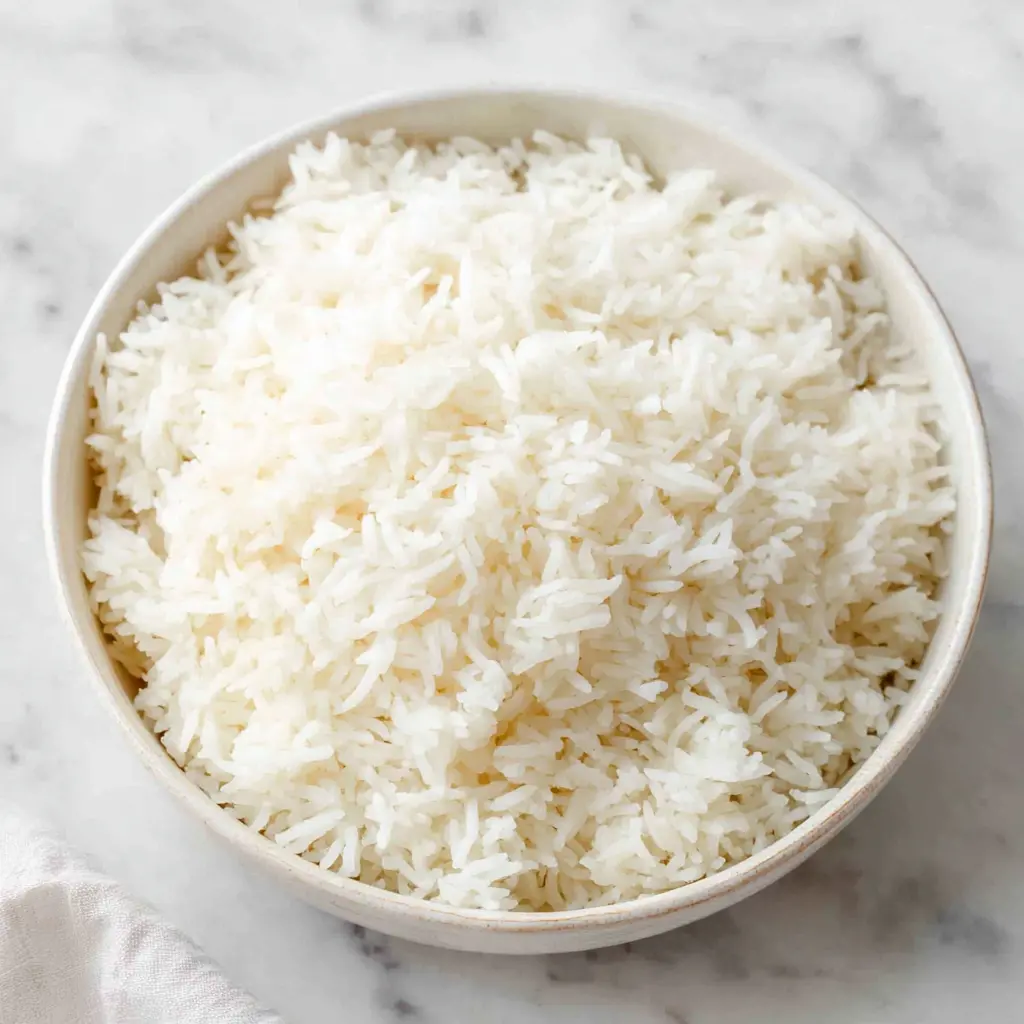
How to Cook Rice Perfectly on the Stove
Ingredients
Method
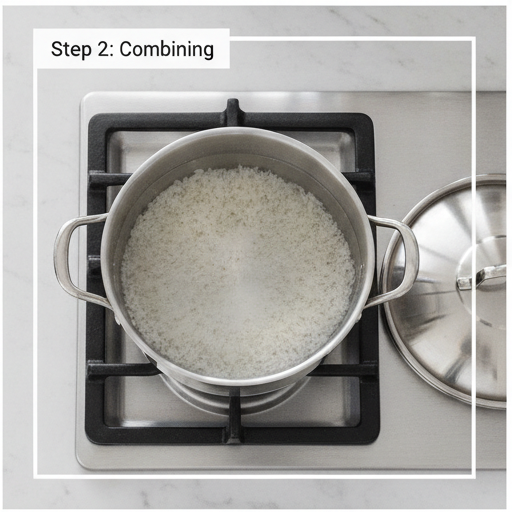
- In a medium saucepan with a tight-fitting lid, combine the rinsed rice, water, and olive oil (if using). Bring to a boil over high heat.
- Once boiling, immediately reduce the heat to low, cover the pot, and let it simmer for 15 minutes, or until all the liquid is absorbed and the rice is tender.
- Remove the pot from the heat and let it sit, still covered, for 10 minutes. This allows the steam to finish cooking the rice. Then fluff gently with a fork and serve.
Nutrition
Notes
Tried this recipe?
Let us know how it was!I Used to Ruin Rice Every Time. Then I Learned This One Trick.
Let me be real with you for a second. For years, I couldn’t cook rice to save my life. I’d end up with a gluey, sticky mess that stuck to the bottom of the pot. Or worse, I’d get crunchy, undercooked grains that made me want to just order takeout. Sound familiar?
I used to think you needed some fancy rice cooker or a culinary degree to get those fluffy, separate grains you see at restaurants. But here’s the thing I finally figured out: how to cook rice perfectly on the stove is actually dead simple. You just need the right ratio, the right technique, and a little bit of patience.
And I promise, once you try this method, you’ll never go back to instant rice again. This is the no-fail rice method that changed everything for me.
Rice to Water Ratio: The Golden Number
Okay, let’s start with the most important part. The rice to water ratio. This is where most people mess up, honestly. I used to just dump in water and hope for the best. Spoiler: that doesn’t work.
For long-grain white rice, the magic ratio is 1 cup of rice to 1½ cups of water. That’s it. Not 2 cups of water like some old recipes say. That 2:1 ratio? That’s how you get gummy, mushy rice. Trust me, I’ve been there.
Now, this ratio changes a little for different types of rice. Here’s a quick cheat sheet:
- Long-grain white rice (what we’re using): 1 cup rice to 1½ cups water
- Jasmine rice: 1 cup rice to 1¼ cups water (it’s a little more delicate)
- Basmati rice: 1 cup rice to 1½ cups water
- Short-grain or sushi rice: 1 cup rice to 1¼ cups water
- Brown rice: 1 cup rice to 2 cups water (and it takes longer, about 40-45 minutes)
But for this recipe, we’re sticking with classic long-grain white rice. It’s the most forgiving and gives you that perfect every time result.
Do You Need to Rinse Rice?
This is one of those questions that gets people arguing in the comments section. So let’s settle it. Yes, you should rinse your rice. Here’s why.
Uncooked rice is coated in a fine layer of starch dust. If you skip rinsing, that starch cooks into a gluey film that makes your rice clump together. Rinsing washes away that excess starch, giving you light, fluffy, separate grains.
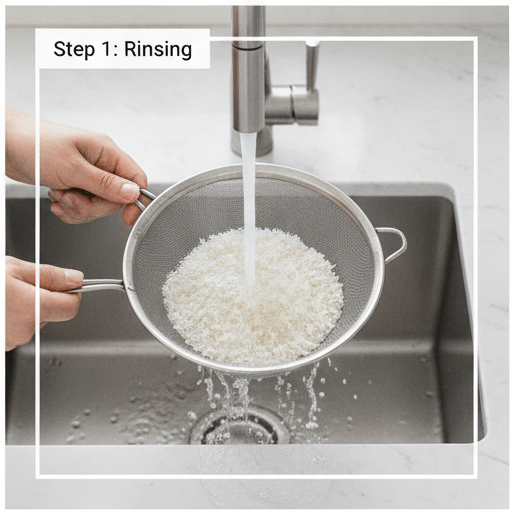
But here’s the thing you don’t have to rinse until the water runs completely clear. That takes forever. Just give it a good swirl in a fine-mesh strainer under cool running water for about 30 seconds. You’ll see the water go from cloudy to mostly clear. That’s good enough.
One exception: If you’re using enriched rice (the kind that says “enriched” on the bag), rinsing will wash away the added nutrients. In that case, you can skip the rinse if you want to keep those vitamins. But honestly, for the best texture, I still rinse and just get my nutrients elsewhere.
How to Cook Rice on the Stove
Alright, let’s get to the actual how to cook rice part. This method works every single time, no rice cooker needed. Here’s the breakdown.
Stage 1: Rinse and Combine
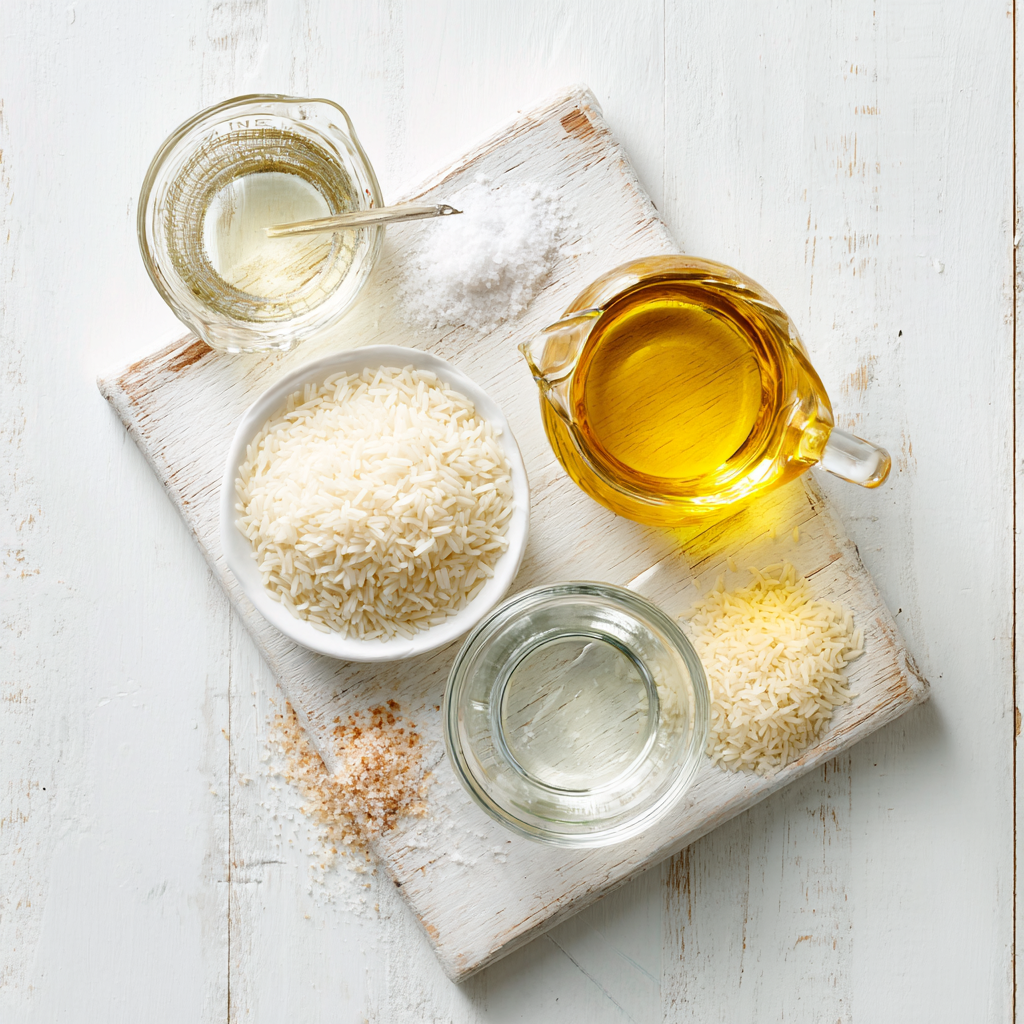
First, rinse your rice in a fine-mesh strainer under cool water for about 30 seconds. Shake off the excess water. Then, in a medium saucepan with a tight-fitting lid, combine the rinsed rice, water, and that teaspoon of California extra-virgin olive oil. The oil is optional, but I love what it does it adds a little sheen and helps prevent sticking. It’s a small touch that makes a big difference.
Stage 2: Bring to a Boil
Place the pot over high heat and bring it to a rolling boil. Don’t walk away here it happens fast. You’ll see bubbles breaking the surface and steam starting to rise. As soon as it’s boiling hard, you’re ready for the next step.
Stage 3: Simmer on Low, Covered
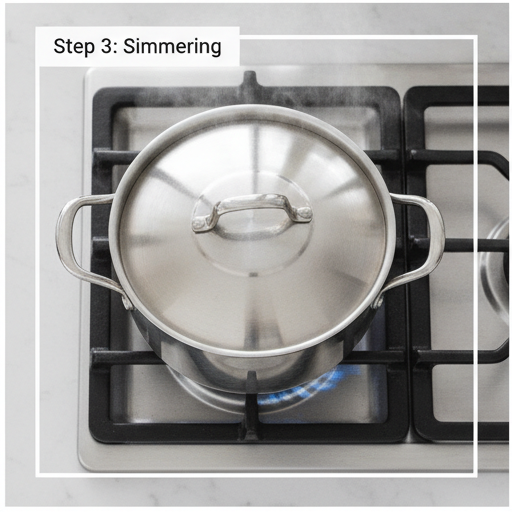
This is the most critical part. Once it’s boiling, immediately reduce the heat to low and cover the pot with that tight-fitting lid. Let it simmer gently for 15 minutes. Do not lift the lid. I repeat, do not lift the lid! Every time you peek, you release steam, and steam is what’s cooking your rice. Let it do its thing.
Stage 4: Rest, Then Fluff
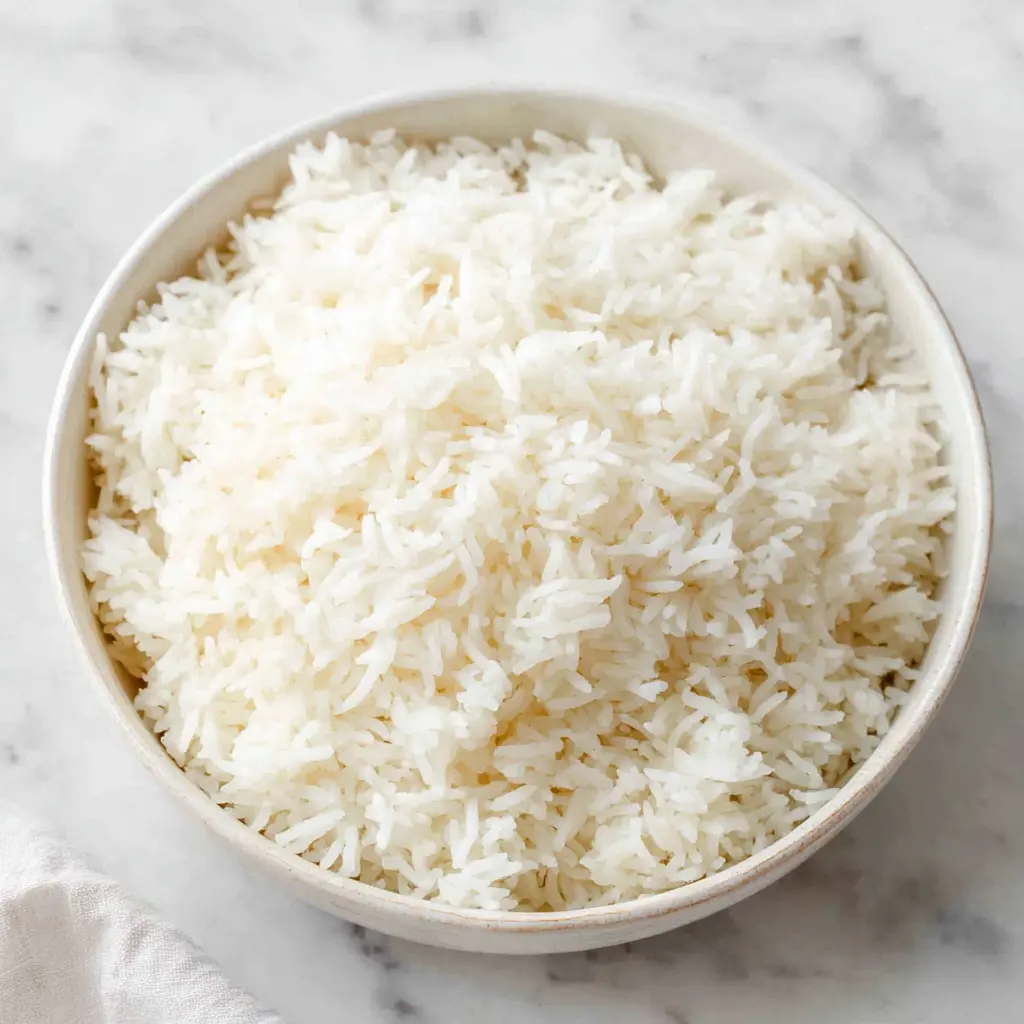
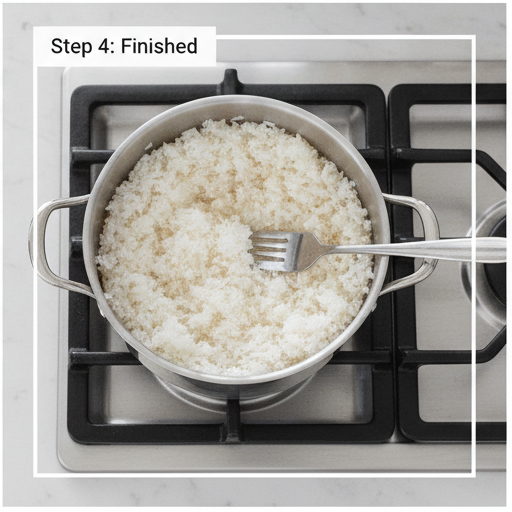
After 15 minutes, remove the pot from the heat. Keep the lid on and let it rest for 10 minutes. This resting time is crucial it lets the steam finish cooking the rice and redistributes the moisture. After 10 minutes, remove the lid, grab a fork, and gently fluff the rice. You’ll see beautiful, separate, tender grains.
Recipe Tips for Perfect Rice
Over the years, I’ve picked up a few tricks that make this method even more foolproof. Here are my best tips for perfect rice every time.
- Use a tight-fitting lid. If your lid is loose, steam escapes and your rice will be undercooked. If your lid is a bit loose, wrap a kitchen towel under it to create a seal.
- Don’t stir the rice while it’s cooking. Stirring activates the starch and makes it gluey. Just let it be.
- Don’t use too large a pot. If the pot is too big, the liquid evaporates too fast and you’ll burn the rice. A medium saucepan is perfect for 1-2 cups of rice.
- Use a gentle simmer, not a rolling boil. Once you lower the heat, you should see just a few small bubbles. A hard boil will cause boil-overs and scorched rice.
- Add a little oil or butter. That teaspoon of olive oil makes a real difference in texture and prevents sticking.
- For extra flavor, use broth instead of water. Chicken or vegetable broth adds a nice savory note.
Budget Swaps
Olive oil alternative: If you don’t have California extra-virgin olive oil, any neutral oil like canola or vegetable oil works fine. Or just skip it entirely the rice will still be great.
Rice Troubleshooting
Even with the best method, things can go wrong. Here’s how to fix common problems when you’re learning how to cook rice.
❌ Mushy, gluey rice → ✅ Too much water or you stirred it. Use the 1:1.5 ratio and don’t stir. If it’s already mushy, spread it on a baking sheet and let it dry out a bit.
❌ Crunchy, undercooked rice → ✅ Not enough water or you lifted the lid. Add a few tablespoons of water, cover, and cook on low for another 5 minutes. Don’t peek!
❌ Burnt, scorched bottom → ✅ Heat was too high or pot was too thin. Use a heavy-bottomed pot and keep the heat on low after boiling. If it’s already burnt, carefully transfer the unburnt rice to a new pot.
❌ Water not absorbed → ✅ Heat was too low or lid wasn’t tight. Remove the lid, let it cook uncovered on low for a few minutes to evaporate the excess liquid.
❌ Overflow mess on the stove → ✅ You boiled it too hard. Use a gentle simmer. If it’s already a mess, wipe it up and lower the heat next time.
❌ Rice too hard for your taste → ✅ Add a splash of water and steam it longer. Add 2-3 tablespoons of water, cover, and cook on low for 5 more minutes. Let it rest before fluffing.
❌ Cooking at high altitude → ✅ Add more water and cook longer. At altitudes above 3,000 feet, add an extra 2-3 tablespoons of water per cup of rice and increase cooking time by 5 minutes.
How to Store and Reheat Leftovers
Perfect rice is great for meal prep. Here’s how to store and reheat it so it stays fluffy, not dry or hard.
Storing: Let the rice cool completely, then transfer it to an airtight container. It’ll keep in the fridge for up to 4 days. For longer storage, freeze it for up to 3 months.
Pro tip for freezing: Spread the cooked rice on a baking sheet in a single layer and freeze for 2 hours. Then transfer to a freezer bag. This prevents it from clumping into a giant ice block.
Reheating in the microwave: Place the rice in a microwave-safe bowl, sprinkle a teaspoon of water per cup of rice over it, cover with a damp paper towel, and microwave for 1-2 minutes. Fluff with a fork.
Reheating on the stove: Add a splash of water to a skillet, add the rice, cover, and heat on low for 3-5 minutes. Fluff and serve.
Leftover rice recipes: Day-old rice is actually perfect for fried rice! The drier texture soaks up all the flavors without turning mushy. Try it with vegetables, eggs, and a little soy sauce.
What to Serve with White Rice
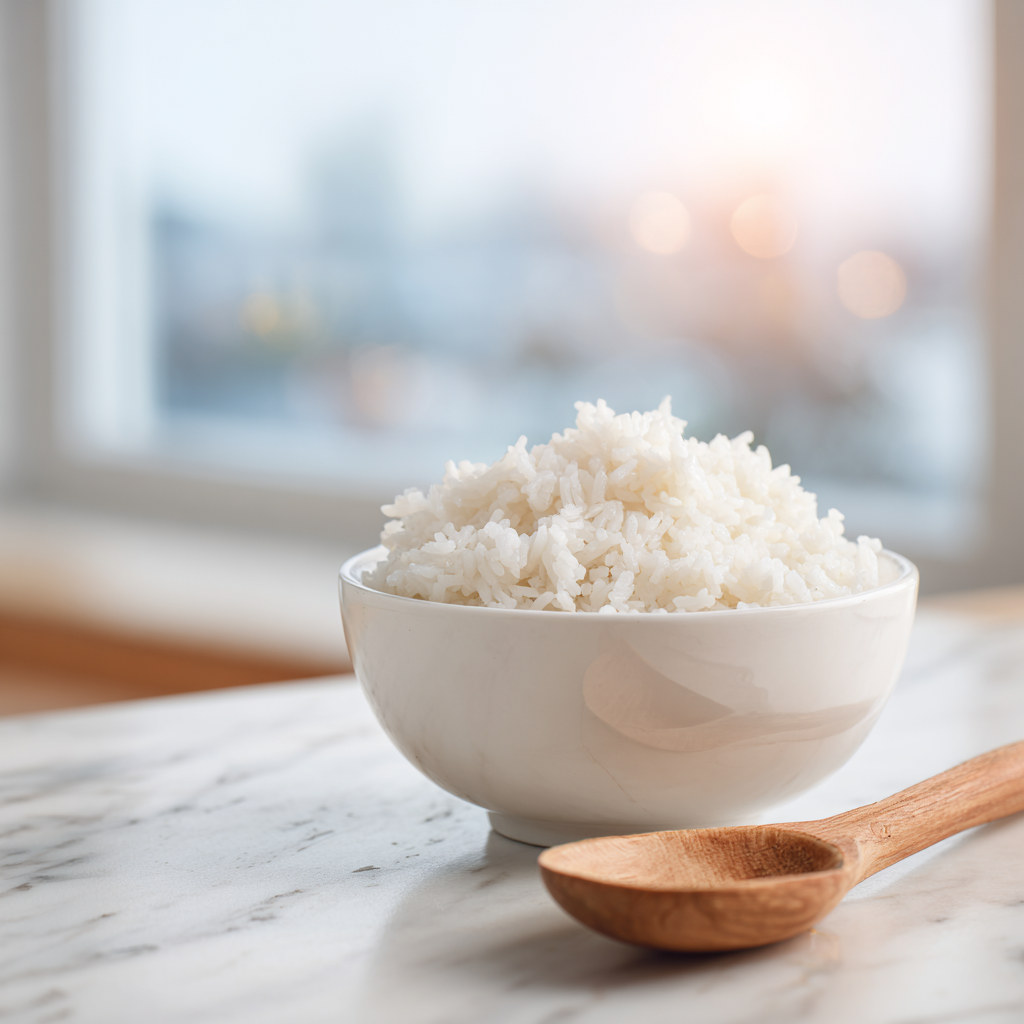
Now that you’ve mastered how to cook rice, what do you serve with it? White rice is the ultimate side dish it goes with almost anything.
- Stir-fries: Chicken, beef, or vegetable stir-fries with soy sauce and ginger
- Curries: Thai green curry, Indian butter chicken, or Japanese curry
- Bowls: Rice bowls with grilled protein, avocado, and fresh veggies
- Mexican dishes: Tacos, burrito bowls, or enchiladas
- Comfort food: Chili, stews, or saucy braised meats
- Asian dishes: Chinese, Thai, Japanese, or Korean favorites
Honestly, I keep a batch of this rice in the fridge all week. It’s a lifesaver for quick lunches and last-minute dinners.
Frequently Asked Questions
You’ve Got This
And there you have it. The secret to how to cook rice perfectly on the stove without any fancy equipment. It’s just three ingredients, one pot, and a little patience. You’ll mess up the first time? Maybe. But I promise, once you get the hang of it, you’ll never buy instant rice again.
Now go impress someone. Make a big batch, pair it with your favorite stir-fry or curry, and enjoy that moment when you lift the lid and see those beautiful, fluffy grains. It’s a small victory, but it feels huge.
And if you want more inspiration, come find me on Pinterest I’m always pinning new recipes and tips for making cooking easier and more fun.
Source: Health & Nutrition Research
What is the correct way of cooking rice?
The correct way is to rinse the rice, use a 1:1.5 rice to water ratio, bring to a boil, then simmer covered on low for 15 minutes. Let it rest off the heat for 10 minutes before fluffing with a fork. Don’t lift the lid while it cooks.
How long to boil 1 cup of rice?
You only boil it briefly just until it reaches a rolling boil. Then you immediately reduce the heat to low and simmer covered for 15 minutes. Total cooking time from start to finish is about 25 minutes, plus 10 minutes resting.
How to prepare rice for diabetes?
For diabetes, cook rice with a little coconut oil or olive oil, then let it cool completely before eating. Cooling creates resistant starch, which lowers the glycemic impact. Brown rice or basmati rice are better choices than short-grain white rice.
How to cook rice for IBS?
For IBS, stick to white rice varieties like jasmine or basmati, which are low in fiber and easier to digest. Rinse the rice thoroughly to remove excess starch. Avoid brown rice, wild rice, or seasoned rice mixes that may trigger symptoms.
Is 2 cups of water for 1 cup of rice?
No, that’s too much water for most white rice. The correct ratio is 1½ cups of water for 1 cup of long-grain white rice. Using 2 cups will give you gummy, mushy rice. Brown rice does need more water, about 2 cups per cup of rice.
What is the 5 5 5 rule for rice?
The 5 5 5 rule is for cooking rice in a pressure cooker or Instant Pot. It means 5 minutes of pressure cooking, 5 minutes of natural pressure release, and 5 minutes of resting. It’s a different method from stovetop cooking.
Do you boil rice on high or low heat?
You start on high heat to bring it to a boil, then immediately reduce to low heat for the rest of the cooking. The low, gentle simmer is what gives you tender, fluffy rice without burning the bottom or creating a mess.
What are common rice cooking mistakes?
The most common mistakes are using too much water, lifting the lid while cooking, stirring the rice, skipping the resting step, and using too high heat. All of these lead to gummy, crunchy, or burnt rice.
Is 1 cup of uncooked rice the same as cooked?
No, 1 cup of uncooked rice yields about 3 cups of cooked rice. Rice roughly triples in volume and weight as it absorbs water. So if a recipe calls for 3 cups of cooked rice, you’d start with 1 cup of uncooked rice.
Why do diabetic patients avoid rice?
White rice has a high glycemic index, meaning it raises blood sugar quickly. Diabetic patients may avoid it or choose brown rice, basmati, or parboiled rice instead. Cooling cooked rice also helps lower its glycemic impact.
What is the 3-hour rule for diabetics?
The 3-hour rule suggests that diabetics should eat within 3 hours of waking and not go more than 3 hours without eating during the day. This helps stabilize blood sugar levels. It’s not specifically about rice, but about meal timing.
What is the healthiest way to cook rice?
The healthiest way is to cook it with a little oil, then let it cool completely before eating. This creates resistant starch, which lowers the glycemic impact. Brown rice is also healthier than white rice due to its higher fiber content.
What is the most gut-friendly rice?
White jasmine rice or basmati rice are the most gut-friendly because they’re low in fiber and easy to digest. Brown rice has more fiber, which can be problematic for some people with sensitive digestive systems.
Why does rice trigger my IBS?
Rice is actually considered low-FODMAP and is usually safe for IBS. If it triggers symptoms, it might be due to portion size, added seasonings, or the specific variety. Try plain white rice in small portions and see how you feel.
What Chinese food is ok for IBS?
Plain steamed white rice, steamed vegetables, and simple stir-fried chicken or tofu with ginger and scallions are usually safe. Avoid dishes with garlic, onion, heavy sauces, or fried rice, as these can trigger symptoms.