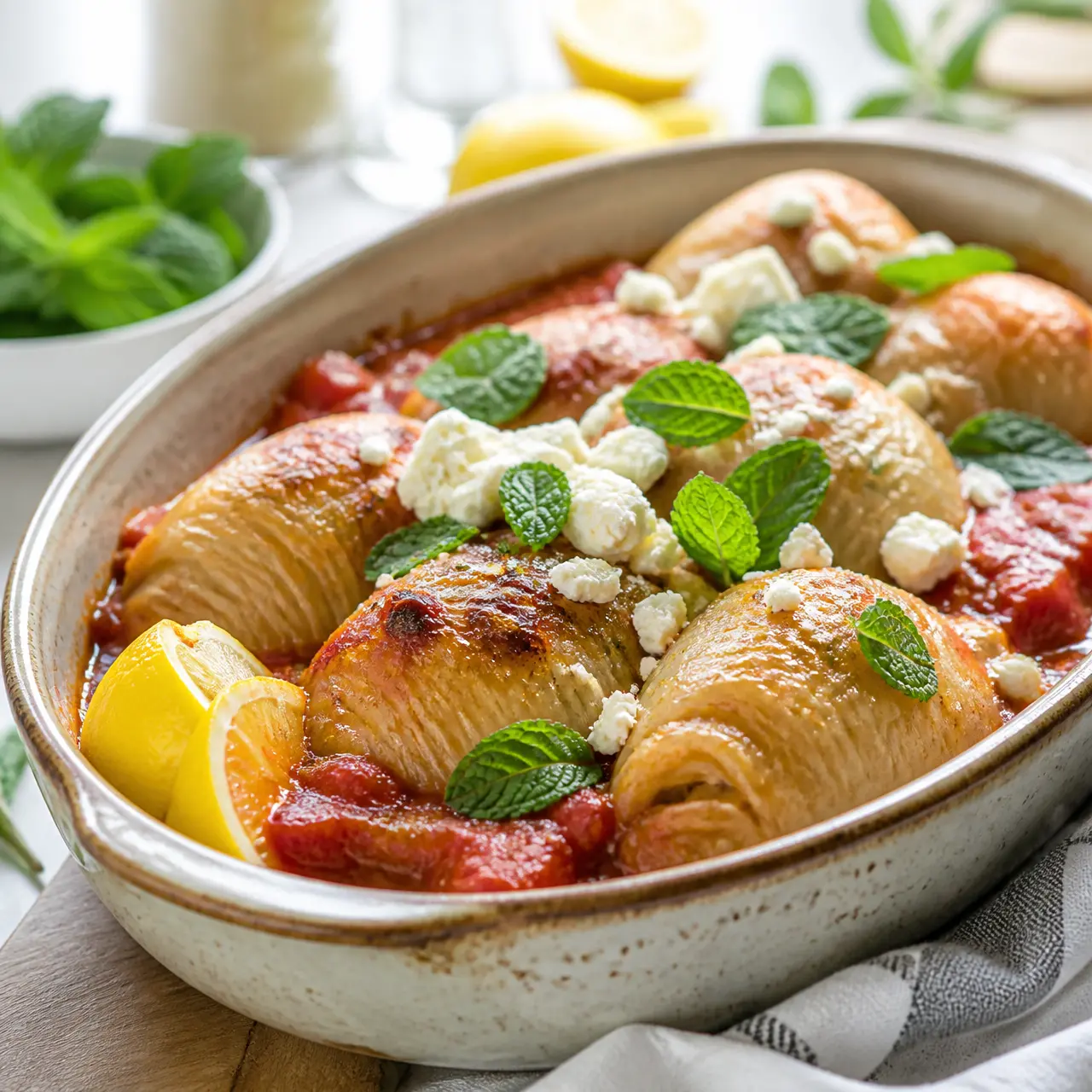
Oven-Baked Greek Stuffed Onions with Beef and Feta
Ingredients
Method
- Heat the oven to 375°F and place a rack in the middle position.
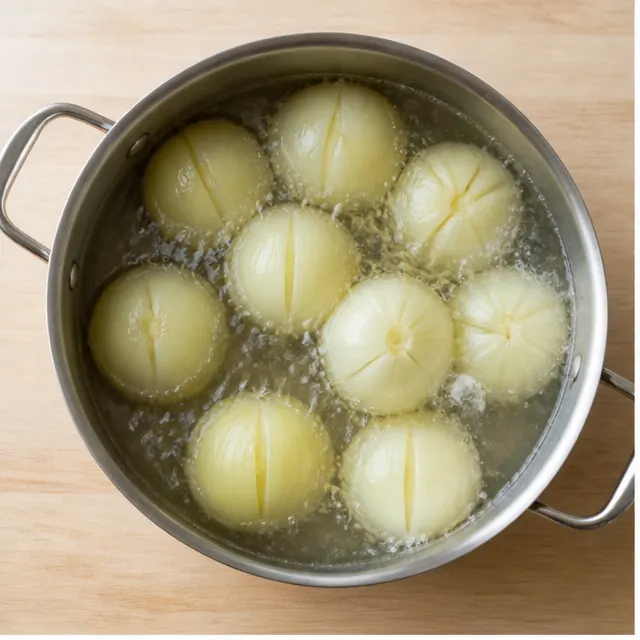
- Fill a large pot with salted water and bring it to a rolling boil. Trim the tops and root ends from the onions, peel off the skins, and cut one slit down a single side of each onion. Boil until the onion layers are soft and pliable, about 10 to 15 minutes. Remove them with a slotted spoon and reserve the onion cooking water. When cool enough to handle, separate the three or four largest outer layers from each onion and set aside for stuffing; save the tender centers for the sauce.
- Set a large skillet over medium heat and pour in the olive oil. Add the chopped onion and cook until soft and translucent, about 5 minutes. Stir in the garlic and cook for another 1 to 2 minutes until fragrant.
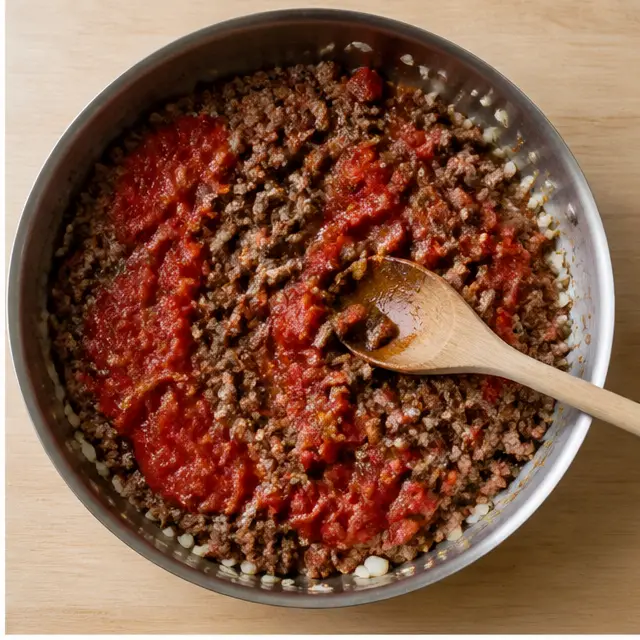
- Add the ground chuck to the skillet, breaking it up with a spoon, and raise the heat to medium-high. Cook until the meat begins to brown, then season with salt and pepper. Pour in the crushed tomatoes and let the mixture simmer until it starts to thicken. Stir in the arborio rice and cook for 1 to 2 minutes, making sure the rice is well coated.
- Remove the pan from the heat and fold in the dried oregano, parsley, mint, and feta. Taste the filling and add more salt and pepper if needed.
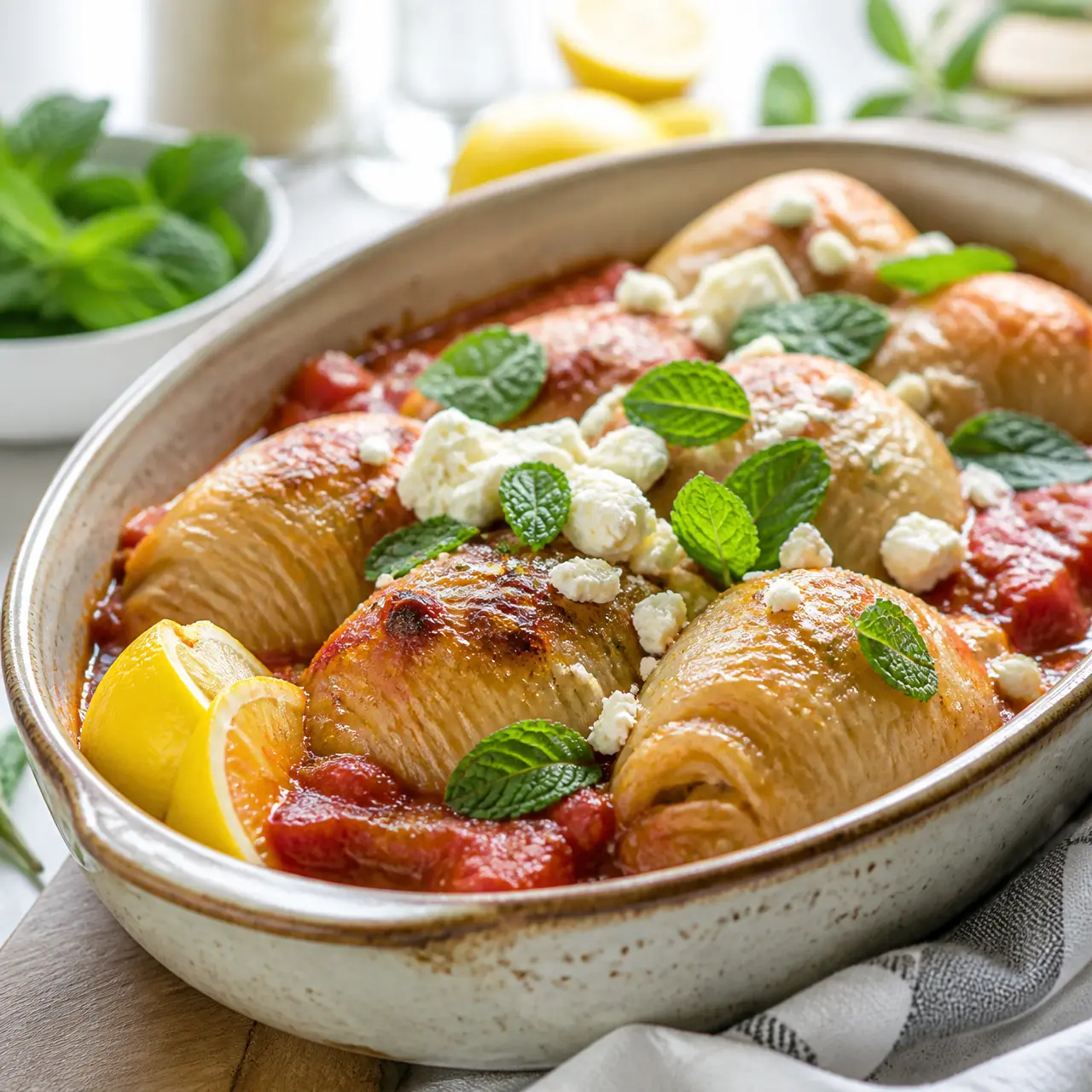
- Scoop 1 to 2 tablespoons of the filling into the center of each onion shell. Roll the onion around the filling so the edges overlap like a little package, then place each roll seam-side down in a 9x13 baking dish. Pack the stuffed onions snugly so they stay closed while baking; you may need a second dish to fit them all.
- In a large measuring cup or mixing bowl, combine the tomato paste, reserved onion broth, and boiled onion centers. Puree with an immersion blender until smooth, then season with salt and pepper. Pour the sauce over the stuffed onions so it mostly covers them, adding a little extra hot onion broth if needed.
- Cover the dish tightly with aluminum foil and bake for 1 hour. Remove the foil and bake for about 30 more minutes until the sauce has thickened and the onion edges are lightly caramelized. If you want more color, broil for 2 to 3 minutes and watch closely.
- Let the stuffed onions rest for a few minutes, then serve warm with pita and extra crumbled feta on the side.
Nutrition
Notes
Tried this recipe?
Let us know how it was!Why This Recipe Works
The first time I truly understood Greek stuffed onions, I was pressed against the counter of a tiny restaurant in Astoria, Queens, watching the owner’s mother fill onion layers with a ground beef and rice mixture. Her hands moved fast, like she’d done it a thousand times. Which she had. When I asked what the dish was called, she said salantourmasi and shrugged. Just onions, she meant. Except they weren’t.
Greek stuffed onions, salantourmasi if you want to sound like you know what you’re doing, belong to that whole family of Mediterranean stuffed vegetables that Greeks call gemista. The onion takes the role of the vessel, and honestly, it might be the most rewarding one of all. When those layers braise low and slow in tomato sauce, they turn candy-sweet and impossibly tender. The humble onion becomes the elegant centerpiece of the plate. That transformation is the whole magic of this dish.
There are two sauce traditions in the salantourmasi world. The tomato-braised style, which is what we’re making today, comes out deep, jammy, and burnished gold. The other camp goes for a silky avgolemono sauce, the classic Greek egg lemon sauce. Both are beautiful in their own way. This recipe sits firmly in the tomato camp, and it’s the one that fills your entire kitchen with that caramelized-onion-and-oregano aroma.
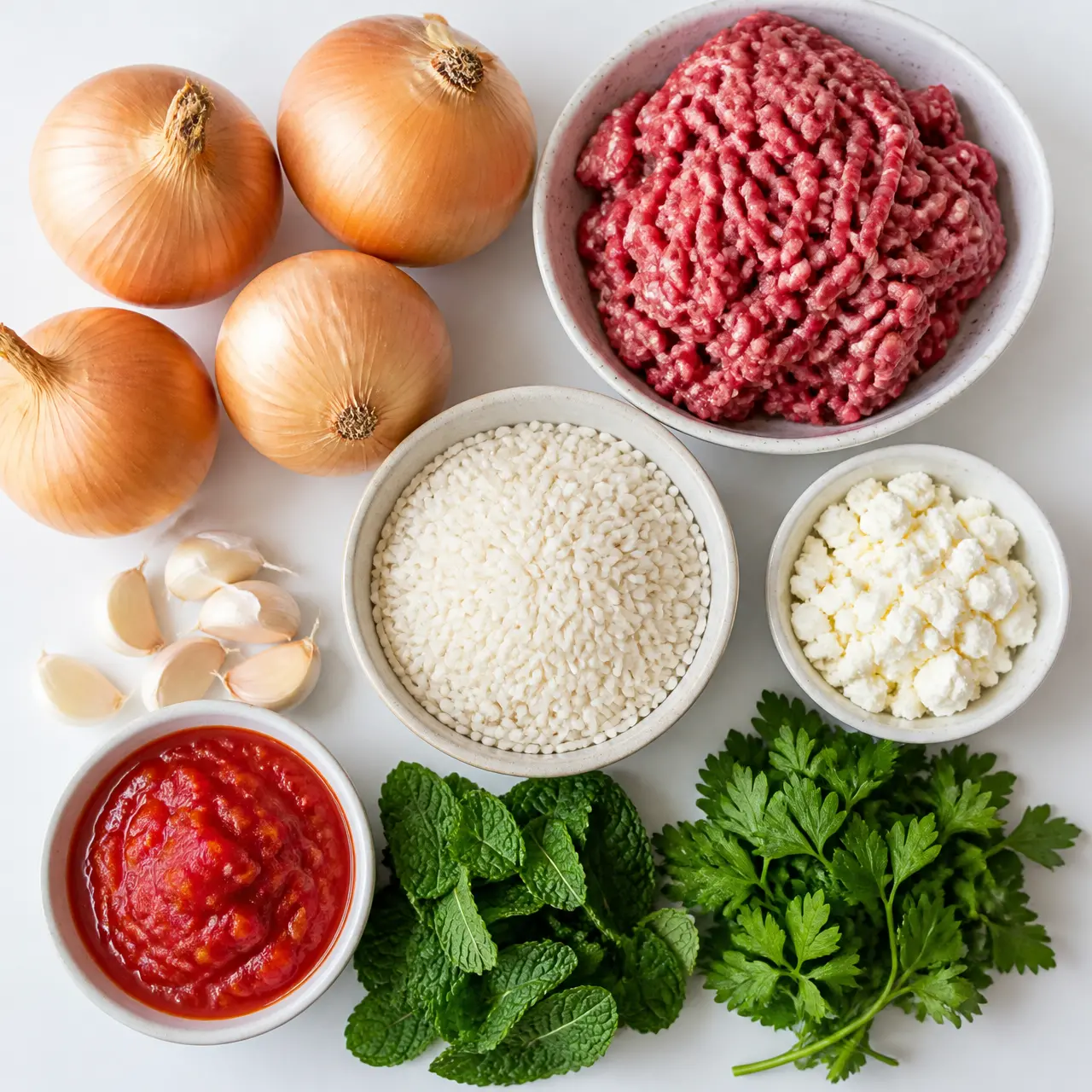
Key Ingredients for Greek Stuffed Onions
You don’t need anything exotic here. The ingredient list leans on the kind of things you probably already stock if you cook Mediterranean food regularly. That’s part of the appeal. But each ingredient earns its place, so let me walk you through what matters.
- Large yellow onions: The backbone. You want onions big enough to yield three or four large shells each. Yellow onions are perfect for stuffing because they’re sweet enough to caramelize beautifully and sturdy enough to hold their shape through a two-hour braise.
- Ground chuck: Fat equals moisture. Ground chuck keeps the filling from drying out next to all that rice. You can use leaner cuts, but you’ll notice the difference in richness.
- Arborio rice: The risotto rice. It goes into the filling uncooked and finishes cooking in the oven, absorbing tomato broth and staying creamy instead of mushy.
- Crushed plum tomatoes and tomato paste: The double tomato team. Crushed tomatoes give body, and the paste deepens the color and flavor of the sauce.
- Fresh mint and flat-leaf parsley: The herbs that make it taste like Greece. Mint especially, it keeps the rich filling bright and fresh.
- Feta: It melts into the rice in little salty pockets. Use a block of decent feta, not the pre-crumbled stuff.
And the secret weapon? The onion itself. Everything you’d normally toss, the centers, the cooking water, becomes the base of the sauce. No waste, just flavor. That’s Greek home cooking at its smartest.
How to Make Greek Stuffed Onions
Making Greek stuffed onions is a two-hour cooking project, but most of it is hands-off oven time. The hands-on part happens early, and the hardest step, hollowing the onions, is far easier than you expect once you learn the parboiling trick.
Stage 1: Parboil the Onions
Whatever you do, don’t cut the onions in half. That’s the number one mistake I see. Instead, trim the tops and roots, peel off the skins, and cut one single slit down one side of each onion. Drop them into a large pot of boiling salted water for 10 to 15 minutes, until the layers go soft and pliable.
When they’re cool enough to handle, the outer layers peel away like wet silk. You’ll get three or four big shells per onion, each about the thickness of a good slice of bread. Flexible, but not floppy. Save the tender centers and the onion water. Both are the foundation of that deep tomato sauce.
Stage 2: Make the Filling
While the onions cool, warm the olive oil in a large skillet and soften a finely chopped onion and five cloves of minced garlic. The garlic should smell fragrant, not browned. Then add the ground chuck, break it up with a spoon, and let it get some real color. Season with salt and pepper, pour in the crushed tomatoes, and let the mixture simmer until it starts to thicken.
Kill the heat and stir in the arborio rice. It goes in raw, no pre-cooking. Then fold in the oregano, parsley, mint, and crumbled feta. Taste it. You will be tempted to eat it by the spoonful before it ever reaches the onions. That’s normal.
Stage 3: Stuff and Assemble
Scoop one to two tablespoons of filling into the center of each onion shell, then wrap the onion around it so the edges overlap like a little package. Place each one seam-side down in a 9×13 baking dish. Pack them as snugly as you can. The tight crowd is what keeps them from unrolling during the bake. You may need a second dish depending on how many shells you got.
For the sauce, blend the tomato paste with three cups of warm reserved onion broth and about a cup of the boiled onion centers. An immersion blender works perfectly here. Season with salt and pepper, then pour it over the onions so it mostly covers them, adding a splash of extra hot broth if needed.
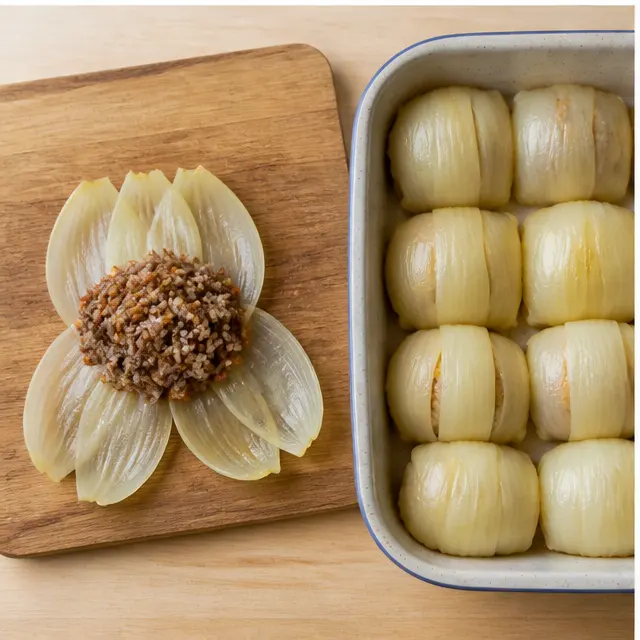
Stage 4: Braise Until Golden
Cover the dish tightly with foil and bake at 375°F for a full hour. The trapped steam softens the onions and cooks the rice through. Then remove the foil and bake 30 minutes more. This is where the sauce reduces and turns glossy, and the onion edges catch a little caramel color. If you want extra char, run it under the broiler for two to three minutes and watch it like a hawk. Let the dish rest before serving, the filling sets as it cools.
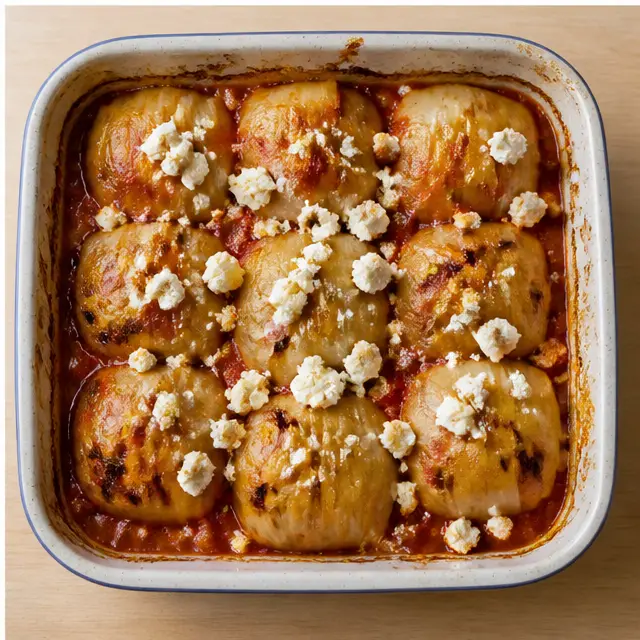
Tips for Perfect Greek Stuffed Onions
Some hard-won wisdom from the times I’ve messed this up, so you don’t have to.
- ❌ Cutting onions in half before boiling. ✅ Cut one slit down the side. The layers separate naturally without tearing.
- ❌ Forgetting the onion broth. ✅ Reserve it. Three cups are the backbone of the sauce, and the boiled centers make it silky.
- ❌ Overfilling the shells. ✅ One to two tablespoons per shell, max. Overstuffed onions burst open in the oven.
- ❌ Not softening the onions enough. ✅ The layers should be pliable enough to wrap. If they tear, they weren’t ready. Give them two or three more minutes in the water.
- ❌ Using pre-cooked rice. ✅ Arborio goes in raw. It finishes cooking in the sauce and stays creamy, not mushy.
And one more thing. Your onions will look a little raggedy at the seams. That is authentic. That is fine. This dish is supposed to look like it was made by a person, not a machine.
Variations and Substitutions
Ground chuck is my default because the fat keeps everything moist through the long bake. But you can absolutely swap in ground turkey, ground lamb, or leaner cuts of beef or sirloin. You’ll trade a little richness for a lighter result, and that’s a fair trade if you’re watching fat.
- Vegetarian version: Swap the beef for 1 1/2 cups of cooked lentils and use vegetable broth in the sauce. It’s genuinely excellent, and it’s what I make when my plant-based friends come over.
- Rice swaps: Long-grain rice works in a pinch. Skip jasmine or basmati, their aromatics fight the mint and oregano.
- Regional additions: Some family recipes stir a handful of black currants into the filling for a sweet note, or add a pinch of cinnamon and cumin for warmth. Those are lovely traditions, but they’re not this version.
Stick with the base recipe the first time. Then explore once you know what the classic should taste like.
How to Serve Greek Stuffed Onions
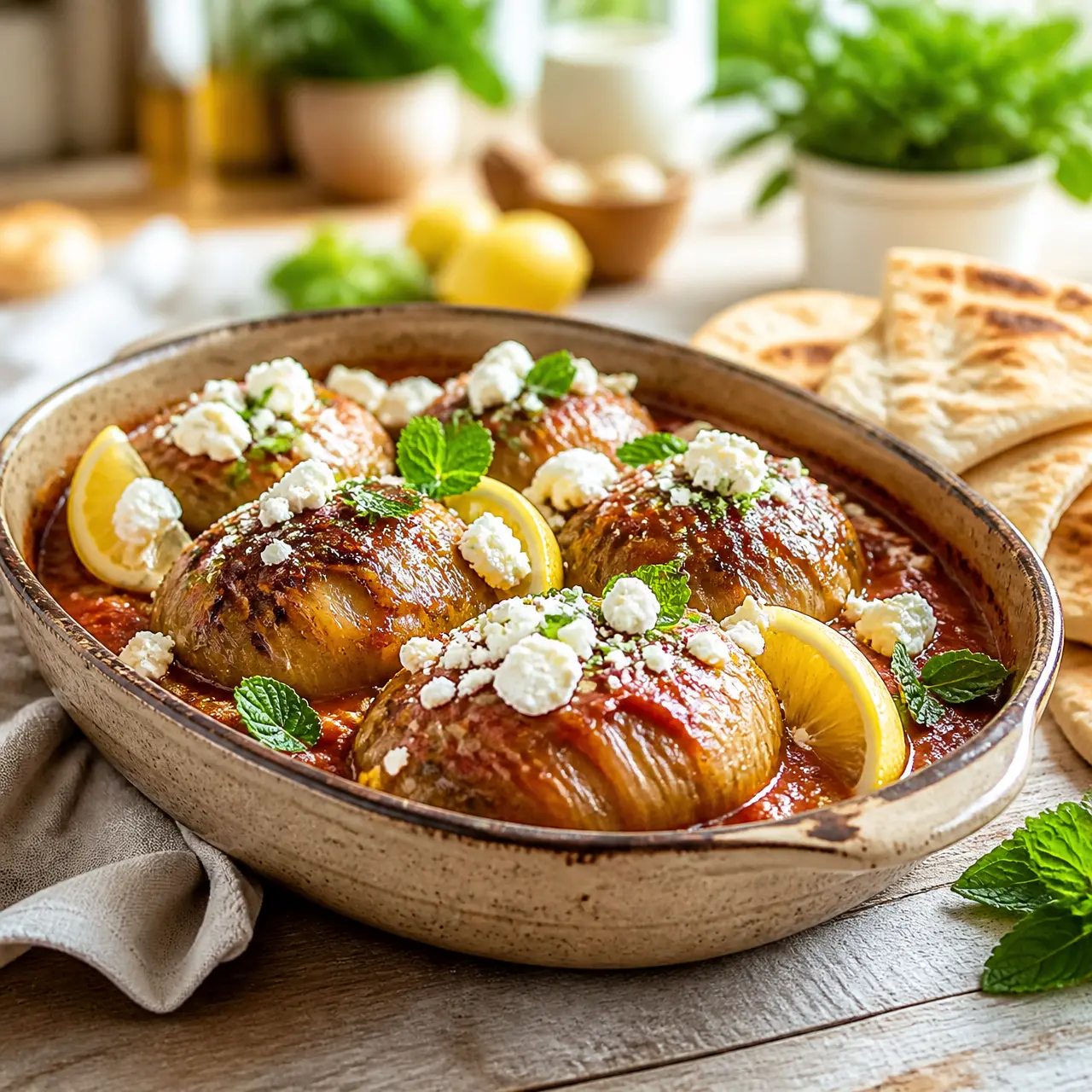
I like to serve these straight from the baking dish with a pile of warm pita on the side. A bowl of extra crumbled feta, a plate of lemon wedges. The squeeze of lemon over the top is not optional in my house. It cuts through the rich tomato sauce with this bright citrusy pop that ties everything together.
A Greek salad with cucumbers, tomatoes, and olives makes the perfect side. Or keep it simple with crusty bread and some lemony roasted potatoes for a full taverna spread at home.
These also make a fantastic dinner party dish. People genuinely have never seen a stuffed onion before, so they show up looking skeptical and leave asking for the recipe. I’d love to see how yours turn out. Come find me on Pinterest and show me your table.
Storage and Leftovers
Greek stuffed onions keep in the fridge for up to three days in an airtight container. To reheat, cover with foil and warm in a 350°F oven until hot, then remove the foil for a few minutes to re-crisp the tops.
They also freeze beautifully for up to three months. Thaw overnight in the fridge before reheating. The sauce will be a little more fragile after freezing, so add a splash of broth or water if it looks too thick.
One honest note: this dish is at its absolute best the day you make it. The rice keeps absorbing liquid as it sits, so the texture becomes softer. Still delicious. Just know what you’re in for.
FAQ: Greek Stuffed Onions
Make these Greek stuffed onions for people you love. They’ll ask what the dish is called, they’ll ask for the recipe, and they’ll scrape every last bit of that tomato sauce off their plates. That’s the moment you’ll know it was worth every minute.
For more Mediterranean inspiration and to see what I’m cooking next, follow along with me on Pinterest. I love seeing your versions of these classics.
Source: Learn More About This Dish
What’s the difference between a white or yellow onion?
White onions are sharper and more astringent, which makes them better for fresh salsas and salads. Yellow onions have more sugar and a deeper flavor once cooked. For Greek stuffed onions, you want that natural sweetness, because a long braise turns them meltingly soft. Reach for yellow onions every time.
Are Salantourmasi healthy?
A serving of about four onion rolls has 638 calories, 28 grams of protein, 35 grams of fat, and 683 milligrams of sodium. It’s a rich comfort dish, not a light lunch. But it does deliver solid protein and fiber. For a lighter version, use lean ground beef or the lentil swap.