Why This Cranberry Orange Cheesecake Recipe Works
I still remember my first attempt at a holiday cheesecake. The top cracked like a desert floor. The crust crumbled into what looked like gravel. And I may have shed a small tear over the sink. Sound familiar? If you’ve been burned by baking letdowns before, I get it. Completely. That’s exactly why I’m sharing this cranberry orange cheesecake recipe with you today.
This one is different. It uses a buttery gingersnap crust that actually holds together, a creamy filling lightened with Greek yogurt, and a bright, jewel-toned cranberry topping that makes every slice look intentional. It’s designed to be forgiving, even for beginners.
I promise, this is the zesty cranberry orange cheesecake you’ll want in your signature dessert rotation. Let’s get into why it works so well.
Ingredients You’ll Need
Let’s talk ingredients before you preheat anything. The cranberry orange cheesecake recipe relies on a short list of things you can grab easily from Ralphs or the Santa Monica Farmers Market. No wild goose chases here, I promise.
- For the crust: gingersnap crumbs, unsalted butter, and a pinch of salt
- For the filling: reduced-fat cream cheese (Neufchatel style), granulated sugar, plain Greek yogurt, vanilla extract, eggs, and fresh orange zest
- For the topping: fresh cranberries, granulated sugar, water, and more orange zest
That orange zest is a champion. It adds that bright citrus flavor that cuts straight through the richness of the cream cheese. And the fresh cranberries? They’re not just for looks. They bring that tart-sweet balance that makes people ask, “What is that flavor?”
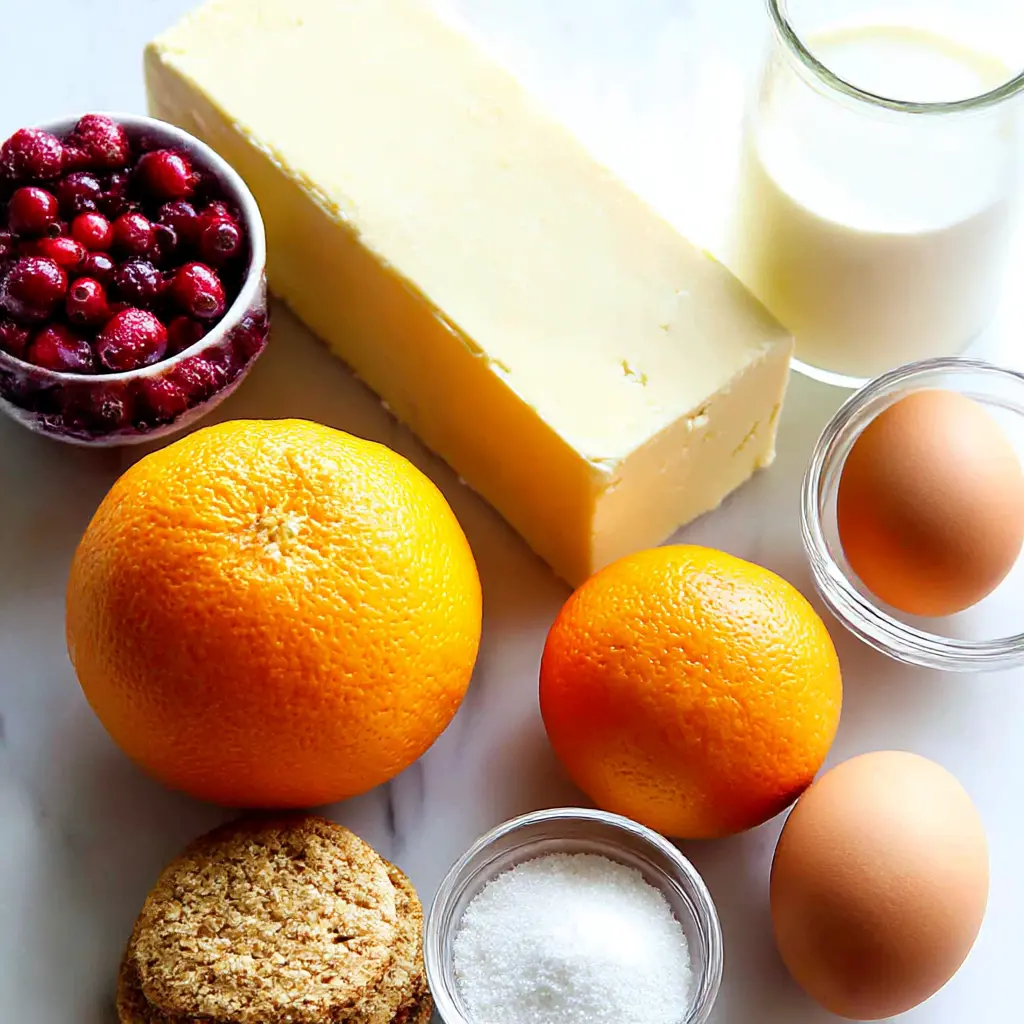
A note on cream cheese: make sure it’s softened. This is non-negotiable. Cold cream cheese creates lumps, and nobody wants lumpy cheesecake. Leave it out on the counter for about an hour before you start. Same goes for the eggs. Room temperature ingredients blend like a dream.
How to Make Cranberry Orange Cheesecake
Here’s where the magic happens. I’m going to walk you through the four major stages of this process. The full detailed instructions are in the recipe card below, but I want to give you the insider tour first. The why behind each step. The stuff that makes the difference.
Stage 1: Build the Gingersnap Crust
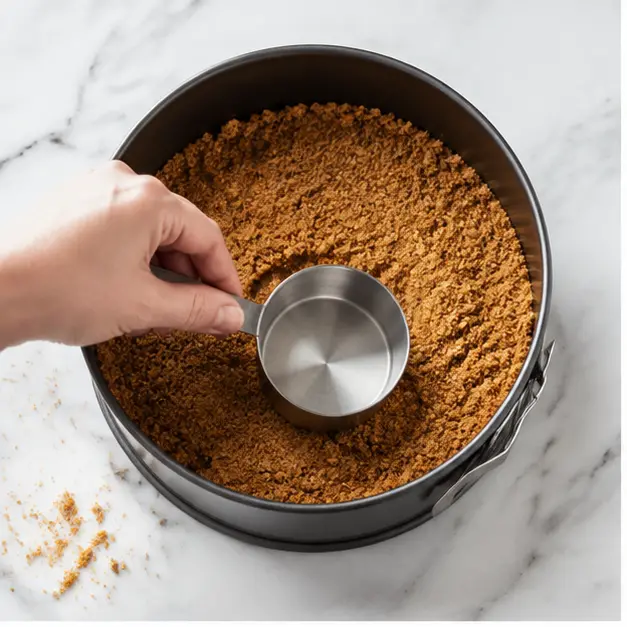
You’ll pulse those gingersnap crumbs with melted butter and salt in a food processor until it holds together like wet sand. Press it firmly into the bottom of a 9-inch springform pan. If you want a more traditional look, push the crumbs about an inch up the sides. Bake it at 350°F for 10 minutes, then let it cool while you get the filling ready.
Here’s a quick tip: if the crust crumbles when you slice the finished cheesecake, you didn’t use enough butter. Press it firmly, really pack it down, and you’ll get a clean slice every time.
Stage 2: Whip Up the Creamy Filling
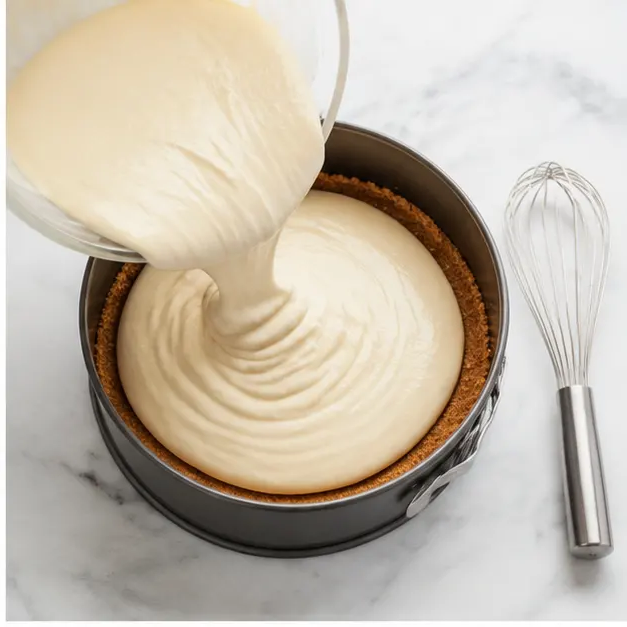
This is where patience pays off. Beat the softened cream cheese on medium speed for about 3 minutes until it’s completely smooth. Then add the sugar, followed by the Greek yogurt and vanilla. The last addition is the eggs, and here’s the critical rule: don’t overmix the batter once the eggs are in. Mix just until each egg is incorporated, then stop.
Overmixing whips too much air into the batter, and that trapped air expands in the oven, which leads to cracks. We’re going for creamy-dense, not fluffy. You want a texture that’s rich but still light.
Stage 3: The Water Bath and Low, Slow Baking
Right before baking, you’ll wrap the outside of the springform pan tightly with two layers of heavy-duty foil. Then place it in a larger roasting pan and pour boiling water about an inch up the sides. The water bath creates a humid environment in the oven that keeps the top of the cheesecake from cracking. It’s the fussiest step, but I promise this is worth it. It’s the difference between a crack-free top and a canyon.
Bake at 325°F for about 90 minutes. The center should still have a slight jiggle, about a 2-inch wobble, while the edges look set. Then comes the secret weapon: turn off the oven, crack the door, and let the cheesecake rest in the warm oven for a full hour. This slow cooling prevents the sudden temperature change that causes cracks.
Stage 4: Simmer the Cranberry Topping and Assemble
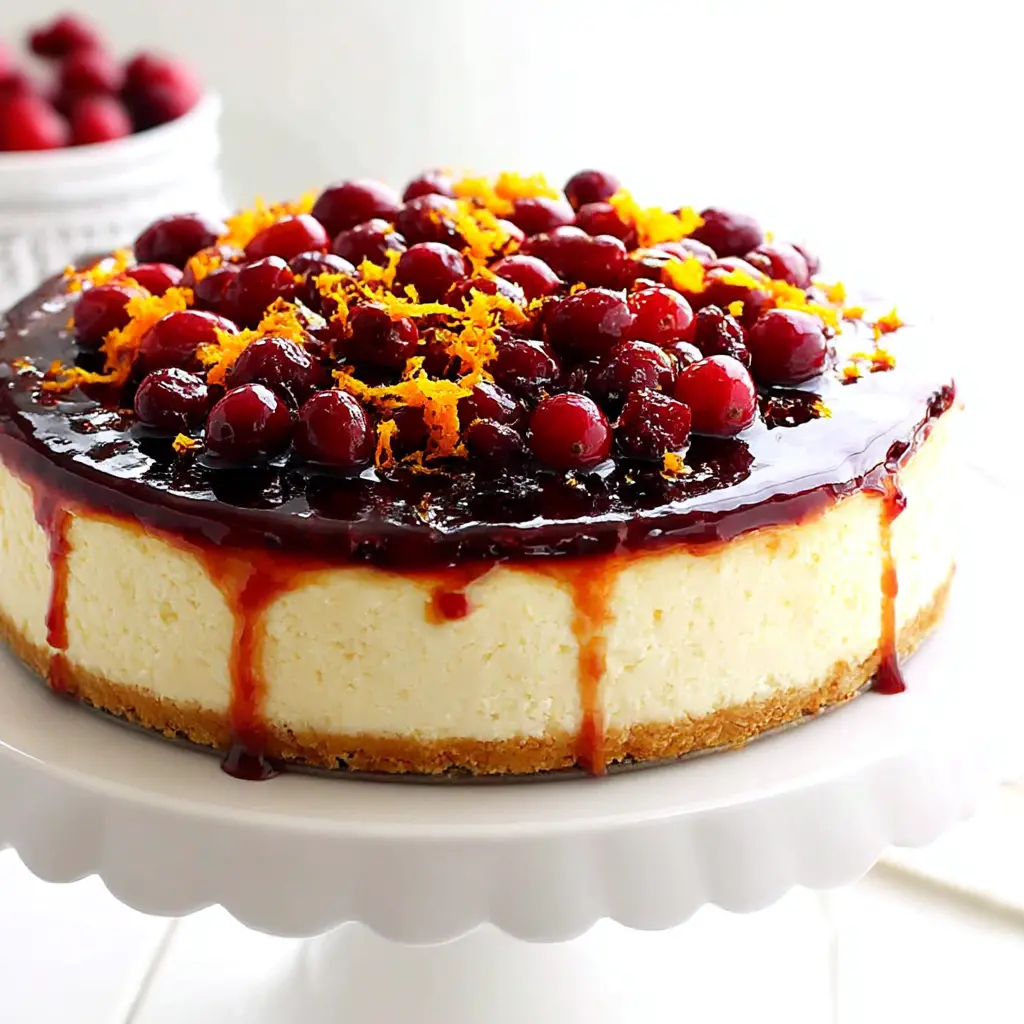
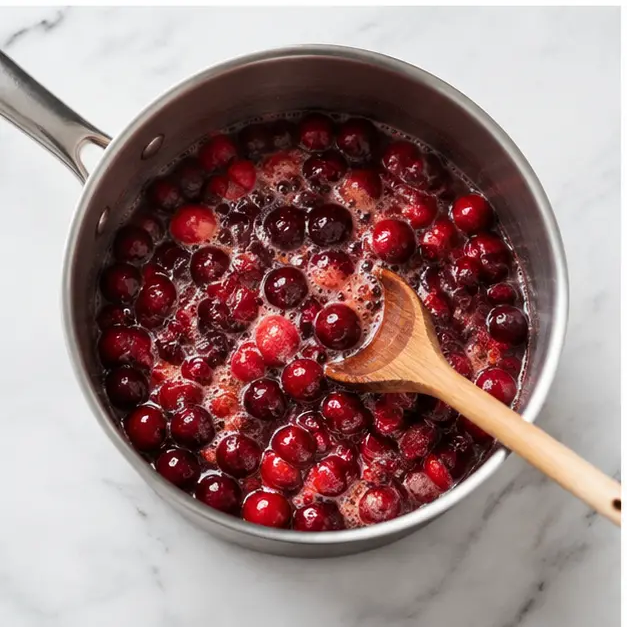
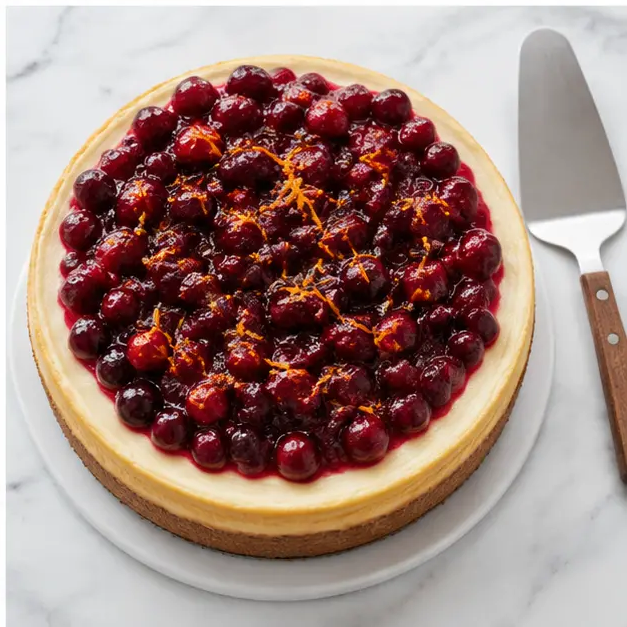
While the cheesecake chills (at least 4 hours, ideally overnight), make the cranberry topping. Simmer the sugar and water, then add the cranberries. Watch them pop. After about 5 minutes, the berries will have softened and released their deep red juice. Let it cool, then use a slotted spoon to lift the berries out and place them on top of the cheesecake.
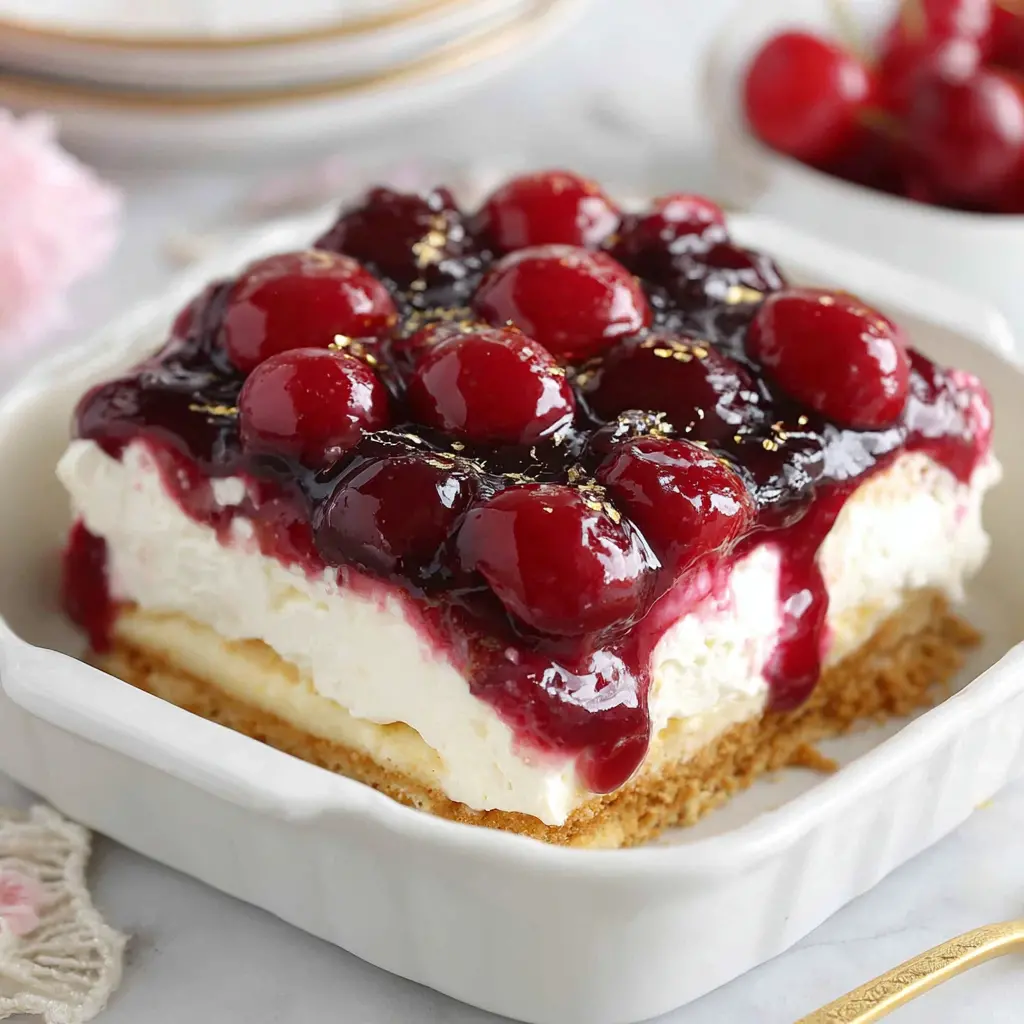
The key here is to leave the excess syrup behind. Too much liquid will make your topping bleed and pool around the base of the cake. Sprinkle with orange zest right before serving. That pop of color against the creamy white cheesecake is pure holiday magic.
Tips for the Best Cheesecake
After testing this cranberry orange cheesecake recipe more times than I can count, I’ve learned a few things the hard way. Here are the tips that matter most.
- Use room temperature ingredients: Cream cheese, yogurt, and eggs should all be at room temperature. This prevents lumps and ensures a silky smooth batter.
- Don’t overmix the batter: Once the eggs go in, mix on low speed just until combined. Overmixing incorporates too much air, which causes cracks.
- Water bath the right way: If you’re nervous about foil leaks, place a baking dish filled with boiling water on the rack below the cheesecake instead. It works almost as well.
- Slow cool, always: Never pull the cheesecake straight from the oven to the counter. Let it rest in the warm oven with the door cracked for an hour. This gentle temperature transition is your crack-prevention insurance.
- Chill overnight for best slices: If you can wait, chill for a full 24 hours. It tastes better, and the texture cuts more cleanly. Use a knife dipped in warm water between cuts.
Now let’s talk about the mistakes. I’ve seen them all. Here’s how to fix them.
- ❌ Mistake: Surface cracks → ✅ Solution: Don’t overmix, always use the water bath, and never skip the slow cooling in the oven.
- ❌ Mistake: Runny center → ✅ Solution: Bake until the center has a slight jiggle, about the size of a quarter, but not a wave. If it’s still liquid, it needs more time.
- ❌ Mistake: Sunken cranberry swirl → ✅ Solution: Don’t overload the top. Use a slotted spoon to drain excess syrup, and place the berries gently on the surface.
Cranberry Orange Cheesecake Variations
Once you’ve mastered the base recipe, feel free to play around. There are so many ways to make this cranberry orange cheesecake your own.
- Swap the crust: Use graham cracker crumbs instead of gingersnap crumbs for a milder, more classic flavor.
- Try low-sugar: This recipe uses a moderate amount of granulated sugar, but you can reduce it slightly in the topping if you prefer a tarter finish.
- Make mini cheesecakes: Use a muffin tin with liners and reduce the baking time to about 25-30 minutes. Perfect for a crowd.
- Add a swirl: Instead of a top layer, swirl a few spoonfuls of cranberry sauce into the filling before baking for a marbled effect. Just be careful to fold it gently so it doesn’t sink.
If you’re short on time, a shortcut version works too. Use a good quality jarred cranberry sauce instead of making the topping from fresh cranberries. And if you’re not ready to commit to the water bath, try the no-bake cheesecake route, it just won’t have that same dense, baked texture.
Storage & Make-Ahead
This is a dream dessert for busy holidays because it stores beautifully. The cranberry topping can be made up to 3 days in advance and kept chilled. The whole cheesecake can be baked a day ahead and refrigerated till you’re ready to serve.
To store leftovers, cover the plate with plastic wrap or transfer the cake to an airtight container. It’ll keep in the refrigerator for up to 5 days, though I doubt it will last that long. For longer storage, wrap individual slices in plastic wrap and freeze for up to 6 months. Thaw overnight in the fridge when you’re ready to enjoy it.
A quick note for the warmer months: if you’re baking in August like me, bake early in the morning before the kitchen heats up. Then let the fridge do the rest of the work. The cheesecake actually gets better after a deep chill.
Serving Suggestions
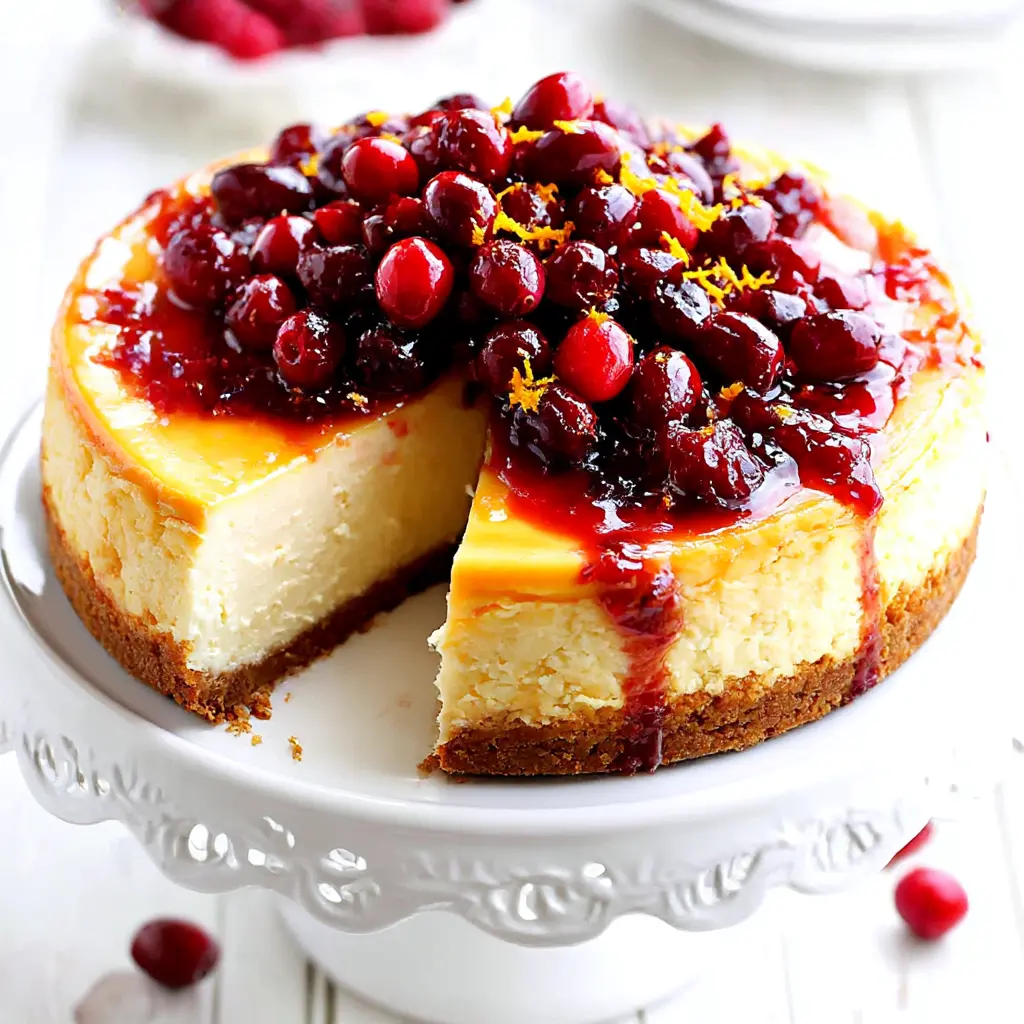
When it’s time to serve, pull the cheesecake from the springform pan and place it on a beautiful cake stand. The final presentation is always a showstopper. The deep red cranberries against the creamy pale filling, with flecks of orange zest on top. It’s a feast for the eyes before anyone even takes a bite.
For the perfect slice, use a long, thin knife dipped in warm water. Wipe it clean between cuts. This gives you those bakery-worthy edges.
This cranberry orange cheesecake is perfect for Thanksgiving, Christmas, or even a summer dinner party when you’re craving something bright and cold. It pairs beautifully with a cup of hot coffee or a pitcher of cold-brewed tea. Any excuse to dig in, honestly.
Before you go, I’d love to see your creation. This is the kind of dessert that makes people say, “Who made this?!” Share your photos with me on Pinterest. I absolutely love seeing your baking wins.
Festive Cranberry Orange Cheesecake
Ingredients
Method
- Heat the oven to 350°F. In a food processor, pulse the gingersnap crumbs, melted butter, and salt until the mixture holds together. (Or stir together in a mixing bowl.) Pat the mixture firmly into the bottom of a 9-inch springform pan, going up the sides if desired. Bake for 10 minutes, then set aside to cool. Reduce the oven temperature to 325°F.
- Once the pan is cool to the touch, wrap the outside of the springform pan tightly with two layers of heavy-duty aluminum foil, making sure there are no tears. Put the wrapped pan into a larger roasting pan. Bring a kettle or pot of water to a boil, then set it aside.
- In a large bowl with an electric mixer, beat the softened cream cheese on medium speed until smooth, about 3 minutes. Add the sugar and beat for 1 minute. Mix in the Greek yogurt and vanilla, beating for another minute and scraping down the bowl as needed. Reduce the speed to low and beat in the eggs one at a time just until incorporated, being careful not to overmix. Pour the filling over the cooled crust.
- Place the roasting pan with the springform on the lower third oven rack. Carefully pour the boiling water into the roasting pan so it comes about 1 inch up the sides of the springform pan.
- Bake for about 1 hour and 30 minutes, until the center is almost set but still has a slight jiggle. Turn off the oven and crack the door. Let the cheesecake rest in the warm oven for 1 hour. Remove it, run a knife around the edge of the pan, and let it cool to room temperature. Transfer to the refrigerator and chill for at least 4 hours or overnight.
- Take the cheesecake from the springform pan, place it on a serving plate, and spread the cranberry orange topping over the top right before serving. Cover any leftovers and store in the refrigerator.
- In a medium saucepan over medium-high heat, bring the water and sugar to a boil. Add the cranberries, cover, and simmer for about 5 minutes, until the berries have popped. Remove from the heat and let cool to room temperature (chilling in the freezer briefly speeds this up).
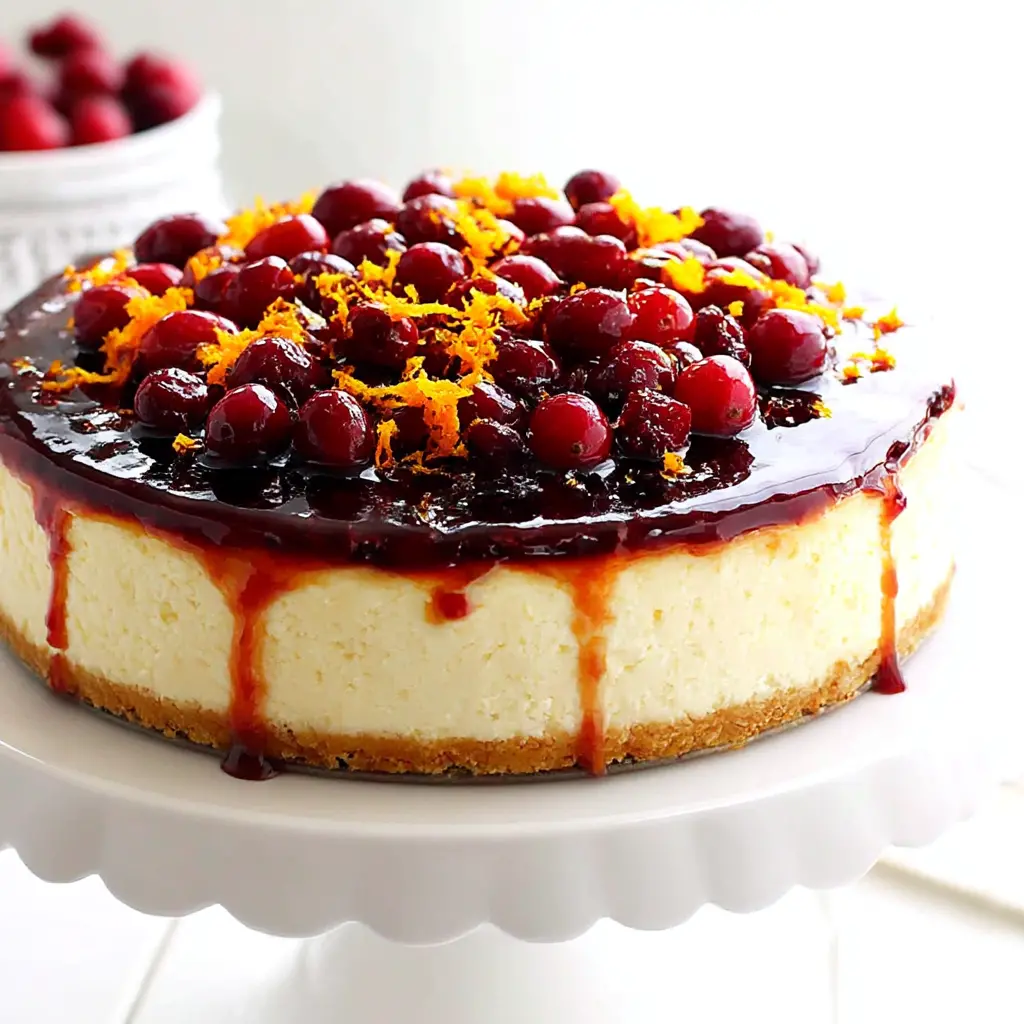
- Using a slotted spoon, lift the cranberries out of the syrup and place them on top of the cheesecake, leaving the excess liquid behind. Sprinkle with the orange zest.
Nutrition
Notes
Tried this recipe?
Let us know how it was!Frequently Asked Questions
Source: Learn More About This Dish
What is the best recipe for orange cheesecake?
The best orange cheesecake starts with room temperature cream cheese, a flavorful crust like gingersnap, and plenty of fresh orange zest in the filling. A water bath and slow cooling keep it crack-free. This cranberry orange cheesecake recipe hits that perfect balance of creamy, tart, and sweet.
What are common cheesecake mistakes to avoid?
The big three are overmixing the batter, skipping the water bath, and rushing the cooling process. Overmixing adds too much air, causing cracks. The water bath keeps the oven moist and the top smooth. Always cool slowly in the turned-off oven for an hour.
Do orange and cranberry go well together?
Absolutely. The bright citrus flavor of orange zest cuts through the deep, tart flavor of fresh cranberries. It’s a classic pairing. The sweetness of orange balances the natural tartness of cranberries, creating an orange cranberry cheesecake recipe that’s harmonious and memorable.
What is the 3 ingredient cheesecake?
A basic 3 ingredient cheesecake usually combines cream cheese, sweetened condensed milk, and eggs. It’s quick, but it lacks the complexity and structure of a traditional baked cheesecake. This recipe uses a few more ingredients for a reason, it delivers a richer, more stable texture and deeper flavor.