
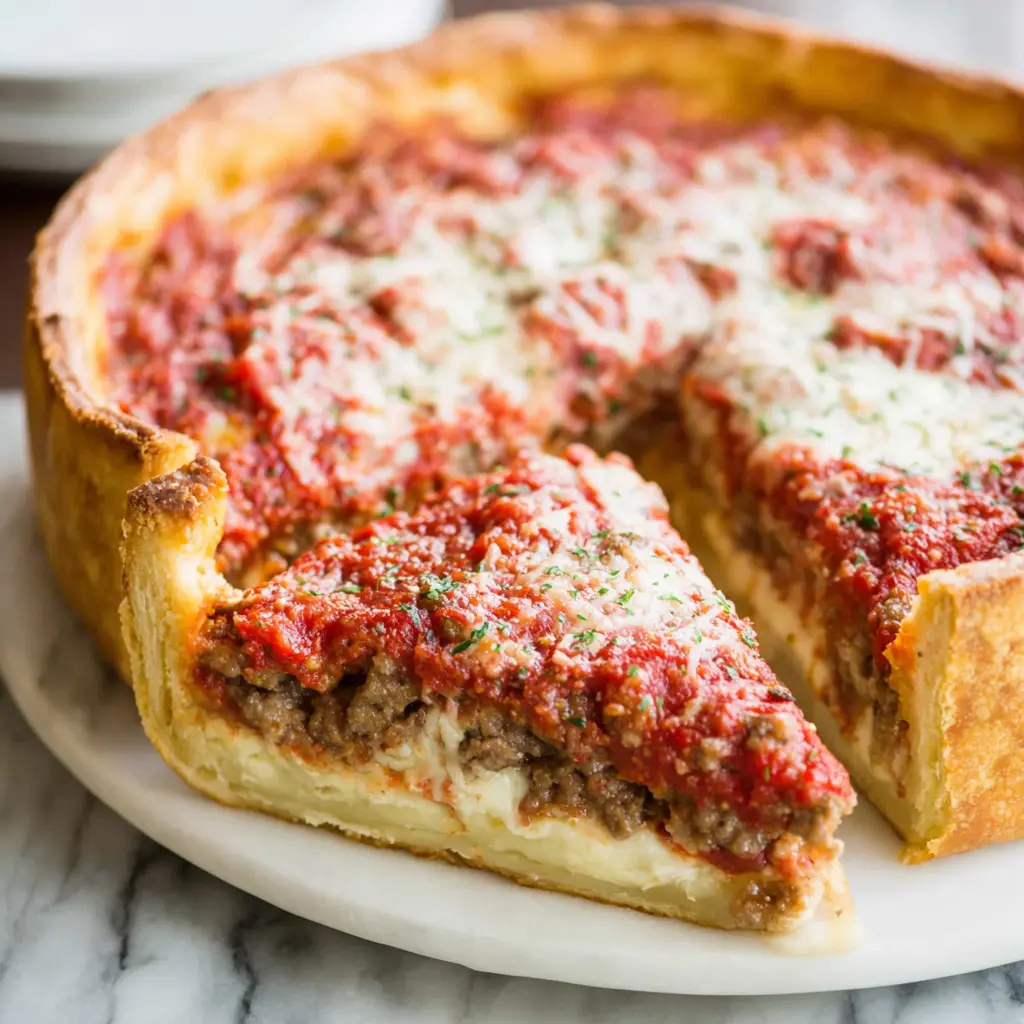
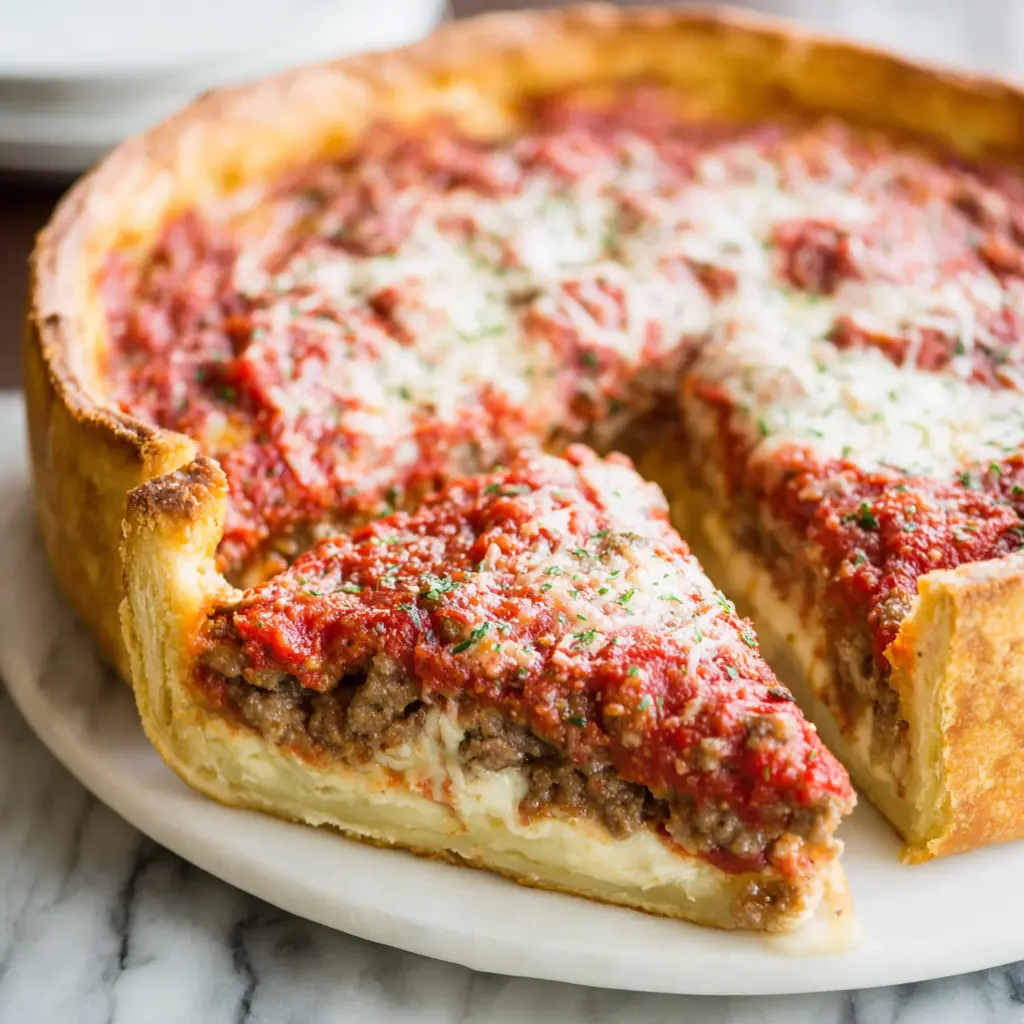
Classic Chicago Style Deep Dish Pizza with a Buttery, Flaky Crust
Ingredients
Method
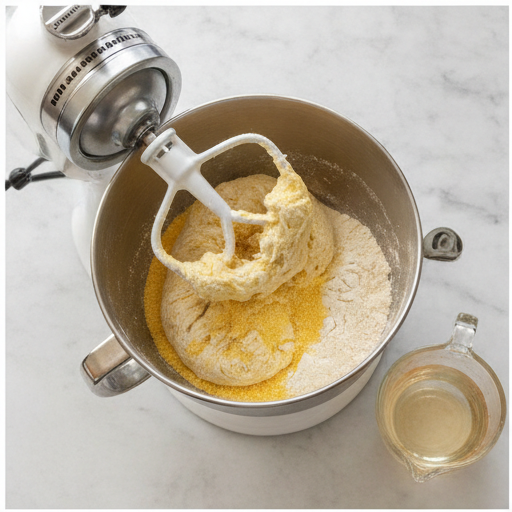
- In the bowl of a stand mixer fitted with the dough hook, combine the flour, cornmeal, yeast, sugar, and salt. Mix on low speed until blended.
- Add the warm water and 3 tablespoons of melted butter. Mix on low until combined, about 1 to 2 minutes. Scrape down the sides of the bowl, then increase speed to medium and knead until the dough is shiny, smooth, and pulls away from the sides of the bowl, about 4 to 5 minutes.
- Coat a large bowl with 1 teaspoon of olive oil. Transfer the dough to the bowl, turning to coat. Cover with plastic wrap and let rest at room temperature until nearly doubled in size, about 1 hour.
- While the dough rises, heat 1 tablespoon olive oil and 1 tablespoon butter in a medium saucepan over medium heat. Add the minced red onion, crushed red pepper flakes, Italian seasoning, salt, and pepper. Cook, stirring frequently, until the onion is softened, about 5 minutes.
- Add the minced garlic and cook until fragrant, about 30 seconds. Stir in the crushed tomatoes and sugar. Bring to a simmer, then reduce heat to medium-low and cook, stirring occasionally, until the sauce thickens to about 2 1/2 cups, about 30 minutes.
- Remove from heat and stir in the chopped basil and remaining 1 tablespoon olive oil. Taste and adjust salt if needed. Cover and set aside.
- Adjust the oven rack to the lowest position and preheat the oven to 425°F. Turn the risen dough out onto a clean countertop. Roll it into a 15 by 12-inch rectangle.
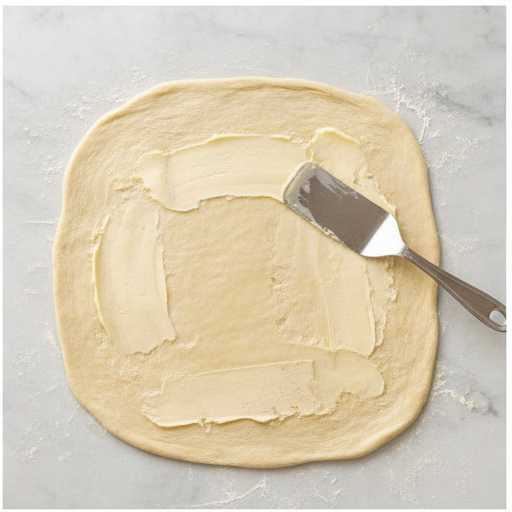
- Using an offset spatula, spread the 4 tablespoons of softened butter over the dough, leaving a 1/2-inch border along the edges. Starting at the short end, tightly roll the dough into a cylinder. With the seam side down, flatten the cylinder into an 18 by 4-inch rectangle. Cut the rectangle in half crosswise.
- Working with one half at a time, fold the dough into thirds like a business letter. Pinch the seams together to form a ball. Repeat with the remaining half. Place both balls in the oiled bowl, cover tightly with plastic wrap, and refrigerate until nearly doubled in size, 45 to 50 minutes.
- While the dough chills, cook the Italian sausage in a large nonstick skillet over medium-high heat, breaking it into crumbles. Cook until browned and cooked through, then drain well and set aside.
- Coat two 9-inch cast iron skillets or round cake pans with 1 1/2 tablespoons of olive oil each.
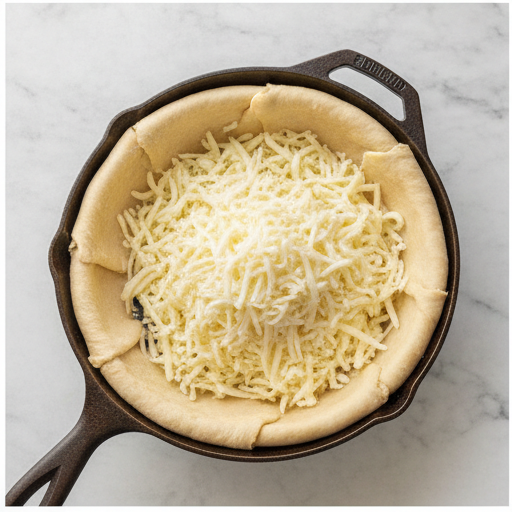
- On a clean countertop, roll one dough ball into a 13-inch round disk about 1/4-inch thick. Roll the dough loosely around the rolling pin and transfer to one of the prepared skillets. Gently press the dough into the pan, working it into the corners and up the sides about 1 inch. If the dough resists, let it rest for 5 minutes before continuing. Repeat with the remaining dough ball.
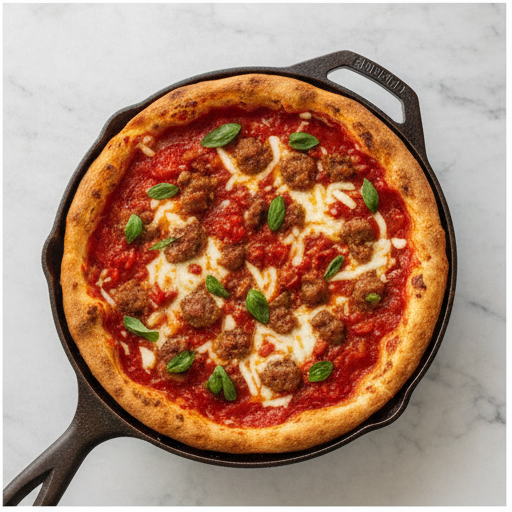
- Sprinkle each pizza with 2 cups of shredded mozzarella. Divide the sauce evenly between the two pizzas, spreading it with the back of a spoon over the cheese. Divide the cooked Italian sausage between the pizzas, scattering it over the sauce. Top with the sliced olives and then the grated Parmesan.
- Bake until the crust is golden brown, about 20 to 30 minutes. If the top browns too quickly, tent the pizzas with foil. Remove from the oven and let cool for 10 minutes before slicing and serving.
Nutrition
Notes
Tried this recipe?
Let us know how it was!Why This Butter-Laminated Crust Works
I still remember my first bite of real Chicago style deep dish pizza. I was visiting a friend in Lincoln Park, and she dragged me to this little spot that looked like it hadn’t been updated since the 70s. I was skeptical, honestly. But then that slice arrived, and it was like nothing I’d ever had before. The crust wasn’t just a vehicle for toppings. It was flaky, almost like a really good biscuit, but sturdy enough to hold a mountain of cheese and sauce without collapsing.
That’s the thing about authentic deep dish. It’s not just a thick pizza. It’s a whole different animal. The crust needs to be buttery, slightly crisp on the outside, and tender on the inside. And the secret to getting that texture at home? Butter lamination. Same technique you’d use for croissants, just simplified. You roll the dough out, spread softened butter all over it, then fold it up like a letter. That butter creates little steam pockets in the oven, giving you those delicate, flaky layers.
Most recipes skip this step. They just press dough into a pan and call it a day. But that’s how you end up with a dense, bready crust that’s more like focaccia than proper Chicago pizza. Trust me, the extra few minutes of work are absolutely worth it.
Tips for Perfect Chicago Deep Dish Pizza
Before we get into the nitty-gritty, here are a few things I’ve learned the hard way. I’ve made this recipe maybe a dozen times now, and these tips are the difference between a good pizza and one that makes people close their eyes on the first bite.
- Let the dough rest before rolling. If you try to roll it straight out of the fridge, it’ll snap back like a rubber band. Give it 10 minutes at room temperature, and it’ll behave much better.
- Roll it wider than you think you need. The dough will shrink a bit when you press it into the pan. Aim for a 13-inch round for a 9-inch pan, so you have enough to climb up the sides.
- Use low-moisture mozzarella. Fresh mozzarella is great for caprese salads, but it’ll make your pizza watery. Part-skim, low-moisture mozzarella is the way to go here.
- Par-bake the crust. Well, sort of. This recipe uses a hot oven and a preheated pan to help the crust set quickly. The key is making sure the bottom gets golden before the top burns.
- Let it rest before slicing. I know, I know. You want to dig in immediately. But if you cut into it too soon, all that beautiful sauce and cheese will gush out. Give it a solid 10-15 minutes.
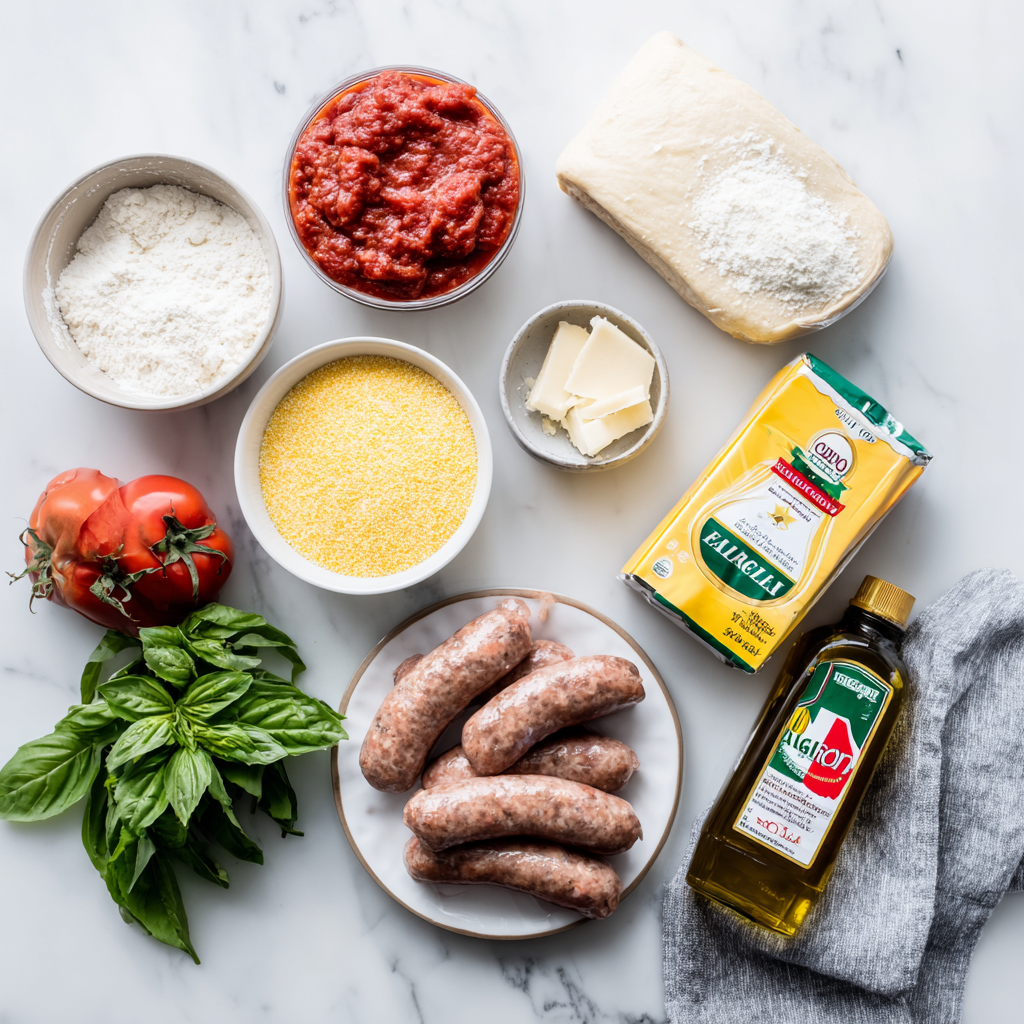
Ingredients for Chicago Style Deep Dish Pizza
The ingredient list might look long, but it’s mostly pantry staples. Here’s what you’ll need, broken down by component. I’ve included a few notes on substitutions where they actually work.
For the Dough
The base of any good deep dish pizza dough recipe starts with a mix of all-purpose flour and yellow cornmeal. The cornmeal gives the crust that distinctive texture and a subtle sweetness. You’ll also need rapid rise yeast, which cuts down on rising time. And butter. Lots of butter. Seven tablespoons total, but three go into the dough and four get used for lamination.
For the Sauce
This isn’t your typical pizza sauce. It’s chunkier, more like a thick tomato soup. You start by sautéing red onion and garlic in olive oil and butter, then add crushed tomatoes and let it simmer until it reduces. The key is using no-salt-added crushed tomatoes so you can control the seasoning yourself. Fresh basil at the end brightens everything up.
For the Toppings
Classic deep dish is all about the layering. Cheese goes directly on the dough, then toppings, then sauce on top. For this version, I use Italian sausage (casings removed, crumbled and cooked), sliced black olives, part-skim mozzarella, and a sprinkle of Parmesan. The sausage needs to be cooked beforehand since it won’t get enough direct heat to cook through otherwise.
Ingredient Swaps That Work
Gluten-free: Use a gluten-free all-purpose flour blend that contains xanthan gum. The texture will be slightly different, but it still works great.
Vegetarian: Skip the sausage and load up on sautéed mushrooms, bell peppers, and spinach. Just make sure to cook off the moisture first.
Cheese lovers: Add a few dollops of ricotta or some provolone slices along with the mozzarella.
How to Make Chicago Deep Dish Pizza
Alright, let’s walk through this. I’ll break it into four main stages so it feels manageable. Take your time with each one, and you’ll be rewarded with a pizza that rivals anything from a Windy City pizzeria.
Stage 1: Make the Dough
Start by combining the flour, cornmeal, yeast, sugar, and salt in a stand mixer fitted with the dough hook. Give it a quick mix on low to distribute everything evenly. Then add warm water (about 110°F) and 3 tablespoons of melted butter. Mix on low until it comes together, then crank it up to medium and knead for about 4 to 5 minutes. You’re looking for a dough that’s smooth, shiny, and pulls away from the sides of the bowl. It should feel soft and supple, not sticky. Transfer it to an oiled bowl, cover with plastic wrap, and let it rise until nearly doubled. That takes about an hour.
Stage 2: Make the Sauce While the Dough Rises
This is where you can multitask. While the dough is doing its thing, heat olive oil and butter in a saucepan. Add minced red onion, crushed red pepper flakes, Italian seasoning, salt, and pepper. Cook until the onion softens, about 5 minutes. Then add minced garlic and cook for 30 seconds until it smells amazing. Stir in the crushed tomatoes and a teaspoon of sugar to balance the acidity. Let it simmer on medium-low for about 30 minutes, stirring occasionally, until it thickens to about 2 1/2 cups. Finish with fresh basil and a drizzle of olive oil. Set it aside.
Stage 3: Laminate the Dough and Prep the Sausage
Once the dough has risen, turn it out onto a clean counter. Roll it into a 15 by 12-inch rectangle. Using an offset spatula, spread the 4 tablespoons of softened butter over the dough, leaving a half-inch border. Starting at the short end, roll it up tightly into a cylinder. Flatten it into an 18 by 4-inch rectangle, then cut it in half crosswise. Working with one half at a time, fold it into thirds like a business letter. Pinch the seams to form a ball. Place both balls back in the oiled bowl, cover, and refrigerate for 45 to 50 minutes. While they chill, cook the Italian sausage in a skillet until browned, then drain and set aside.
This lamination step is what gives the crust those beautiful flaky layers. It’s a little extra work, but I promise it makes a huge difference.
Stage 4: Assemble and Bake
Preheat your oven to 425°F with the rack on the lowest position. Coat two 9-inch cast iron skillets or round cake pans with olive oil. Roll one dough ball into a 13-inch round, about 1/4-inch thick. Transfer it to a skillet and gently press it into the corners and up the sides about an inch. If it resists, let it rest for 5 minutes. Repeat with the second ball.
Now for the layering. This is crucial. Cheese goes first. Sprinkle each pizza with 2 cups of shredded mozzarella. Then spread the sauce over the cheese with the back of a spoon. Scatter the cooked sausage and sliced olives on top, then finish with grated Parmesan. Bake for 20 to 30 minutes, until the crust is golden brown. If the top browns too quickly, tent with foil. Let it cool for 10 minutes before slicing.
Variations and Topping Ideas
Once you’ve mastered the basic recipe, feel free to experiment. The authentic deep dish ingredients are flexible, and Chicago pizzerias offer tons of variations. Here are some of my favorites:
- Meat Lovers: Add cooked ground beef, sliced pepperoni, and cooked Italian sausage. Just make sure any meat is fully cooked before it goes in the oven.
- Veggie Delight: Sauté mushrooms, bell peppers, red onions, and spinach until most of the moisture has evaporated, then layer them on top of the cheese.
- Spicy Kick: Increase the crushed red pepper flakes in the sauce, or add sliced fresh jalapeños on top.
- Herb Infused: Mix some chopped fresh basil or rosemary into the dough before kneading for an aromatic boost.
- Cheese Explosion: Add dollops of ricotta or slices of provolone along with the mozzarella.
Make Ahead and Storage Tips
One of the best things about this recipe is how well it works for meal prep. You can make the sauce and cook the sausage up to a day ahead and keep them in the fridge. The dough can be made ahead too. After kneading, refrigerate it overnight and let it come to room temperature before rolling.
For storing leftovers, wrap individual slices in plastic wrap, then aluminum foil, and freeze for up to 2 months. To reheat, thaw overnight in the fridge, then warm in a 350°F oven for about 15 minutes. If you’re reheating from frozen, go low and slow at 325°F for 20-25 minutes. The oven method is way better than the microwave, which will make the crust soggy.
Leftover pizza keeps in the fridge for up to 4 days in an airtight container. Just reheat in a skillet or the oven for best texture.
Troubleshooting Common Deep Dish Problems
Even after making this recipe a bunch of times, things can still go wrong. Here are the most common issues and how to fix them.
Common Mistakes and Solutions
❌ Dough keeps snapping back when rolling → ✅ Let it rest at room temperature for 10 minutes before rolling. The gluten needs to relax.
❌ Crust is pale and doughy → ✅ Bake 5 more minutes and make sure your oven is fully preheated. The lowest rack position helps the bottom cook.
❌ Pizza is soggy in the middle → ✅ You probably used fresh mozzarella or didn’t cook watery toppings first. Stick with low-moisture mozzarella.
❌ Sauce is too thin → ✅ Simmer it longer to reduce. It should be thick enough to hold its shape when spooned.
❌ Cheese is oily → ✅ Use part-skim mozzarella and make sure your oven temperature is accurate. Too low and the cheese renders out fat.
❌ Crust is too hard → ✅ You may have overbaked or used too much flour. Check your oven temperature with a thermometer.
❌ Dough isn’t rising → ✅ Check your yeast expiration date and make sure the water was warm (around 110°F), not hot. Yeast dies above 130°F.
Frequently Asked Questions
What to Serve with Deep Dish Pizza
Deep dish pizza is a meal in itself, but a few simple sides can round it out nicely. Since we’re in the middle of summer, I like to keep things light and fresh.
- Crisp green salad with a zesty vinaigrette to cut through the richness.
- Roasted vegetables like zucchini, bell peppers, and cherry tomatoes tossed in olive oil and herbs.
- Garlic breadsticks if you want to go all-in on the carb fest.
- Sparkling water with lemon or iced tea for a refreshing drink.
And for dessert? A simple chocolate lava cake or some fresh summer berries with whipped cream. Because after all that pizza, you deserve a treat.
I really hope you give this recipe a try. It’s a project, sure, but it’s the kind of cooking that fills your kitchen with the most incredible aromas and makes everyone who takes a bite go quiet for a second. That’s the sign of a good pizza. If you make it, tag me on social media or drop a comment below. I’d love to see how it turns out. And if you’re looking for more inspiration, come hang out with me on Pinterest where I’m always pinning new recipes and ideas.
Source: Nutritional Information
What makes a Chicago deep dish pizza?
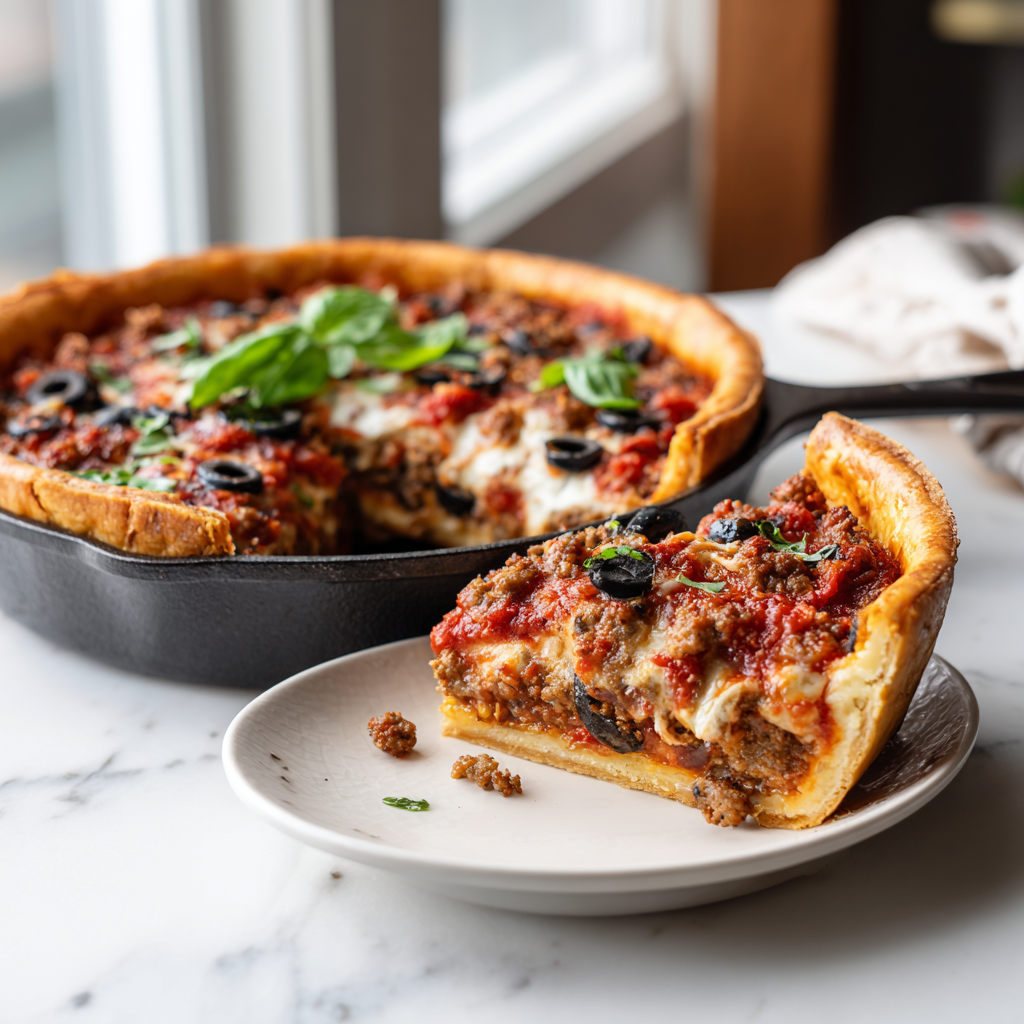
A Chicago style deep dish pizza is defined by its tall, flaky, buttery crust that’s pressed into a deep pan, with cheese layered directly on the dough, toppings in the middle, and a chunky tomato sauce spread on top. It’s baked until the crust is golden and the cheese is melted and gooey.
Can diabetics eat deep-dish pizza?
Deep dish pizza is higher in carbs and fat than thin crust, so portion control is key. For a diabetic-friendly version, consider a gluten-free crust or a smaller slice paired with a big salad. Always consult your doctor for personalized advice.
What is a grandma slice?
A grandma slice is a thin, rectangular pizza that originated on Long Island. It’s similar to Sicilian style but thinner and crispier, usually topped with mozzarella and a simple tomato sauce. It’s quite different from the tall, deep dish pizza we’re making here.
What kind of pizza for GERD?
For GERD, avoid acidic tomato sauce and fatty toppings. A white pizza with olive oil, low-fat cheese, and mild toppings like grilled chicken or vegetables is gentler on the stomach. Skip the spicy sausage and red pepper flakes in this recipe.
Why is Chicago Deep Dish pizza so good?
The magic is in the layers. A buttery, flaky crust that’s crisp on the outside and tender inside, a thick layer of gooey mozzarella, hearty toppings like Italian sausage, and a chunky, slightly sweet tomato sauce on top. Every bite has texture and flavor.
What are common deep-dish pizza mistakes?
The biggest mistakes are using fresh mozzarella (makes it watery), not par-cooking toppings, cutting the pizza too soon (causes gushing), and not letting the dough rest before rolling. Also, don’t skimp on greasing the pan or the crust won’t get crispy edges.
Will pizza raise your A1c?
Pizza, especially deep dish, can raise blood sugar due to its high carb content from the crust. The fat in the cheese and toppings can delay the spike, but it’s still best enjoyed in moderation. Pairing it with protein and fiber helps stabilize blood sugar.
What are the 5 worst foods for blood sugar?
Sugary drinks, white bread, white rice, sugary cereals, and fruit juice concentrate are among the worst. Deep dish pizza is also high in refined carbs, so it’s best to limit portion size and pair with vegetables and protein.
What is the best pizza for a Type 2 diabetic?
A thin crust pizza with a cauliflower or whole wheat base, low-fat cheese, lots of vegetables, and lean protein like grilled chicken is best. Avoid thick, buttery crusts and sugary sauces. Portion control is essential.
Does the $1 slice still exist?
In some cities like New York, you can still find $1 slices at certain pizzerias, though prices have gone up in many places. Those are thin crust slices, not deep dish, which is always more expensive due to the ingredients and cooking time.
What does Sicilian slice mean?
A Sicilian slice is a thick, square pizza with a spongy, airy crust, usually topped with tomato sauce and cheese. It’s different from Chicago deep dish, which has a denser, flakier crust and is baked in a round pan with the sauce on top.
What pizza has no cheese on it?
That’s called a marinara pizza, or pizza without cheese. It’s a Neapolitan style with just tomato sauce, garlic, oregano, and olive oil. Very different from the cheese-heavy Chicago style deep dish pizza we’re making here.
What food cancels out acid reflux?
Foods like oatmeal, ginger, melon, bananas, and green vegetables can help neutralize stomach acid. Avoid trigger foods like spicy tomato sauce, fatty meats, and fried foods, which are all present in traditional deep dish pizza.
What pizza is easy on the stomach?
A white pizza with olive oil, low-fat mozzarella, and mild toppings like cooked chicken or mushrooms is easier to digest. Skip the spicy sauce, heavy sausage, and acidic tomatoes. A thin, well-baked crust is also gentler than a thick, doughy one.
Can I eat pizza while on omeprazole?
Omeprazole reduces stomach acid, but trigger foods can still cause discomfort. A low-acid pizza with a mild sauce, low-fat cheese, and non-spicy toppings is your best bet. Avoid the tomato-heavy sauce and spicy Italian sausage in this recipe.


2 Responses
I tried this recipe last night and while the flavor was great, my crust came out a bit too thick and doughy in the center. I followed the instructions exactly, but maybe I didn’t roll it thin enough? Any advice on getting that perfect thickness?
Hi Emily, thanks for giving it a try! For a lighter crust, aim to roll the dough to about 1/4-inch thick before pressing it into the pan. Also, make sure you’re pressing it evenly up the sides—thicker dough in the center can happen if it’s not spread well. Pre-baking the crust for 5-7 minutes before adding toppings can also help prevent a soggy middle. Hope that helps!