Why This Recipe Works
It’s August. The thermometer’s flirting with triple digits, and somehow you’re here, searching for a butternut squash apple soup recipe. I promise you’re not crazy.
Fall cravings hit early for a reason. The light’s changing, the days feel different, and your brain is already craving that cozy feeling. This soup is the fix. It’s sweet and savory at the same time, velvety smooth, and it makes your whole house smell like the best kind of autumn even when it’s 95 degrees outside.
My first attempt at butternut squash apple soup? I skipped the roasting step entirely. Dumped everything raw in a pot, boiled it, blended it. The result tasted like orange water. Thin, flat, honestly a little sad. Never again. Learn from me: roasting is everything.
Here’s why this recipe works:
- Roasting deepens the flavor. At 425°F, the natural sugars in the squash and apple caramelize. That brown color? That’s flavor. No browning, no depth. Simple science.
- The apple balances the squash. A tart Granny Smith adds brightness so the soup stays savory and complex, not cloyingly sweet.
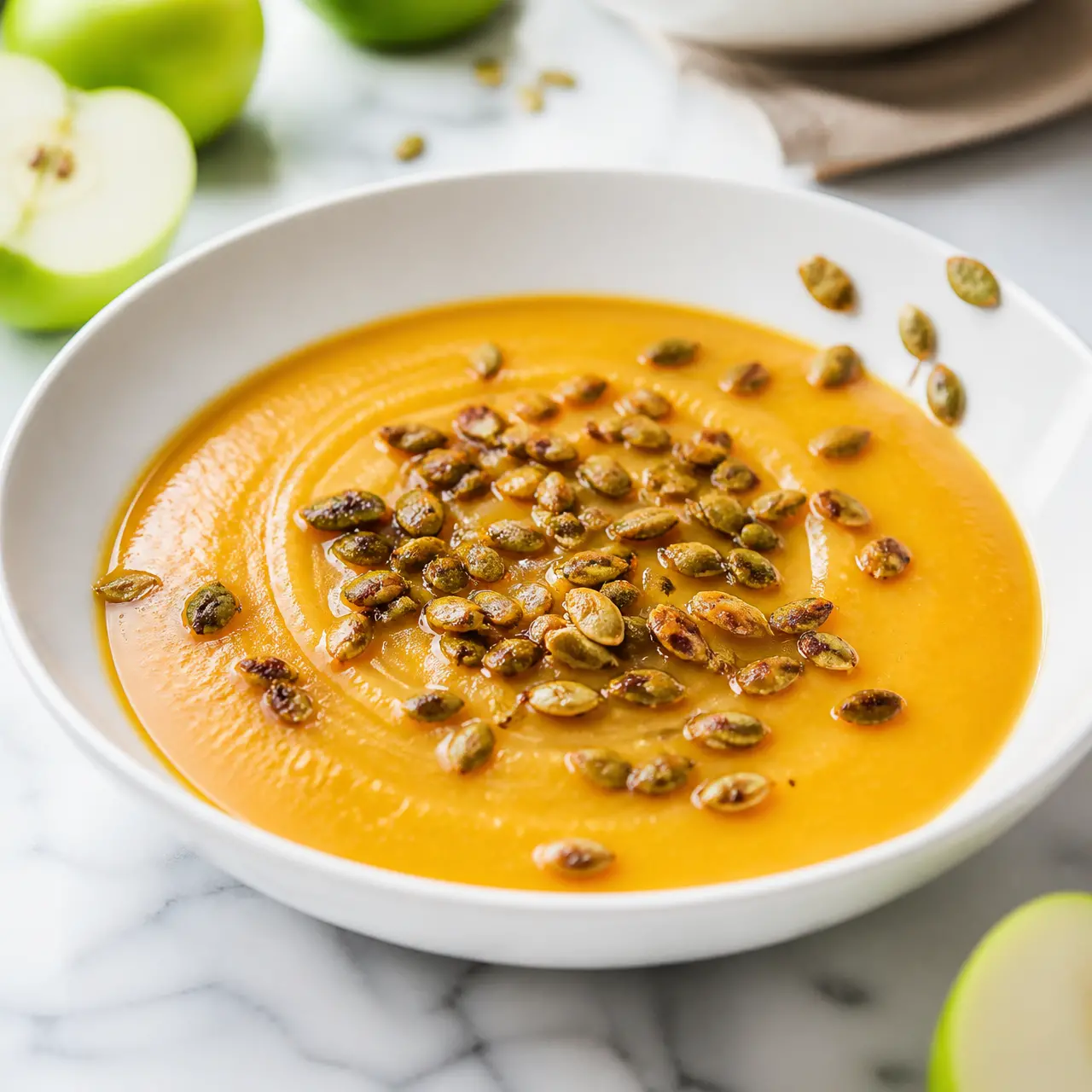
- The pumpkin seed topping is the hero. Smoky, lightly sweet, and crunchy. It turns a simple bowl into something you’d pay $14 for at a farm-to-table spot.
Plus, this is a vitamin A-rich soup. Butternut squash is packed with beta-carotene, and apples bring fiber and antioxidants. Comfort food that’s actually good for you. This soup is ridiculously forgiving, and with the right technique you literally can’t mess it up.
How to Roast Butternut Squash
The soul of this roasted butternut squash apple soup lives in the oven. Roasting does something boiling never can: it concentrates sweetness and builds layers of savory richness.
Butternut Squash Peeling Hack
Trust me on this: if you dread wrestling a raw squash, cut it in half, scoop the seeds, rub the flesh with a little olive oil, and roast it cut-side down until tender. The skin practically slips off afterward. You’ll never wrestle a raw squash again. For this recipe, though, peeling and cubing first gives you more caramelized surface area, which means more flavor in every spoonful. Both paths lead to a great soup.
A few things I’ve learned about roasting squash the right way:
- Cut the cubes evenly. Aim for about 1 to 1.5 inches. Uniform pieces cook at the same speed, so you don’t end up with mushy bits next to crunchy ones.
- Don’t crowd the pan. If the vegetables are packed in tight, they’ll steam instead of roast. Space them out. That’s the difference between caramelized and soggy.
- Flip once at the 20-minute mark. You’ll see the edges turning golden brown, and around minute 20 your kitchen starts to smell like fall. That smell is the exact reason I started making this soup in the first place.
- Roast until truly tender. The recipe calls for 35 to 40 minutes at 425°F. When a fork slides through the squash with zero resistance, you’re there.
How to Make Roasted Butternut Squash Apple Soup
Once your roasting game is solid, the rest of this creamy butternut squash apple soup comes together fast. You’ll need your roasted vegetables, some good broth, and a blender. That’s it.
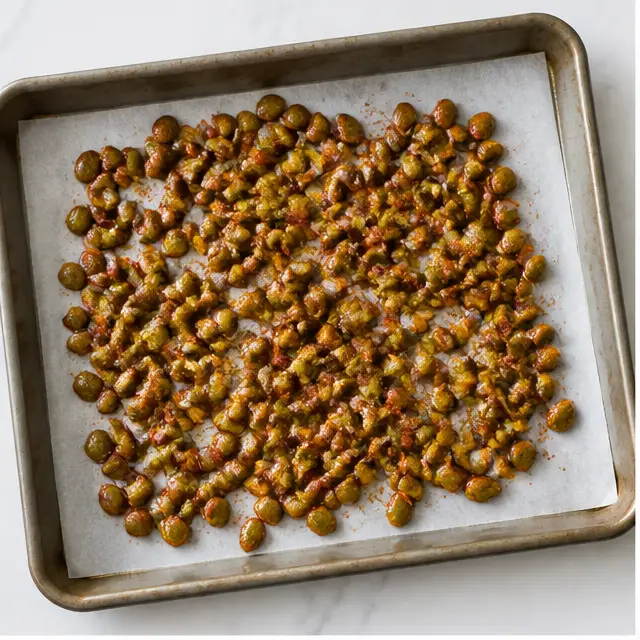
1. Toast the Pumpkin Seeds
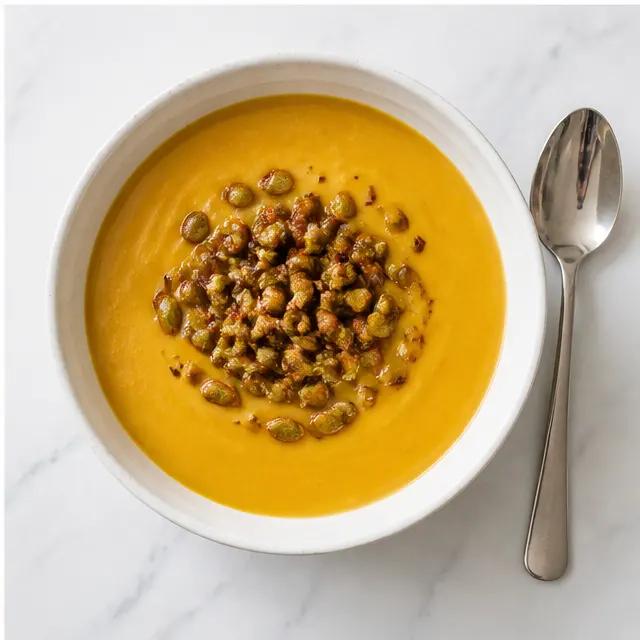
Get the topping going first. Toss the pumpkin seeds with brown sugar, salt, paprika, and olive oil, then bake at 350°F for 10 minutes, stirring once. You’ll smell them turning nutty and sweet around minute 8, and that’s when it gets real. Set them aside to cool. They crisp up as they rest, and you want that crunch.
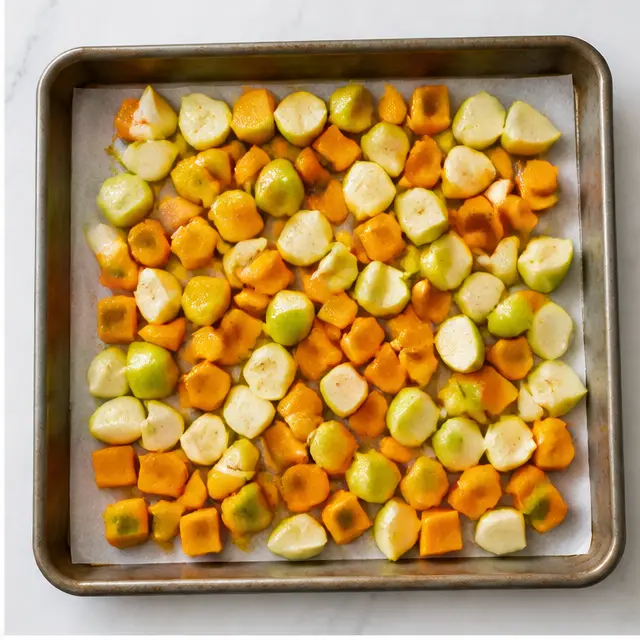
2. Roast the Vegetables
Crank the oven to 425°F and line a big baking sheet with parchment. Toss the cubed butternut squash, apple chunks, chopped onion, olive oil, salt, pepper, and garlic powder until everything’s coated. Spread it in one layer, then roast for 35 to 40 minutes, flipping once halfway. You’re looking for deep golden edges, especially on the onion and apple. That caramelized color is your ticket to a soup that tastes like it simmered all day.
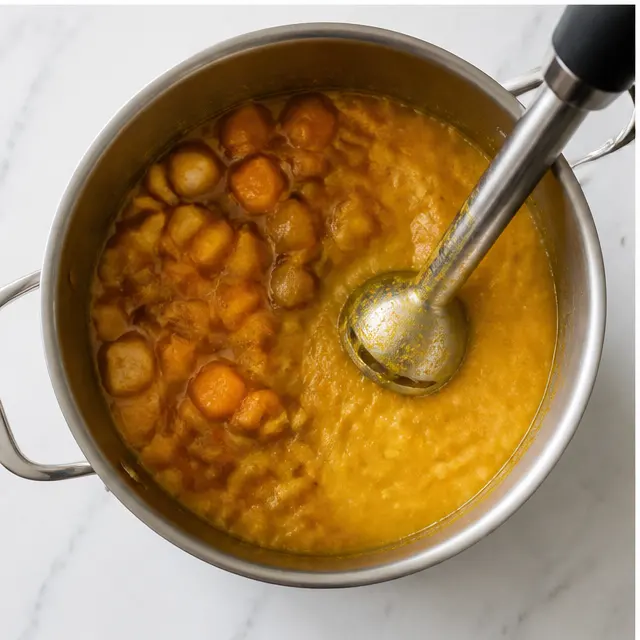
3. Simmer and Blend
Transfer the roasted vegetables to a large pot. Pour in 3 1/2 cups of low-sodium chicken broth and bring it to a gentle simmer for 15 minutes. That short simmer lets all those browned bits soften into the liquid. Then puree until silky. An immersion blender makes this dangerously easy, just move it around until the soup is glossy. Using a standard blender? Fill it only halfway, cover the lid with a kitchen towel, and start on low. Hot soup splatters are a thing you don’t want on your ceiling.
4. Season and Serve
Now it’s yours. Taste the finished butternut squash apple soup and season with extra salt and pepper. Want it thinner? Stir in the remaining cup of broth. Warm everything over low heat for 5 minutes, then ladle it into bowls and shower it with that pumpkin seed crunch. Silky soup plus crispy topping equals the kind of meal people request every year.
Common mistakes to sidestep:
- ❌ Crowding the baking sheet → ✅ Spread vegetables in a single layer so they roast, not steam.
- ❌ Using too much broth → ✅ Start with 3 1/2 cups and add more only after blending.
- ❌ Blending hot soup in a full blender → ✅ Fill halfway, cover the lid with a towel, start on low.
- ❌ Skipping the roasting step → ✅ Roasting caramelizes the sugars. That’s where the flavor lives.
- ❌ Underseasoning → ✅ Taste at the end and add salt gradually. The apple and squash need it to shine.
Recipe Variations
One of the best things about this butternut squash and apple soup is how easy it is to make your own. Here are some tried-and-true swaps:
- Vegan: Swap the chicken broth for vegetable broth, and you’re there. Everything else is already plant-based.
- Dairy-free: It already is one. No cream in the base and the topping is completely dairy-free. If you want extra richness, stir in a splash of coconut milk after blending, though honestly it doesn’t need it.
- Different apples: Granny Smith gives the perfect tart balance, but a Honeycrisp, Fuji, or Gala works beautifully if you prefer it sweeter. Skip mealy varieties like Red Delicious.
- Different squash: Sweet potato or acorn squash can step in. Just adjust the roasting time and watch for tenderness.
- Chunky texture: Puree about three quarters of the soup, then stir the rest in for a rustic bowl.
- Extra creamy: A splash of heavy cream or coconut milk after blending gives it a velvety finish that feels extra indulgent.
Storage & Make-Ahead Tips
This soup was born for busy weeks. Here’s how to keep it tasting fresh:
- Fridge: Store in an airtight container for up to 4 days. The flavors actually get better overnight.
- Freezer: Cool completely, then pour into a freezer-safe container. It freezes beautifully for up to 3 months. Thaw overnight in the fridge.
- Reheating: Warm gently on the stovetop over medium-low heat, stirring occasionally. If it’s thickened, add a splash of broth or water.
- The topping: Keep the pumpkin seeds in a separate airtight container. They stay crunchy for up to a week. Always add them right before serving, never earlier.
This is the ultimate make-ahead soup. When the heat finally breaks and you need something warm in ten minutes, future you will be very grateful.
Serving Suggestions
This butternut squash apple soup is a meal on its own in a big bowl, but it also plays nicely with others. Some favorite pairings:
- Crusty bread or a grilled cheese sandwich. Soup and toast, a love story.
- A simple green salad with bright vinaigrette to balance the sweet-savory richness.
- A drizzle of olive oil or a swirl of coconut milk on top for extra polish.
- Croutons or crumbled goat cheese if you like playing with texture and tang.
- Extra pepitas over each bowl, because the crunch is the best part.
Serve it as a starter for a dinner party or as the main event with a big sandwich on the side. That golden-orange bowl will make the whole kitchen feel like fall, even in August.
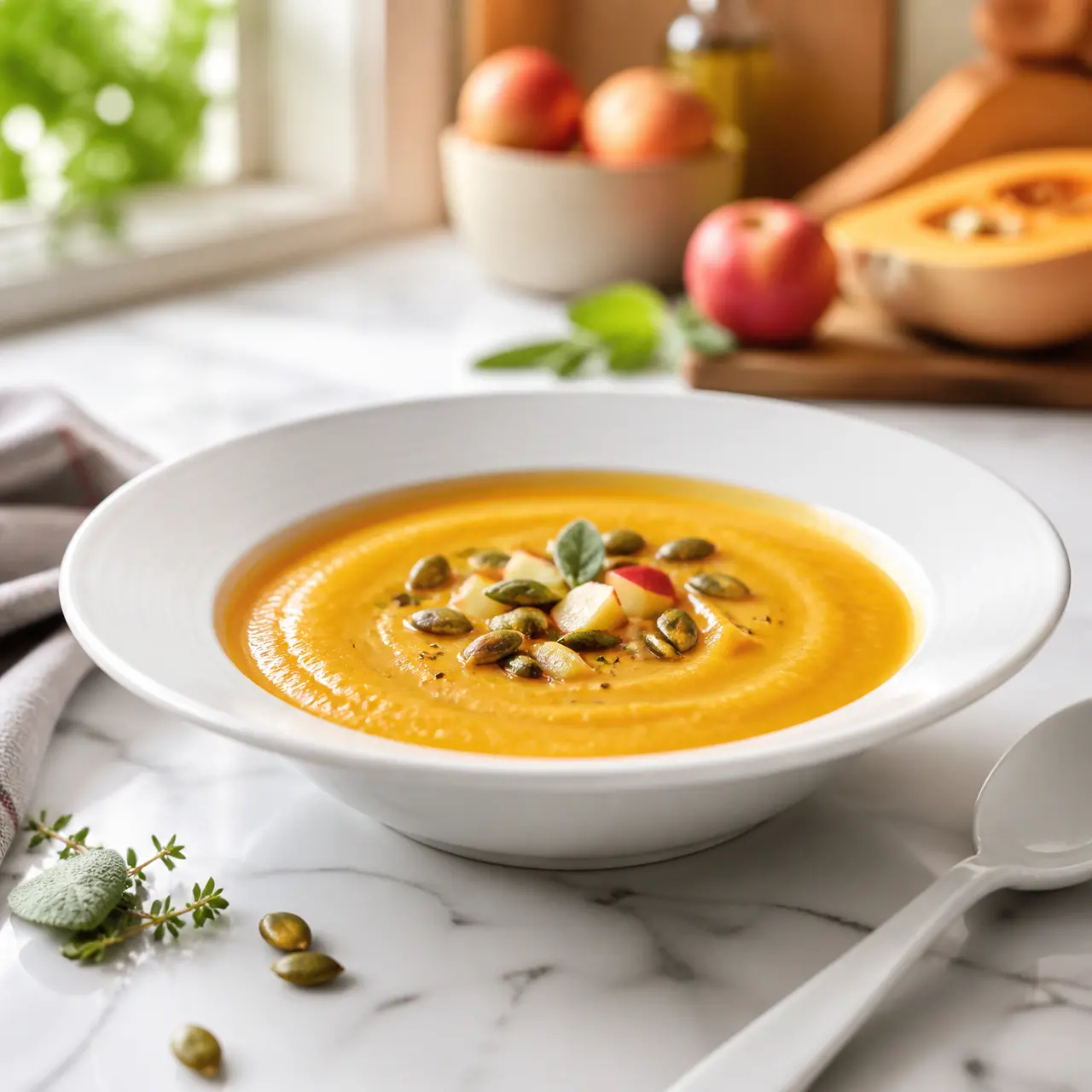
There it is. A velvety, glossy butternut squash apple soup that tastes like it came from a farm-to-table restaurant, made right in your own kitchen. Make it now and freeze a batch for the first truly cool evening. You’ll be glad you did.
If you love make-ahead soups and cozy fall recipes, I’m over on Pinterest curating all my favorite fall soup recipes. And when you make this, tag me or just text me a photo. I want to see that beautiful orange bowl.
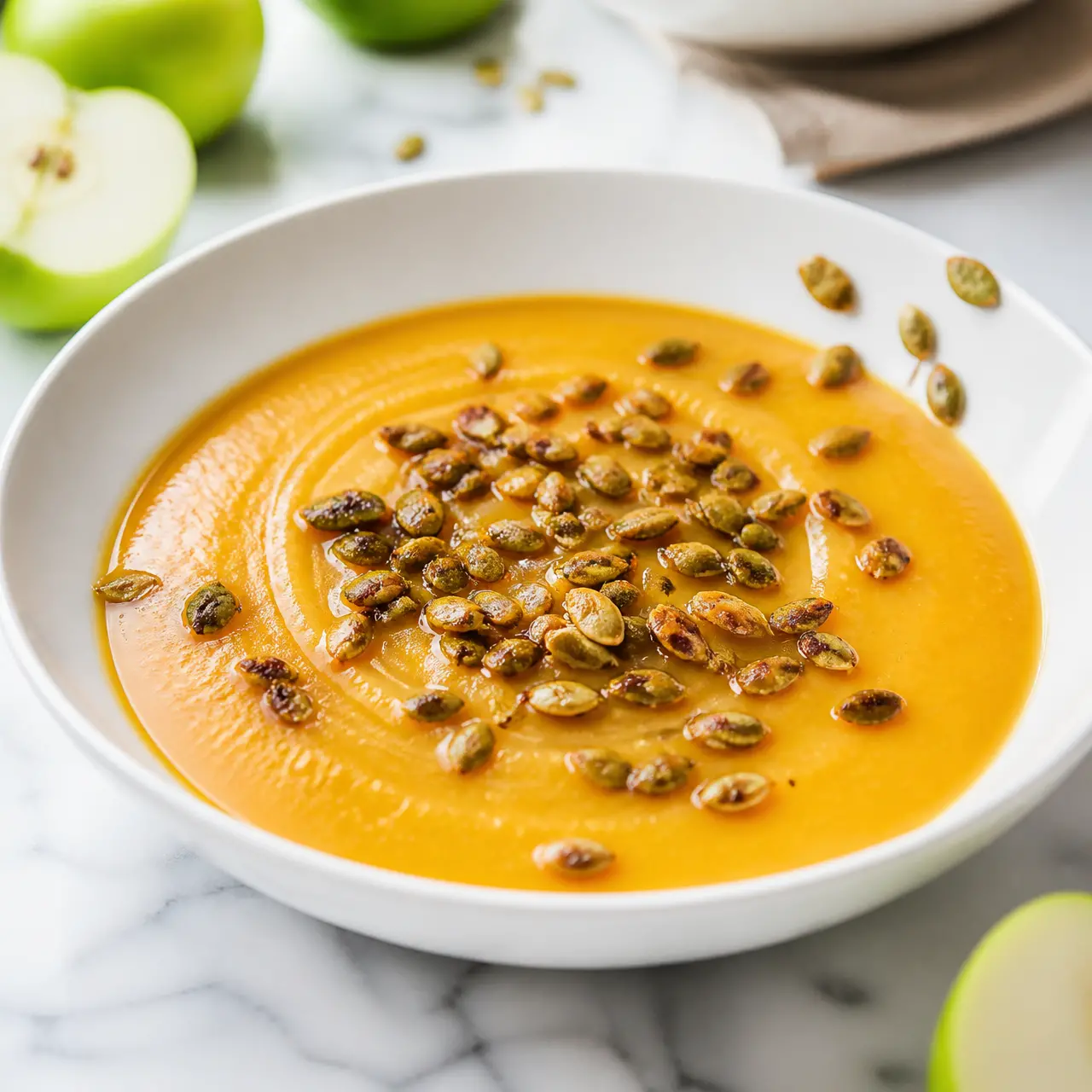
Roasted Butternut Squash Apple Soup with Pumpkin Seed Crunch
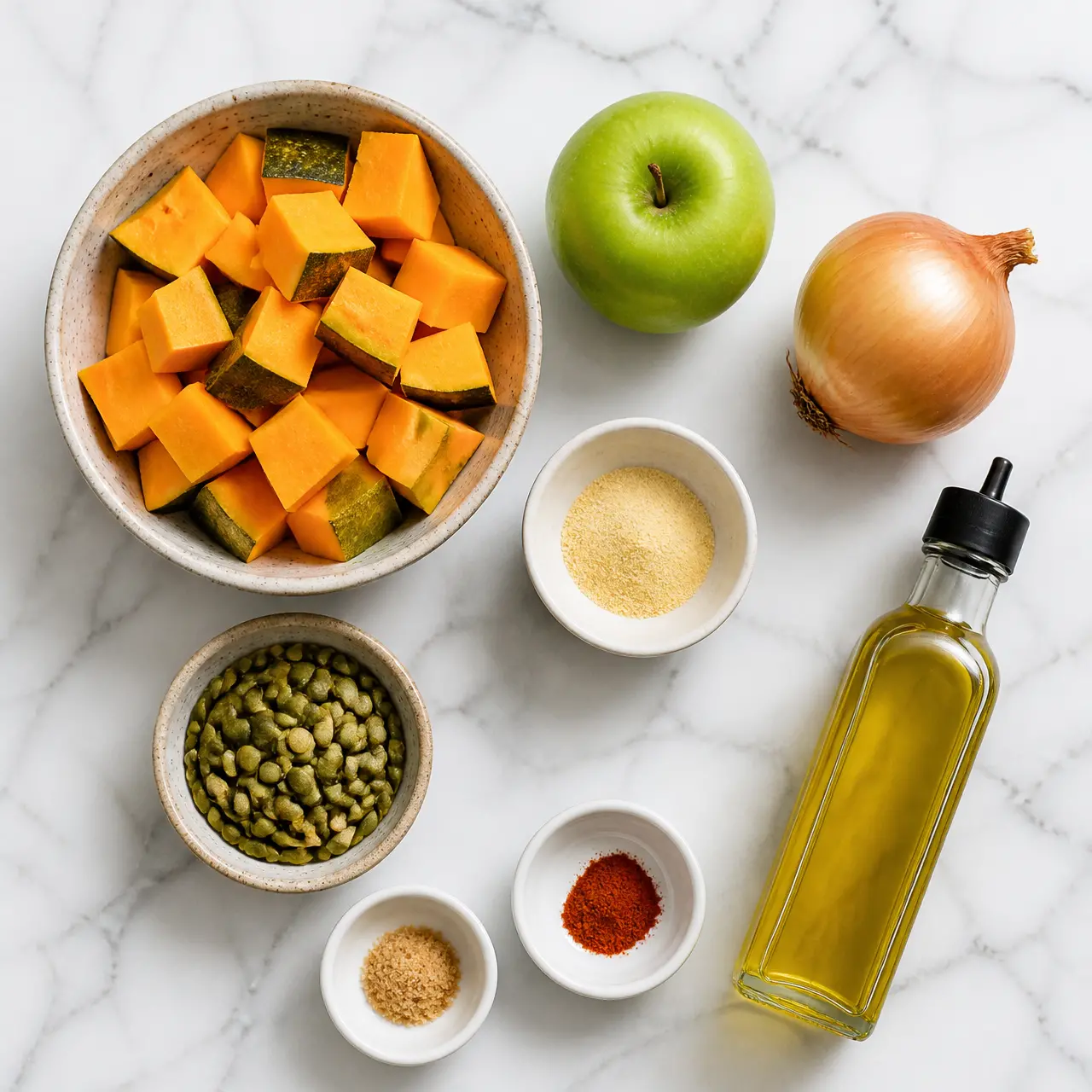
Ingredients
Method
- Heat the oven to 350F. In a small bowl, toss the pumpkin seeds with brown sugar, salt, paprika, and olive oil. Spread on a baking sheet and bake for 10 minutes, stirring once. Set aside.
- Raise the oven to 425F. Line a large rimmed baking sheet with parchment paper.
- On the sheet, toss the butternut squash, apple, onion, olive oil, salt, pepper, and garlic powder until evenly coated.
- Roast for 35 to 40 minutes, flipping the vegetables once at the 20 minute mark, until the squash is tender.
- Transfer the roasted vegetables to a large pot. Add 3 1/2 cups of chicken broth and bring to a simmer over medium-high heat. Lower the heat and simmer for 15 minutes.
- Remove the pot from the heat. Puree the soup with an immersion blender, or blend in batches in a countertop blender (see notes for safety).
- Season with extra salt and pepper. If you prefer a thinner soup, stir in the remaining broth.
- Warm the soup over low heat for 5 minutes. Ladle into bowls and top with the pumpkin seed mixture.
Nutrition
Notes
Tried this recipe?
Let us know how it was!Frequently Asked Questions
Source: Learn More About This Dish
What if I don’t want to make the pumpkin seed topping, are there other garnishes I could use?
Absolutely. A swirl of heavy cream or coconut milk, a drizzle of olive oil, some croutons, or even a little crumbled goat cheese all work great. The pumpkin seed topping adds a smoky-sweet crunch, but this soup is silky enough to shine with just about any garnish you love.
Can I freeze this butternut squash apple soup?
Yes, and it freezes beautifully. Let the soup cool completely, pour it into a freezer-safe container, and freeze for up to 3 months. Thaw overnight in the fridge, then reheat gently on the stovetop over medium-low heat, adding a splash of broth if it’s thickened.
Does this recipe work in a slow-cooker or instant pot?
You can, but you’ll trade away some caramelized flavor. Roast the vegetables first if you can, then transfer everything to a slow cooker and cook on low for 4 to 6 hours before blending. For an Instant Pot, roast first, then use the sauté function to simmer and blend right in the pot. Roasting is still the hero here.
Why is my roasted butternut squash soggy?
It’s almost always overcrowding. When the squash pieces are packed tight, they steam instead of roast, which leaves them soft and watery. Spread them in a single layer on a large baking sheet, roast at 425°F, and flip once at the 20-minute mark for the best texture.
Why does my butternut squash soup taste bitter?
Bitterness usually comes from over-roasted or slightly burnt spots, or from a squash that’s past its prime. Trim away any dark burnt edges before blending, start with fresh squash, and don’t skip the salt. Salt is what pulls all the sweet, savory notes forward.
What can I use to thicken butternut soup?
This soup is naturally thick from the roasted squash, so it usually doesn’t need help. If it’s thinner than you like, simmer it longer to reduce, or blend in a few extra roasted squash pieces. Skip flour and cornstarch, they’ll just muddy the clean flavor.