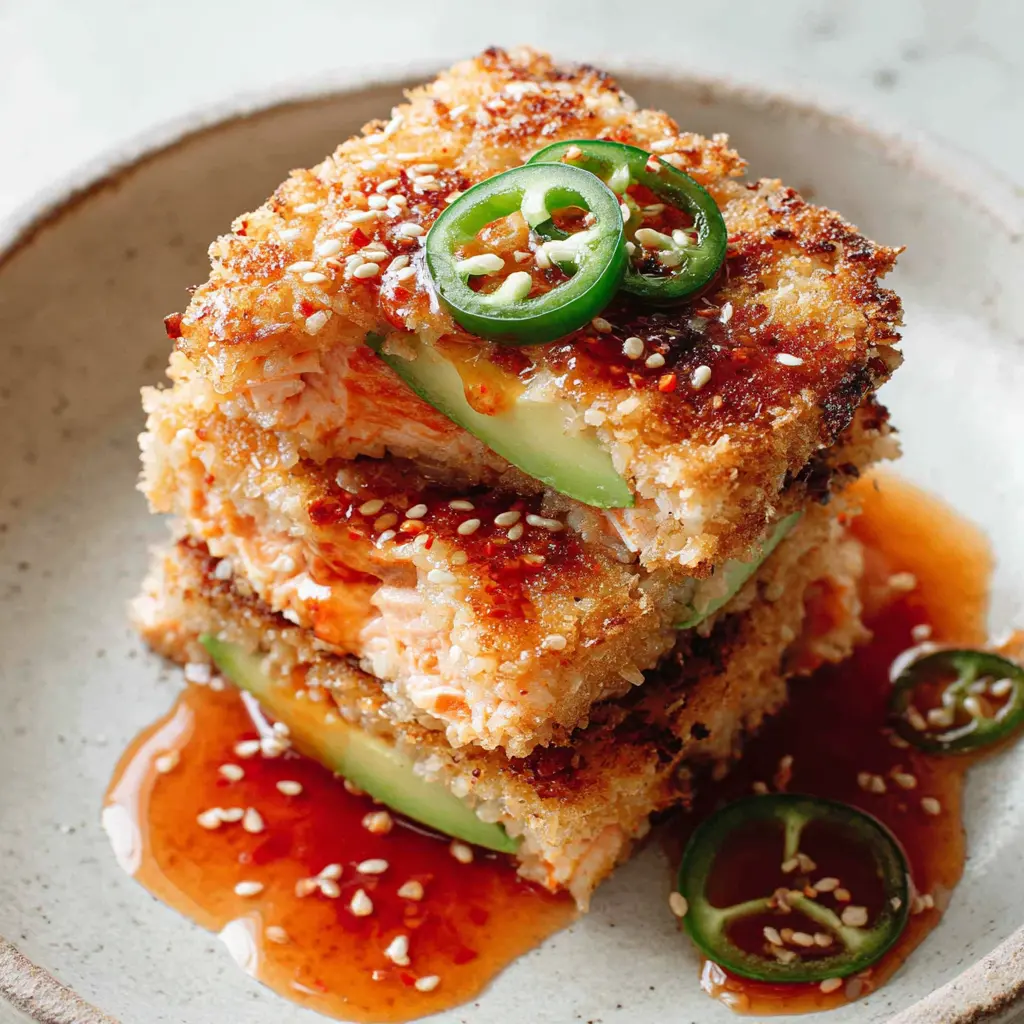
Spicy Salmon Crispy Rice Stack Recipe
Ingredients
Method
- Rinse and cook rice according to the package.
- While the rice is cooking, prepare the sushi vinegar. In a small saucepan, over medium-low heat, whisk together the rice vinegar, sugar, and kosher salt and heat until the sugar and salt have dissolved. Pour over the cooked rice and fan with a rice paddle to evenly coat the rice.
- Line an 8-by-8-inch baking pan with a piece of plastic wrap. Gently and evenly press the rice into the pan then cover with another piece of plastic wrap. The goal is an even layer that is bound together but not squished and mushy. Place the pan in the freezer for 3 hours to firm up.
- While the rice is chilling, make the spicy salmon mixture. Chop the salmon into small, ¼-inch cubes and place them in a bowl. Mix the salmon with the mayo, sriracha, soy sauce, 1 teaspoon toasted sesame oil, and green onion, and toss until well combined. Cover the bowl with plastic wrap and refrigerate until ready to use.
- Once the rice has firmed up enough to slice easily, cut into 18 rectangles, 6 columns by 3 rows.
- Set a wide-rimmed pan or pot over medium heat and fill with oil until about ½-inch depth. When hot, in three or more batches, fry the rice blocks until golden brown and crispy, about 1 to 2 minutes on each side. If the rice is browning too quickly, reduce the heat. Use a spider or a slotted spoon to remove the rice blocks and place them on a paper towel-lined plate to cool.
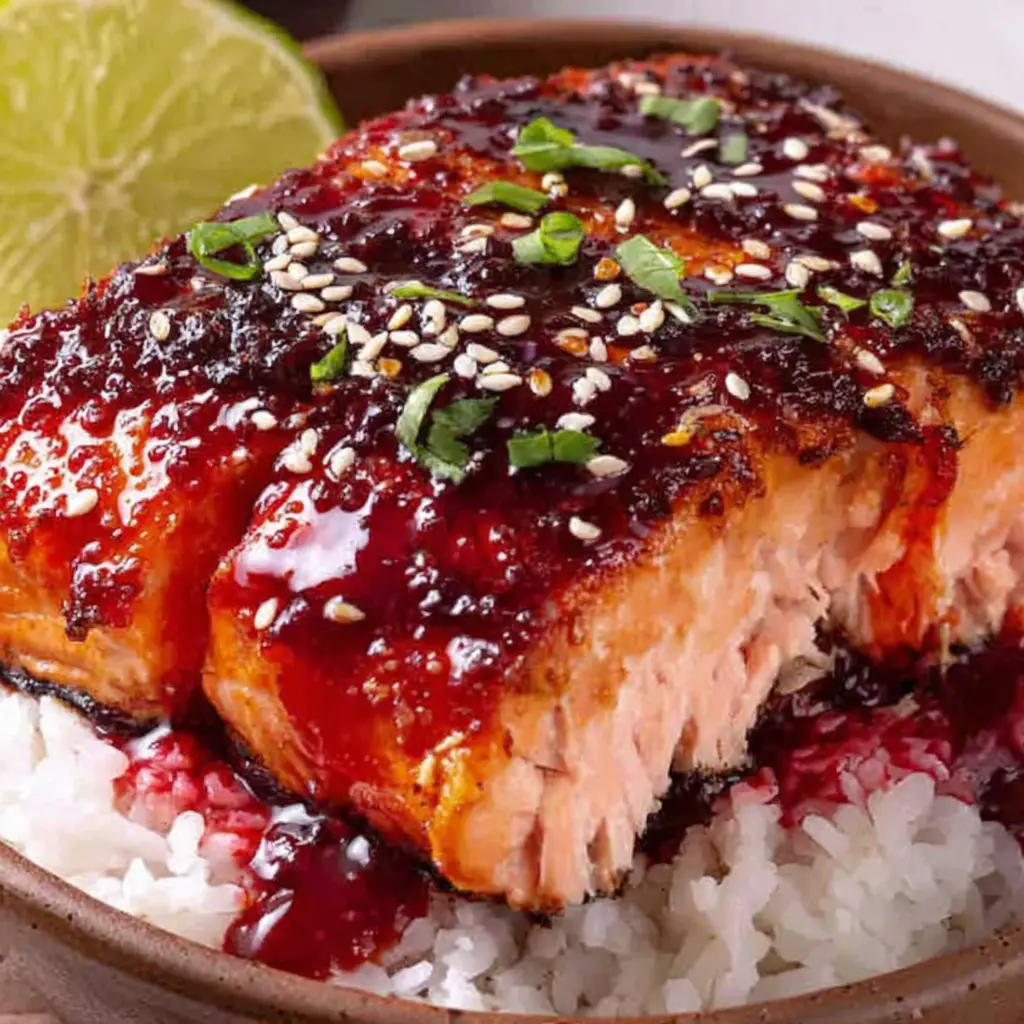
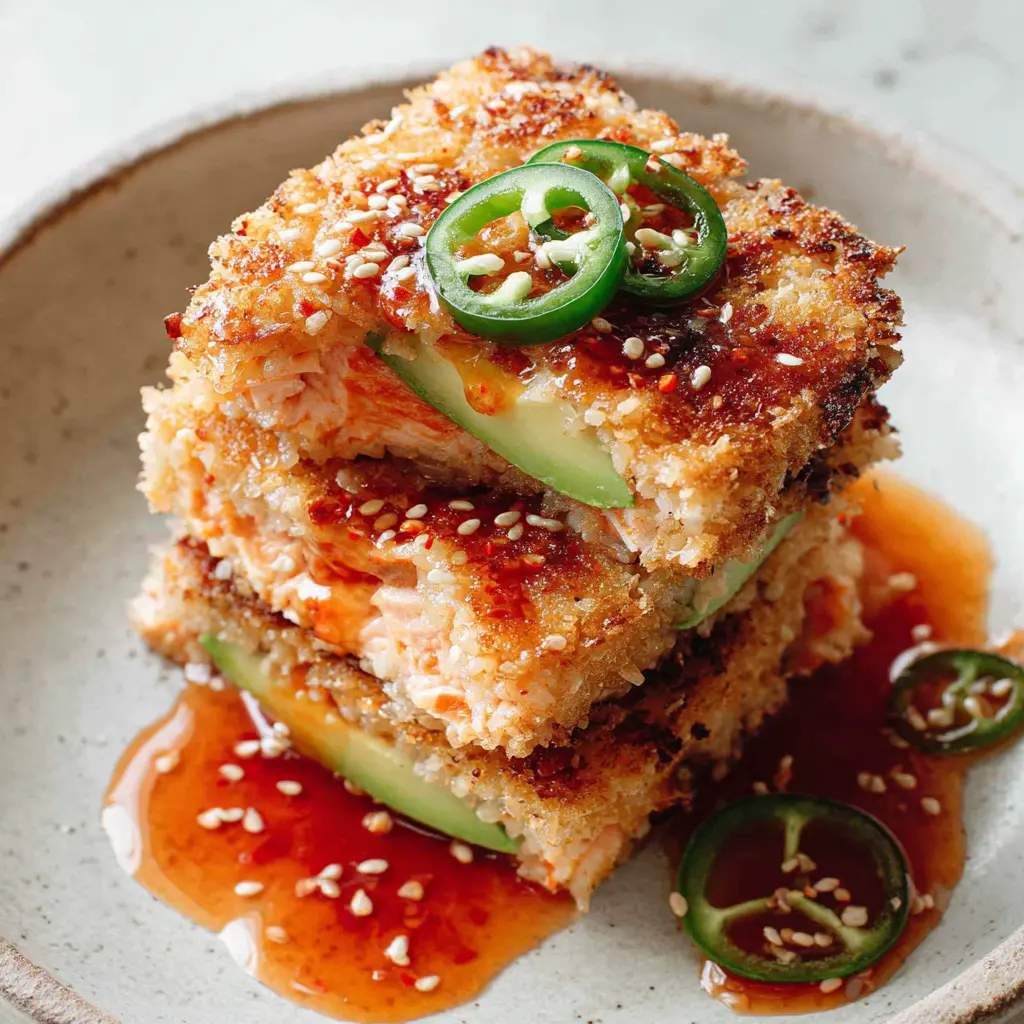
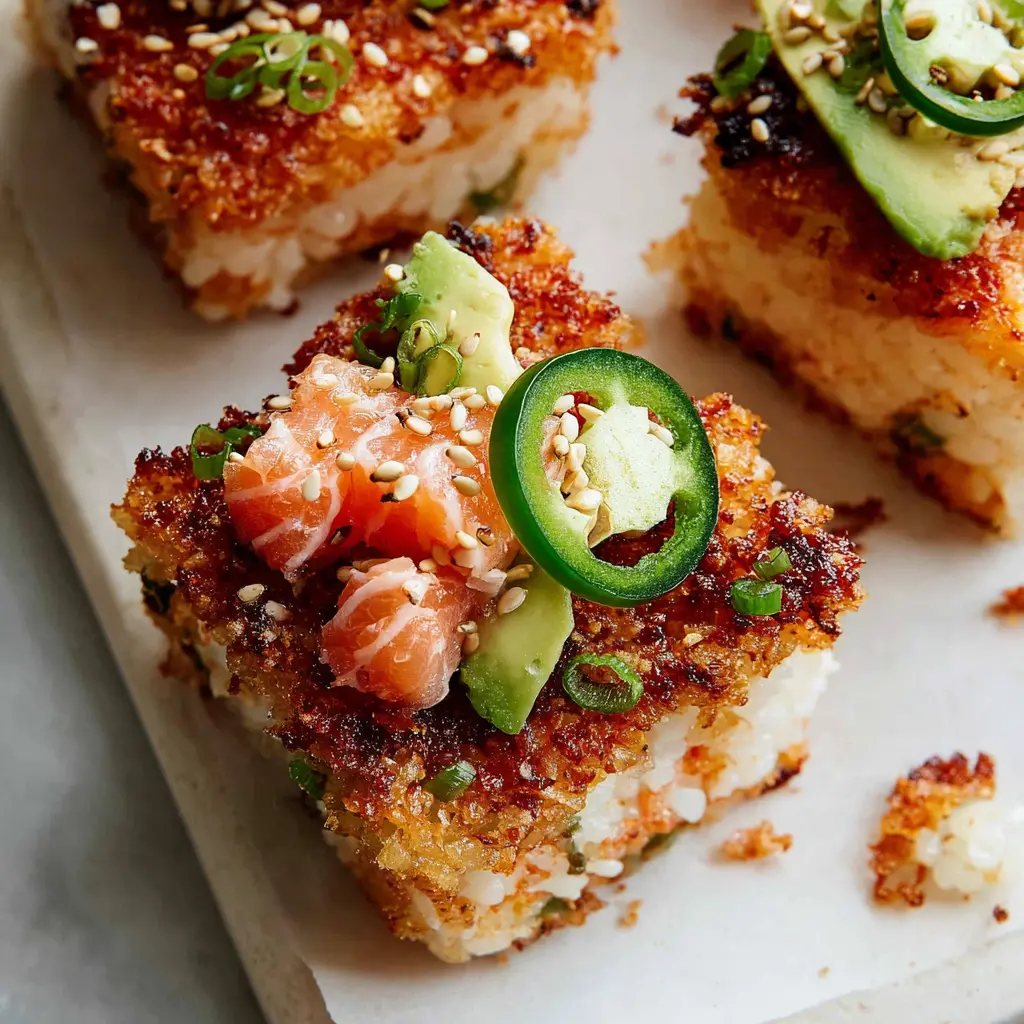
- Once the rice has cooled to room temperature, top each block with a slice of avocado, a spoonful of spicy salmon, a jalapeño slice, a drizzle of toasted sesame oil, a drizzle of sweet chili sauce, and some toasted sesame seeds. Serve immediately.
Nutrition
Notes
- Be sure to freeze your rice until it’s firm enough to cut through easily. This not only helps with the cutting process but also helps when frying. If it’s not cold enough, the rice blocks fall apart when you’re frying them.
- If your salmon is fresh but not previously frozen, please freeze your salmon before using it. Raw salmon sometimes has parasites. Freezing the salmon kills the parasites while also making it easier to cut. Defrost until it’s still very cold but not frozen anymore. If you’re not sure your salmon is sushi-grade, ask your fish monger.
- If you can’t find Kewpie mayo, you can substitute regular mayo.
Tried this recipe?
Let us know how it was!Remember That Viral Sushi Stack You Saw on Instagram?
Yeah, I tried it too. And let me tell you, my first attempt was a tragedy. The rice fell apart in the pan, the salmon was overdone, and the whole thing looked like a sad, beige landslide. I stood there, spatula in hand, wondering how something that looked so simple could go so wrong. But I’m stubborn. And I love a good challenge. And honestly, I really wanted that perfect, golden, layered tower I kept seeing on my feed.
So I went back to the kitchen. Five times. Maybe six. I tried different rice, different pressing techniques, different pan temperatures. I burned my fingers, I ate a lot of mediocre crispy rice, and I learned exactly what works. This crispy rice salmon stack recipe is the result of all that trial and error. It’s the one I finally got right. And today, I’m going to show you the foolproof method so you skip all my mistakes and get straight to the good part.
Well, that’s a learning experience wrapped in a tasty mistake, right? Let’s fix it.
Why This Crispy Rice Salmon Stack Works
There are a few reasons this recipe is different from the ones that let you down. First, we’re using short-grain sushi rice. It’s not negotiable. Long-grain rice just won’t stick together the same way, and you’ll end up with a pile of fried grains instead of a solid block. The starch in short-grain rice is the glue that holds everything together. It’s the same reason sushi rolls stay intact.
Second, we’re pressing the rice while it’s still warm. This is huge. Warm rice is pliable and sticky. It wants to hold a shape. If you let it cool completely before pressing, you’re fighting against the grains. You want them to meld together into a single, cohesive slab. I press mine into a quarter-sheet pan lined with plastic wrap, and I use a second pan to really weight it down. We’re talking serious pressure here.
And third, we’re freezing that pressed rice block before cutting and frying. I know, it seems like an extra step, but it’s actually the secret weapon. Freezing firms up the rice so it cuts cleanly into perfect squares without crumbling. It also removes surface moisture, which is critical for getting that deep golden crust. The cold rice hits the hot oil and sizzles immediately, creating a barrier that prevents it from absorbing too much oil. You get a crunchy exterior and a tender, chewy interior. It’s the best of both worlds.
Patience, buddy. The rice knows what it’s doing.
Ingredients You’ll Need
Before we get into the nitty-gritty, let’s talk about what you’ll need. The list is short, but each ingredient plays a specific role. Don’t skimp on the quality here, especially with the salmon.
For the rice base, you’ll need short-grain sushi rice, rice vinegar, granulated sugar, and kosher salt. These four things create the seasoned rice that’s the foundation of the whole dish. The vinegar adds a subtle tang that cuts through the richness of the salmon and avocado. The sugar balances the acidity. And the salt, well, salt makes everything better.
For the salmon layer, you want sushi-grade salmon. This is non-negotiable if you’re serving it raw. If you’re nervous about raw fish, you can sear it quickly, but I’ll cover that in the variations section. You’ll also need Kewpie mayo, sriracha, soy sauce, and toasted sesame oil for the spicy mayo mixture. And a stalk of green onion for some freshness.
For the toppings and assembly, grab an avocado, a jalapeño for a little kick, toasted white sesame seeds for crunch, and sweet chili sauce for drizzling. That’s it. Simple ingredients, but when you layer them right, they create something truly special.
Oh, and you’ll need a neutral oil for frying. Something like avocado or grapeseed oil works great. Don’t use olive oil here; it has a lower smoke point and will burn before the rice gets crispy.
How to Make Crispy Rice Salmon Stack
Alright, let’s walk through this. I’ll break it down into stages so you can see the whole picture before you start. Trust me, it’s easier than you think once you understand the flow.
First, cook your sushi rice according to the package directions. While it’s still hot, fold in the rice vinegar, sugar, and salt mixture. Use a cutting motion with your rice paddle to avoid mashing the grains. You want each grain to be coated but still intact.
Next, line a quarter-sheet pan with plastic wrap. Spread the seasoned rice evenly into the pan, pressing it down firmly. I use a second sheet pan on top to really compress it. You want it about half an inch thick. Press the edges especially well; those are the parts that fall apart most easily. Then refrigerate the whole thing for at least two hours, or overnight if you’re planning ahead.
Once the rice is chilled and firm, transfer the whole block to the freezer for about an hour. This is the step that makes all the difference. While the rice is freezing, you can prep your salmon. If you’re using it raw, dice it into small cubes. Mix the Kewpie mayo, sriracha, soy sauce, and sesame oil together, then fold in the salmon and sliced green onion. Pop that in the fridge too.
After the rice is frozen solid, take it out and let it sit for a minute. Wet your knife blade and cutting board with water. This prevents sticking. Cut the rice block into squares, about two inches by two inches. You should get around 12 to 16 pieces, depending on how you slice them.
Now, heat about a quarter-inch of oil in a non-stick skillet over medium-high heat. You want it hot enough that a grain of rice sizzles immediately. Carefully place the frozen rice squares in the pan, making sure not to overcrowd. Fry for about 3 to 4 minutes per side, until they’re deep golden brown and crispy. Transfer to a wire rack to cool. This keeps them from getting soggy.
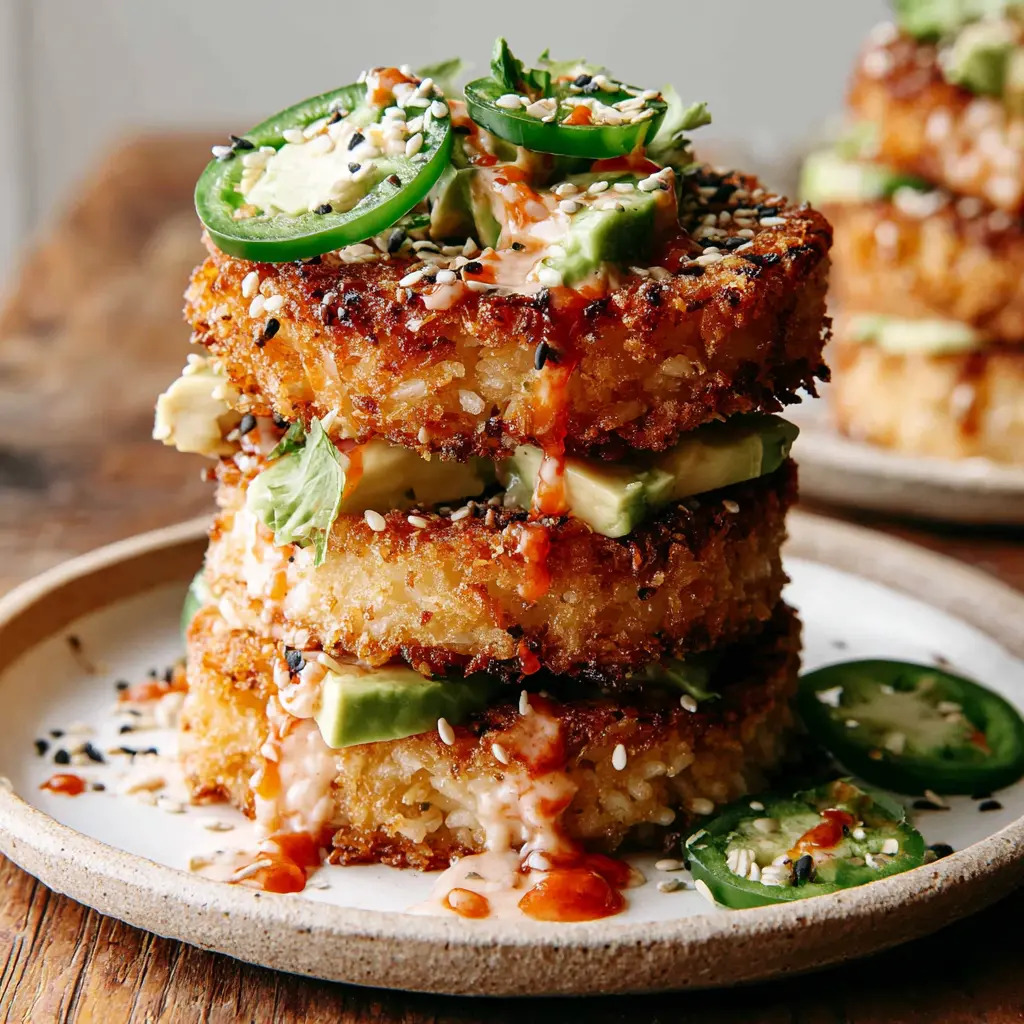
To assemble, use a ring mold or a food ring. Place a crispy rice square at the bottom, then a layer of diced avocado, then the spicy salmon mixture. Press down gently with a spoon to compact everything. Lift the ring mold carefully, and you should have a perfect little tower. Drizzle with sweet chili sauce and sprinkle with toasted sesame seeds and sliced jalapeño.
You want a sizzle, not a hiss. There’s a difference.
Tips for Perfect Crispy Rice
I’ve made enough mistakes to fill a cookbook, so let me save you the trouble. Here are the things I wish someone had told me before my first attempt.
First, press the rice tightly. Especially at the edges. I can’t stress this enough. The corners are the weakest point, and if they’re loose, they’ll disintegrate in the oil. Use a rice paddle or the bottom of a glass to really compact them.
Second, freeze the rice until it’s firm enough to cut through easily. If it’s still soft, your knife will squish the grains and you’ll get ragged edges. An hour in the freezer is usually enough, but if you’re in a rush, you can go for 30 minutes. Just make sure it’s solid.
Third, slice with a wet knife. This is a trick I learned from making sushi. The water creates a thin barrier between the blade and the rice, preventing sticking. You get clean, sharp edges every time. Rinse the knife between cuts.
Fourth, don’t overcrowd the pan. If you add too many rice squares at once, the oil temperature drops and they’ll steam instead of fry. You’ll end up with greasy, soft rice instead of crispy, golden squares. Fry in batches. It takes an extra few minutes, but it’s worth it.
And finally, cool the fried rice on a wire rack. If you put them on paper towels, the steam gets trapped and the bottoms get soggy. A wire rack lets air circulate all around, keeping every side crunchy.
Common Mistakes & Fixes
Mistake: The rice fell apart while frying.
Solution: You probably didn’t press it firmly enough or chill it long enough. Next time, press while the rice is warm, focus on the edges, and refrigerate overnight if you can.
Mistake: The rice didn’t get crispy.
Solution: Your pan or oil wasn’t hot enough. The rice should sizzle immediately when it hits the oil. Also, make sure the surface of the rice is dry before frying. Freezing helps with this.
Mistake: The rice squares are too oily or greasy.
Solution: You overcrowded the pan or the oil wasn’t hot enough. Fry in small batches and use a high-heat oil like avocado oil. Too much oil is also a problem; you only need a quarter-inch.
Mistake: The toppings keep sliding off the crispy rice.
Solution: Use a ring mold to build the stack. Press each layer down firmly before adding the next. The avocado layer acts as a sticky base for the salmon.
Variations to Try
One of the best things about this crispy rice salmon stack is how adaptable it is. Don’t like salmon? No problem. You can substitute sushi-grade ahi tuna or hamachi. Just dice it the same way and mix it with the spicy mayo. The preparation is identical, so you don’t need to change anything else.
If you’re not comfortable with raw fish, you can sear the salmon quickly. Season it with salt and pepper, then sear in a hot pan for about 2 minutes per side. Let it cool, then flake it into chunks and mix with the spicy mayo. It won’t be quite the same texture, but it’s still delicious.
You could also try using smoked salmon. It’s already cooked and has a wonderful smoky flavor that pairs beautifully with the creamy avocado and sweet chili sauce. Just chop it into small pieces and fold it into the mayo mixture.
For a vegetarian version, replace the salmon with diced mango and cucumber. The sweetness of the mango contrasts with the spicy mayo, and the cucumber adds crunch. It’s a completely different dish, but it’s just as impressive.
And if you can’t find Kewpie mayo, don’t stress. Regular mayo works fine. Just add a tiny splash of rice vinegar and a pinch of sugar to mimic that tangy, slightly sweet flavor. It’s not exact, but it’s close enough for a weeknight dinner.
I’ve got a jar of that fermenting in the closet. Don’t ask.
Storage and Leftovers
Here’s the thing about this crispy rice salmon stack: it’s best eaten fresh. The rice is at its peak crunchiness right after frying, and the salmon mixture is coldest and most refreshing. But I know life happens, and sometimes you need to prep ahead or save leftovers.
Store the components separately. The crispy rice squares can be kept in an airtight container at room temperature for up to a day. They’ll lose some crunch, but they’ll still be good. The spicy salmon mixture should be stored in the fridge and used within 24 hours. The avocado should be cut fresh, as it will brown quickly.
To reheat the rice, don’t use the microwave. It’ll turn them into sad, chewy discs. Instead, pop them in a 350°F oven for about 5 minutes, or back in a hot skillet for a minute per side. An air fryer works great too; just spray them lightly with oil and heat at 375°F for 3 minutes.
For make-ahead strategy, you can press and freeze the rice block up to a week in advance. Cut it into squares while frozen, then store them in a freezer bag. When you’re ready to serve, just fry them straight from the freezer. No thawing needed. The salmon mixture can be made a few hours ahead and kept in the fridge.
Only cook as much as you’ll eat. After re-frying, the rice squares can turn a bit firmer or harder to bite. It’s one of those things that’s just better fresh.
Frequently Asked Questions
Go Ahead, Take the Fork
When you serve this crispy rice salmon stack at your next dinner party, people are going to think you spent hours on it. They’ll ask where you ordered it from. You can just smile and say you made it yourself. And you know what? You’ll mean it.
This one’s a party in your mouth. I don’t make the rules.
The smell right now? Unreal. I want to bottle it. That first bite where the crispy rice shatters, then the creamy avocado, then the cool, spicy salmon. It’s a whole symphony of textures and flavors, and it all comes together in a single, perfect stack.
I’d normally say use fresh herbs, but dried might work in a pinch… Actually, no. Get fresh green onions. Trust me on this.
For more inspiration, check out my Pinterest boards where I share tons of variations and other party-perfect appetizers.
You’ve got this. Just take your time with the layers, trust the process, and remember that even if your first stack isn’t perfect, it’s still going to taste incredible. And that’s what really matters.
Tag me in your stack photos. I love seeing your creations. Go ahead, take the fork. That first bite is all yours.
Source: Nutritional Information
What is the best type of rice to use for a crispy rice salmon stack?
Short-grain sushi rice is the only option here. It has the right amount of starch to hold together when pressed and fried. Don’t use long-grain or jasmine rice; they’ll fall apart. I’ve tried, and it’s not pretty.
How do you make the crispy rice for a spicy salmon crispy rice stack?
Cook and season the sushi rice, press it firmly into a pan while warm, chill it, then freeze it solid. Cut into squares and fry in hot oil until golden. The freezing step is key; it firms the rice and removes moisture for maximum crunch.
Can I use canned salmon instead of sushi-grade salmon for this layered salmon crispy rice recipe?
You can, but the texture will be different. Canned salmon is flaky and softer. Drain it well, flake it, and mix with the spicy mayo. It works in a pinch, but sushi-grade salmon gives you that clean, buttery bite that makes this dish special.
What can I substitute for Kewpie mayo in a sushi style rice stack?
Regular mayo works fine. To get closer to Kewpie’s flavor, add a tiny splash of rice vinegar and a pinch of sugar. It won’t be exactly the same, but it’ll be creamy and tangy enough to hold the salmon together.
How should I store leftover crispy rice salmon stack ingredients?
Store the crispy rice squares at room temperature in an airtight container. Keep the spicy salmon mixture in the fridge and use within 24 hours. Cut the avocado fresh when you’re ready to assemble. Reheat rice in a skillet or oven, not the microwave.
What if I don’t like salmon? Could I use another fish?
Absolutely. Sushi-grade ahi tuna or hamachi are perfect substitutes. Just dice them the same size and mix with the same spicy mayo. You can also use cooked shrimp, scallops, or even smoked trout. The technique stays the same.