Why This Easy Tuna Noodle Casserole Works
It happens around 5pm on the first cool September night. You’re tired, the kitchen is a disaster, and everyone is suddenly starving. Your brain scrolls through comfort food recipes, but nothing feels fast enough. Then you remember this easy tuna noodle casserole, and the whole evening relaxes.
This isn’t the dump-and-bake version from a can of creamy soup. Don’t get me wrong, that classic has its place. But this grown-up tuna noodle casserole builds a homemade cream sauce from butter, flour, chicken stock, milk, and heavy cream. It tastes rich and silky, not salty or gluey. And it comes together on the stovetop in about 25 minutes.
At its heart, tuna noodle casserole is just three things: tender noodles, good tuna, and something creamy to hold them together. Get those right, and you’ve already won the night.
- The sauce starts with a proper roux. Butter and flour whisked together, then slowly joined by stock and cream. That’s what gives you that old-school comfort food texture without a single can.
- The tuna gets treated gently. Solid white albacore, drained well and folded in at the end so it stays in nice flakes instead of breaking into mush.
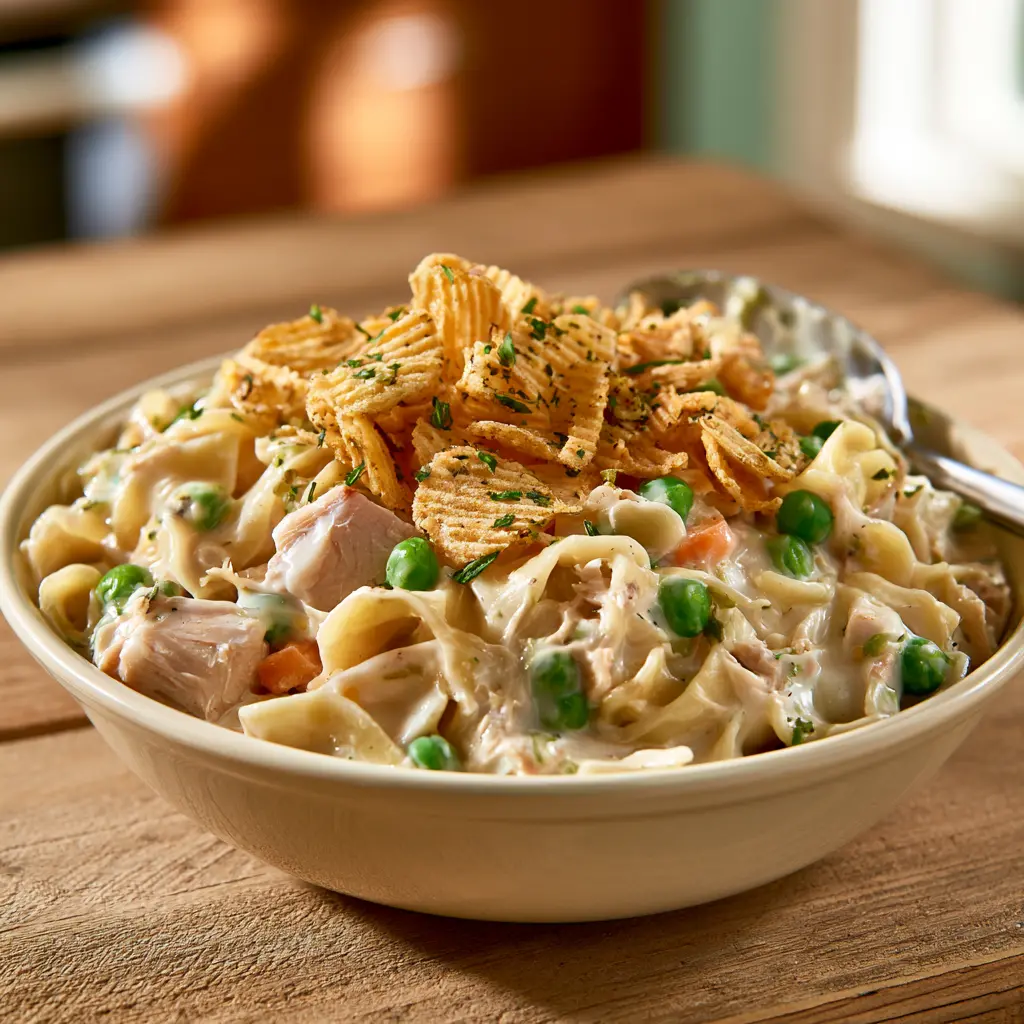
- The topping is crushed ridged potato chips. Salty, crunchy, and completely irresistible scattered over each bowl.
My first attempt at this turned into gluey chaos, so trust me, I’m saving you that exact night. The recipe is forgiving if you hit a few important moments right.
Tips for the Best Easy Tuna Noodle Casserole
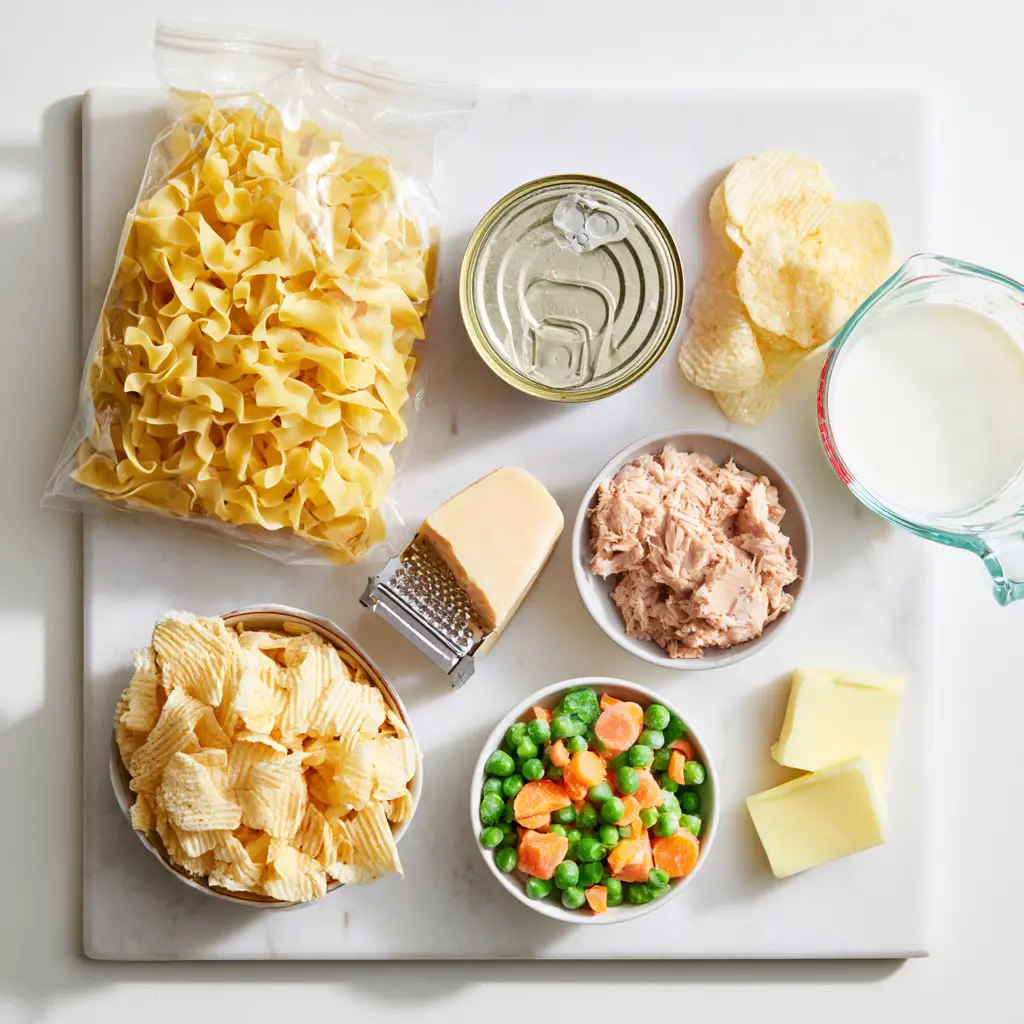
Here’s the thing about this easy tuna noodle casserole: every ingredient is a pantry staple, so you can make it on impulse. A few small habits make the difference between creamy and clumpy.
- Salt your pasta water like the sea. Underseasoned noodles give you a flat, boring casserole, and no amount of sauce can fully fix that.
- Keep the heat at medium. Once the milk and cream go in, drop it to medium-low. Dairy sauce that boils hard can turn grainy and separate.
- Drain the tuna really well. Albacore packed in water holds a surprising amount of liquid, and that extra water thins out your beautiful sauce.
❌ Overcooking the noodles until they’re fully soft before they hit the sauce, which turns them mushy.
✅ Cook to al dente, rinse briefly with cold water, and let the warm sauce finish the job.
❌ Letting the sauce boil hard, which can make it look broken or curdled.
✅ Keep it at a gentle simmer, whisking often, until it coats the back of a spoon.
❌ Skipping the salt in the pasta water, leaving the whole dish tasting flat.
✅ Season in layers, starting with that pot of boiling water.
How to Make This Easy Tuna Noodle Casserole
The method looks simple because it is simple. But each stage does something specific, so here’s what’s actually happening in the pot.
1. Cook the noodles and vegetables
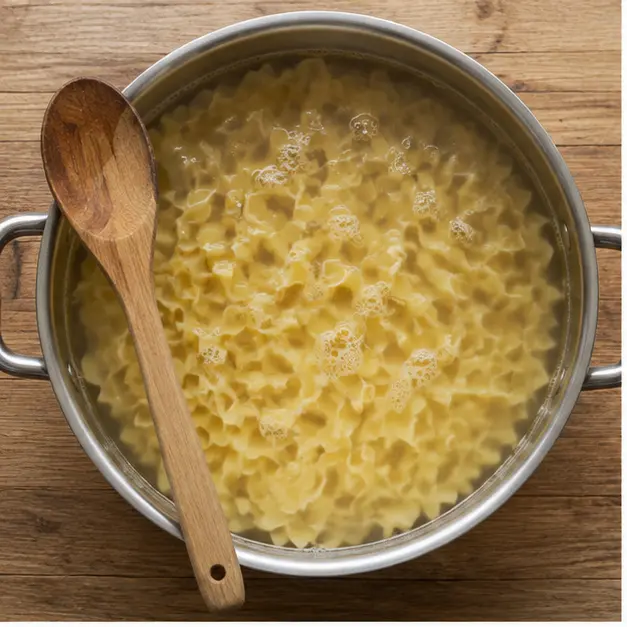
Fill a deep pot with water and bring it to a rolling boil. Add a generous amount of salt, then drop in the wide egg noodles and cook until just al dente. During the last two minutes, stir in the frozen mixed vegetables so they warm through without turning to mush. Drain everything, rinse briefly with cold water to stop the cooking, and set it aside.
2. Whisk up a quick roux
Return the empty pot to the stove over medium heat and melt the butter. Whisk in the flour and cook for a full minute, stirring constantly. You’re looking for a smooth paste that smells slightly nutty. This roux is what makes the sauce creamy instead of watery, so don’t rush it.
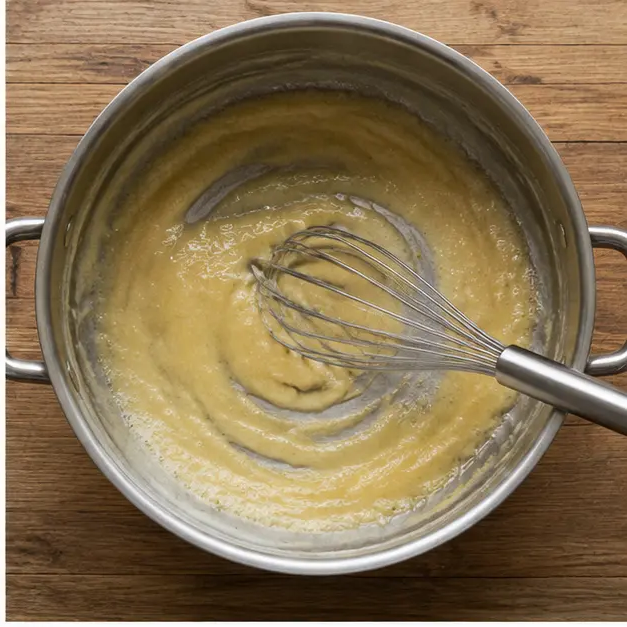
3. Build the creamy sauce
Pour in the chicken stock slowly while whisking steadily. The sauce will smooth out and start to thicken, so let it simmer for a few minutes. Then whisk in the milk, heavy cream, poultry seasoning, and salt and pepper to taste. Drop the heat to medium-low and cook until the sauce is warm and nicely thickened. If it looks a little loose, that’s fine. The noodles will absorb some as it sits.
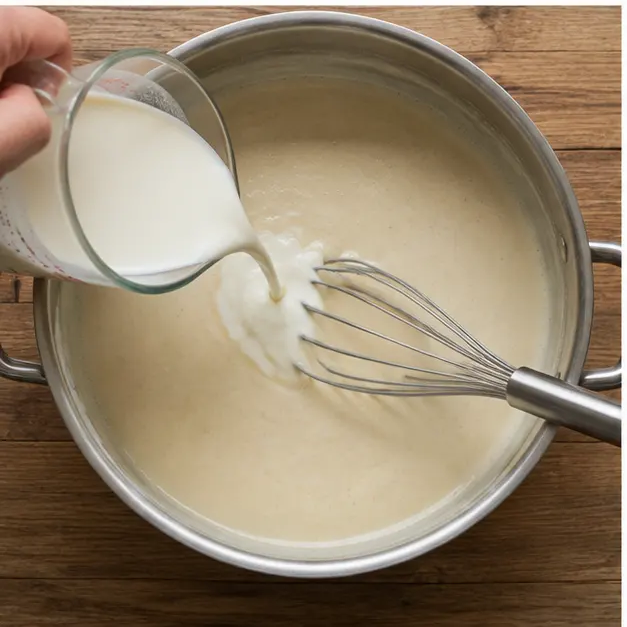
4. Fold everything together and top it
Gently fold the cooked noodles and vegetables into the sauce with a rubber spatula so every piece gets coated. Then stir in the drained albacore tuna and finely grated Parmesan, mixing just enough to distribute without breaking up the fish. Let it heat through briefly over low heat. Serve it in bowls with a shower of crushed ridged potato chips and a sprinkle of dried parsley on top.
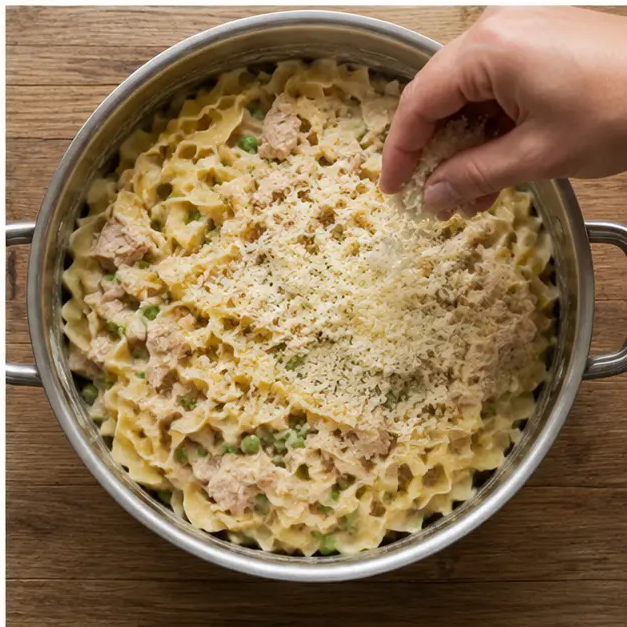
Grown-Up Tuna Noodle Casserole Variations
Once you’ve made the base recipe, feel free to riff on it. This easy tuna noodle casserole handles changes beautifully.
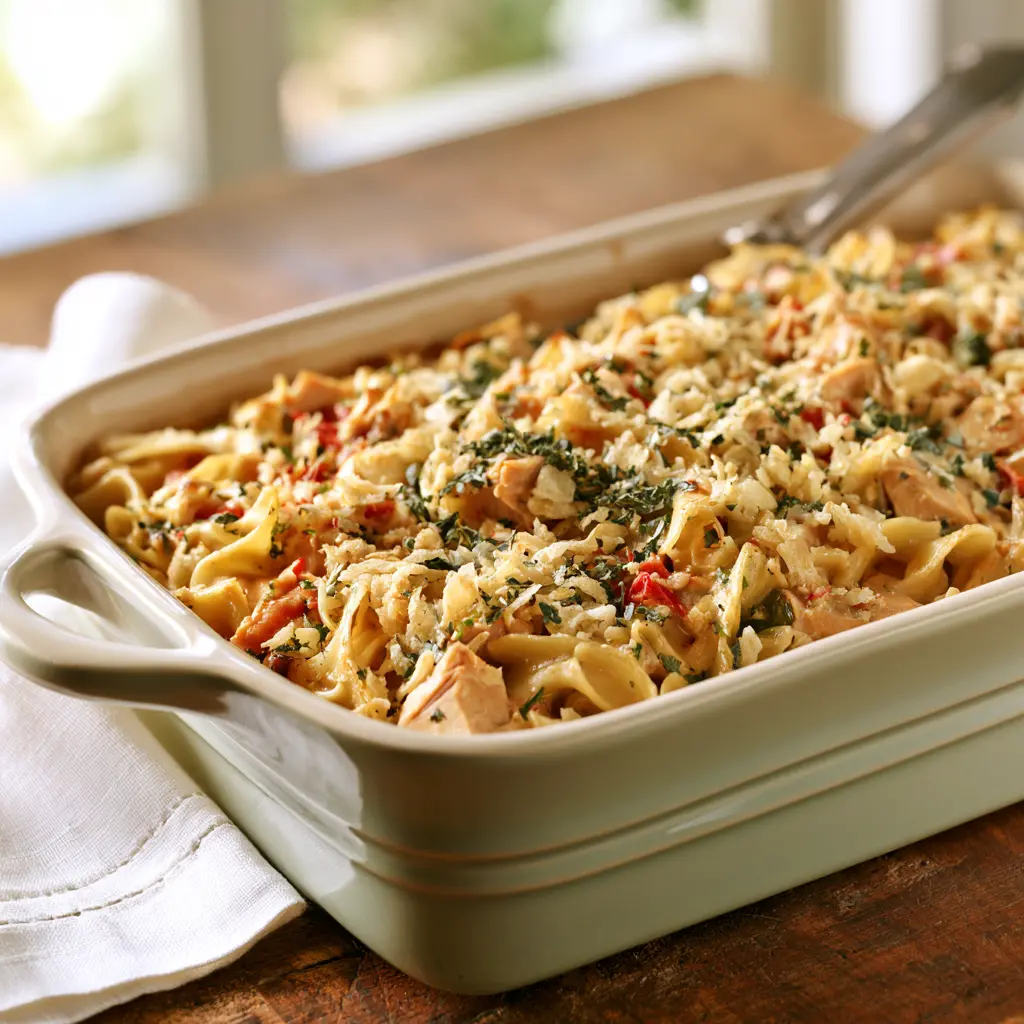
- Turn it into a baked casserole. Spoon the finished mixture into a buttered 9×13-inch baking dish, sprinkle the crushed chips over the top, and broil for 2 to 3 minutes until golden and bubbling at the edges.
- Swap the pasta. No egg noodles? Any short-cut pasta like rotini or cavatappi works great. Just adjust the cooking time to the package and cook to al dente.
- Make it dairy-free. Swap the milk and heavy cream for unsweetened cashew or oat milk, add a tablespoon of olive oil to keep it rich, and omit the Parmesan or use a dairy-free alternative.
- Try a different crunchy topping. If you’re out of potato chips, buttered panko breadcrumbs or French fried onions give you that same golden crispy topping energy.
- Swap the protein. Cubed cooked chicken or roast chicken works shockingly well in place of the tuna for a chicken noodle casserole vibe.
How to Serve Tuna Noodle Casserole
Serve this hot, straight from the pot, in wide bowls so the creamy sauce has room to pool. The chips go on right before eating so they stay shatteringly crisp, not soggy.
A squeeze of fresh lemon over each bowl adds a bright finish that cuts through all that cream. It’s a small move, but it makes the whole dish taste more alive.
Put the pot on the table with the chip bag right next to it and a few lemon wedges tucked onto the side of each bowl. That’s the whole dinner. No sides required, no complicated plating, just everybody leaning in and helping themselves before you’ve even sat down.How to Store and Reheat Leftovers
If there are leftovers, that is. This easy tuna noodle casserole keeps better than you’d expect, mostly because the sauce is built on a proper roux instead of a can of condensed soup. Let it cool completely before you stash it, then transfer it to an airtight container. It will stay good in the fridge for three to four days.
The one thing to remember? The sauce thickens as it sits in the cold. That’s normal, not a sign that something went wrong. When you reheat, add a splash of milk or chicken stock to loosen it back up and bring it gently back to life.
- Stovetop (best): Warm it in a saucepan over medium-low heat, stirring often. Splash in a little milk or stock if it looks tight, and heat until it’s bubbling gently at the edges.
- Microwave (fast): Cover the bowl with a damp paper towel and heat in 45-second bursts, stirring between each one. The damp towel keeps the noodles from drying out on top.
- Freezer: Spoon cooled portions into freezer-safe containers and freeze for up to one month. Thaw overnight in the fridge, then reheat on the stovetop low and slow. The potato chip topping won’t survive the freezer, so plan to add fresh chips after reheating.
Storage tip: Keep the crushed chips in a separate bag or container if you know you’ll have leftovers. A soggy topping is the only real tragedy in tuna noodle casserole, and it’s completely avoidable.
Choosing the Best Tuna for This Casserole
I get asked about this constantly, so let’s settle it. The tuna you pick genuinely changes how the casserole turns out.
Solid white albacore in water is my default here. It has that clean, mild flavor that reads as classic tuna noodle casserole, and it holds its shape well enough to give you nice flakes instead of mush. Just drain it thoroughly and flake it gently with a fork.
Chunk light tuna works too, and it’s usually a little more affordable. It has a stronger, more pronounced fishy flavor that some people absolutely love. If you grew up on the old-school casserole, chunk light might actually taste more nostalgic to you.
Tuna packed in oil is richer and more luxurious, but it can make the casserole feel heavier. If you go this route, drain it well and know that you can skip a little of the butter in the sauce since the tuna brings its own richness.
One more thing? Buy the cans without added salt or broth if you can. The sauce is already seasoned, so you want the tuna to be a blank canvas, not an extra dose of sodium.
Why the Sauce Works (and How to Fix It If It Doesn’t)
Understanding what’s happening in the pot makes you a better cook, but it also makes this recipe nearly impossible to ruin. So here’s the quick science.
The roux is the backbone. When butter and flour cook together, the flour’s starches swell and create a base that thickens the liquid you add. That minute of cooking isn’t just theater; it removes the raw flour taste and helps the sauce stay smooth.
The stock adds flavor without making things too heavy, and the milk and cream bring the richness. Together they create an emulsion that coats the noodles like velvet. The Parmesan at the end isn’t just for flavor; it also adds a little more body because the cheese melts into the sauce and helps it cling.
Why did my sauce turn out lumpy?
Lumps almost always mean the liquid went in too fast while the roux was still hot, or the whisk wasn’t moving fast enough. Don’t panic. Keep whisking vigorously; most lumps will dissolve as the sauce heats. If a few stubborn ones remain, strain the sauce through a fine-mesh sieve before adding the noodles. Nobody will ever know.
Why does my casserole taste flat?
Nine times out of ten, it’s the pasta water. If the noodles aren’t cooked in generously salted water, the whole dish tastes muted no matter how much salt you add to the sauce. The other culprit is undrained tuna. Water-packed albacore releases liquid into the sauce and dilutes every flavor. Drain it, press it gently with the back of a spoon, and drain a little more.
Can I make this gluten-free?
Yes. Use gluten-free egg noodles or your favorite short pasta, and swap the all-purpose flour for a 1-to-1 gluten-free flour blend. The rest of the recipe stays exactly the same. Cook the gluten-free pasta a minute less than the package suggests so it doesn’t turn mushy in the sauce.
Frequently Asked Questions
Can I prepare this easy tuna noodle casserole ahead of time?
Absolutely. Cook the noodles, vegetables, and sauce, then fold in the tuna and Parmesan. Transfer everything to a buttered 9×13-inch baking dish, cover it, and refrigerate for up to two days. When you’re ready to eat, bake it covered at 350°F for 25 minutes, then uncover, add the crushed chips, and bake for another 8 to 10 minutes until hot and bubbling at the edges.
Do I have to use frozen mixed vegetables?
Not at all. Frozen peas and carrots are convenient, but fresh vegetables work beautifully. Sauté diced celery and onion in the butter before making the roux for a deeper, more savory flavor base. You can also swap in roasted broccoli, sautéed mushrooms, or even leftover green beans.
Why do you use chicken stock instead of water?
Because flavor is built in layers. Chicken stock gives the sauce a savory depth that water simply can’t provide. If you want to keep it vegetarian, use vegetable stock; you won’t lose much.
Can I double this recipe?
Yes, and it’s the perfect crowd dish. Double every ingredient and use a large Dutch oven or deep pot. The cooking time stays roughly the same, though the sauce may take a minute or two longer to come together. If you’re baking the doubled version, use a deep 9×13-inch dish or two smaller dishes and expect the bake time to increase slightly.
What can I use instead of egg noodles?
Any short pasta works. Cavatappi, rotini, shells, and rigatoni all catch the creamy sauce beautifully. Cook whatever you choose to al dente, and don’t rinse it unless you’re making the casserole ahead of time.
Is this the same as the canned soup version?
It’s a cousin, not a twin. The canned soup version is faster and has that distinctive retro flavor. This version takes an extra ten minutes but tastes brighter, richer, and more like something you made from scratch. Both are valid; this one just feels a little more grown-up.
More Easy Weeknight Dinners You’ll Love
If this easy tuna noodle casserole earns a spot in your regular rotation, you might also enjoy a few other low-effort, high-reward dinners. Creamy chicken and rice soup is another one-pot wonder that comes together when you least expect it. And when you’re craving something cozy but fast, a simple skillet lasagna delivers all the comfort with none of the layering.
Expert Notes & Data Insights
After years of testing weeknight casseroles, here are the numbers and details worth remembering.
- Total time: About 30 minutes from cold pot to table. That’s faster than delivery in most neighborhoods.
- Active time: Roughly 25 minutes. The sauce is the only part that needs your full attention, and even that is just a few minutes of whisking.
- Servings: This recipe comfortably feeds four hungry people, or six if you round it out with a green salad and some crusty bread.
- Pantry payoff: Every ingredient except the fresh dairy is shelf-stable, which means you can make this on a whim without a grocery run.
- Nutritional estimate per serving: Approximately 540 calories, 26 grams of fat, 48 grams of carbohydrates, and 30 grams of protein, depending on your exact ingredients and portion size. If you lighten it up, swap the heavy cream for whole milk and use tuna packed in water.
- Leftover window: Three to four days refrigerated in an airtight container, or one month frozen. Reheat gently with a splash of milk to bring the sauce back to life.
- Crowd math: Double the recipe and bake it in a 9×13-inch dish for an easy potluck contribution. The crushed chip topping is non-negotiable at that point; people will line up for the crispy edges.
This easy tuna noodle casserole is proof that comfort food doesn’t need to be complicated. It’s creamy, it’s fast, and it uses things you probably already have. The next time that 5pm panic hits, you know exactly what to make. I’d love to hear how yours turns out, and if you tried a variation that worked, tell me about it. Happy cooking.
What Are the Three Essential Ingredients for an Easy Tuna Noodle Casserole?
The three essential ingredients in any tuna noodle casserole are canned tuna, egg noodles (or another short pasta), and a creamy sauce that brings everything together. In our fully loaded version, that creamy element is a rich Parmesan sauce, with a crunchy potato chip topping added for texture. From these three basics, classic recipes often include peas, celery, onion, and seasonings, but tuna, pasta, and a creamy binder are the true foundation.
What Is the Simplest Way to Make Tuna Noodle Casserole at Home?
The easiest approach is to cook 8 to 10 ounces of egg noodles until just tender, drain them, and toss them with two cans of drained tuna and a creamy sauce made from butter, flour, milk, and Parmesan. Stir in frozen peas if you like, spread the mixture into a buttered casserole dish, sprinkle with Parmesan, and top with crushed potato chips. Bake at 375°F for about 25 minutes, until the casserole is hot and bubbly and the topping is golden brown. For an even quicker shortcut, you can swap the homemade sauce for one can of condensed cream of mushroom soup.
What Ingredients Do You Need for a 4-Ingredient Tuna Casserole?
A true four-ingredient tuna casserole uses just canned tuna, egg noodles, condensed cream of mushroom soup, and shredded cheddar cheese or a little milk. Combine the cooked noodles with the drained tuna, soup, and cheese, spoon the mixture into a baking dish, and bake until hot and bubbly. If you want extra texture without adding another grocery item, crushed potato chips make an excellent topping in place of bread crumbs, or you can stir in frozen peas as a simple fifth ingredient.
How Can You Make a Quick Tuna Pasta Bake?
To make a quick tuna pasta bake, preheat your oven to 375°F and cook pasta such as egg noodles, shells, or penne until al dente. While the pasta cooks, whisk together a fast cream sauce using butter, flour, milk, and Parmesan, then fold in well-drained canned tuna and frozen peas. Combine the pasta with the sauce, pour it into a baking dish, top with crushed potato chips and extra Parmesan, and bake for 15 to 20 minutes until golden and bubbling. If you need the fastest possible version, replace the homemade sauce with condensed cream of mushroom soup and bake as directed.