 {
“h1_variants”: [
“Chicken Sausage and Broccoli Orzo, One Skillet Wonder”,
“Got 30 Minutes? Try Chicken Sausage and Broccoli Orzo”,
“How to Make Chicken Sausage and Broccoli Orzo”,
“The Chicken Sausage and Broccoli Orzo That Saves Weeknights”,
“One Pot Chicken Sausage and Broccoli Orzo Recipe”
]
{
“h1_variants”: [
“Chicken Sausage and Broccoli Orzo, One Skillet Wonder”,
“Got 30 Minutes? Try Chicken Sausage and Broccoli Orzo”,
“How to Make Chicken Sausage and Broccoli Orzo”,
“The Chicken Sausage and Broccoli Orzo That Saves Weeknights”,
“One Pot Chicken Sausage and Broccoli Orzo Recipe”
]
 ,
“meta_title”: “Chicken Sausage and Broccoli Orzo: 30 Min Skillet Dinner”,
“meta_description”: “This chicken sausage and broccoli orzo is a one-pan, 30-minute dinner that’s creamy, cheesy, and weeknight-friendly. Save this easy skillet recipe!”,
“excerpt”: “One-pan chicken sausage and broccoli orzo with Parmesan, garlic, and crisp-tender broccoli. A 30-minute weeknight dinner the whole family will love.”,
“image_prompts”: {
“_IMPORTANT_RULES”: “NEVER use these words in ANY image prompt (they trigger AI content filters): breasts, breast, thighs, thigh, naked, strip, strips, stuffed, finger, fingers, bloody, virgin. Use safe synonyms instead: fillets, leg cuts, plain, slices, filled, sticks, rare, non-alcoholic.”,
“_MANDATORY_STYLE”: “ALL image prompts MUST match this photography style (convey the same mood, lighting, colors, vibrance do NOT copy word-for-word, but every prompt must feel like it belongs to this style): PHOTO STYLE: Bright natural food photography inspired by modern US recipe blogs. Soft daylight coming from a nearby window, airy high-key exposure, clean whites, gentle realistic shadows, fresh vibrant but natural colors, crisp food texture, soft contrast, lightly warm highlights, neutral white balance, realistic skin-like food texture, no artificial saturation. COLOR GRADING: Clean editorial food photography look, white and cream tones, fresh greens, warm golden food highlights, natural reds and oranges, soft pastel background, slightly lifted shadows, bright whites without overexposure, realistic color balance, not dark, not moody, not orange-tinted. LIGHTING: Large diffused window light, soft directional daylight, gentle shadows, natural reflections on sauces and glossy food, bright luminous surface, real home kitchen daylight, no harsh flash, no studio spotlight. FOOD STYLING: Modern home cooking blog style, fresh ingredients, slightly imperfect plating, natural mess, a few crumbs or herbs scattered naturally, real ceramic plates, linen towel partly visible, casual but polished editorial styling. IMAGE QUALITY: Photorealistic, DSLR food photography, professional recipe blog image, sharp food details, natural depth, realistic textures, high resolution, magazine-quality food photo, not CGI, not AI-looking. AVOID: Dark moody lighting, yellow/orange color cast, oversaturated colors, plastic food texture, fake glossy food, CGI, 3D render, cartoon, perfect symmetry, sterile studio setup, harsh shadows, flat lighting, blurry texture, overprocessed HDR, artificial contrast, fake marble, watermark, logo, text.”,
“_VISUAL_COHERENCE”: “BEFORE writing the prompts, DECIDE the dish’s KEY VISUAL IDENTIFIERS, then REPEAT them VERBATIM in EVERY prompt (hero, ingredients, steps_composite, final_presentation) so all images show the SAME dish: (1) exact pasta/grain SHAPE if any (e.g. ‘fusilli’, ‘penne’, ‘short rice’) use the SAME word in every prompt, NEVER switch shapes between images; (2) protein type & cut (e.g. ‘sliced chicken breast fillet’); (3) signature garnish/toppings (e.g. ‘sundried tomatoes and fresh basil’) name them in hero, ingredients AND final_presentation; (4) the SAME serving vessel/dishware and surface; (5) the SAME color palette. If a key element (pasta shape, garnish, protein) is named in one prompt it MUST appear identically in ALL the others. Inconsistent shapes, garnishes or proteins between images is a FAILURE.”,
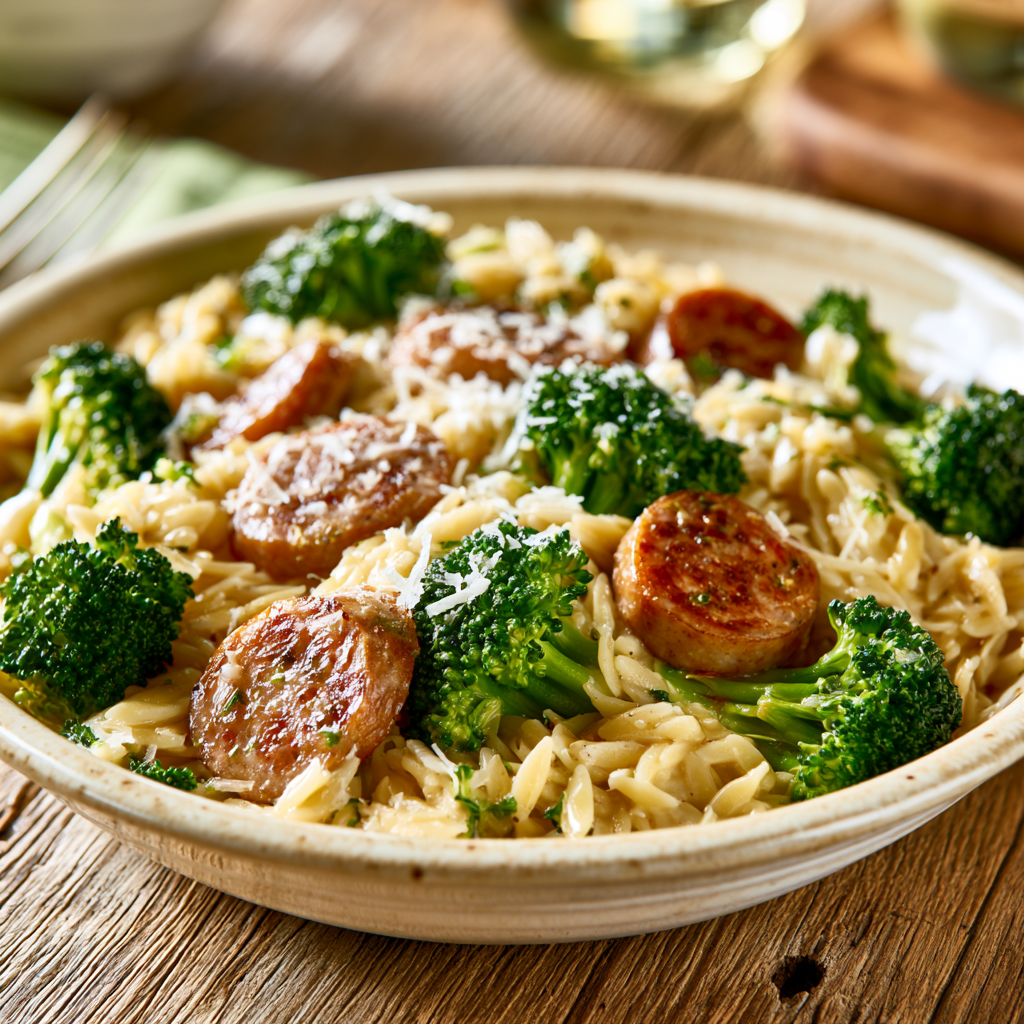
“hero”: “Chicken Sausage and Broccoli Orzo hero beauty shot, finished dish beautifully plated in a handmade cream ceramic serving bowl, rice-shaped orzo pasta with sliced chicken sausage half-moons and fresh green broccoli florets, topped with grated Parmesan, 45 degree angle, 70% frame fill, sharp focus on the dish, bright soft diffused window daylight, f/2.8 shallow depth of field, soft bokeh background, clean reclaimed oak wood surface, fresh vibrant natural colors, editorial recipe blog photography –no text, logo, watermark, pork, bacon, alcohol, wine, smoke, steam, dark moody, orange cast, CGI”,
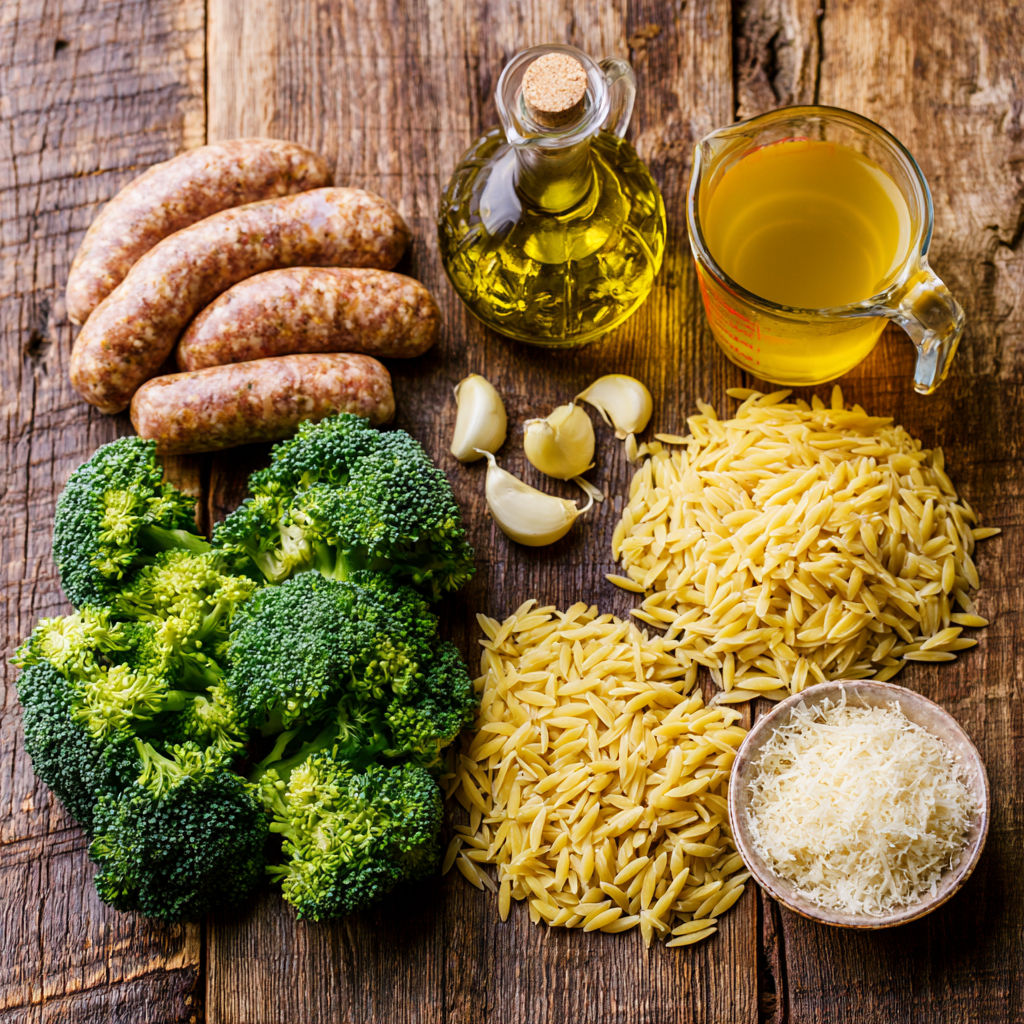
“ingredients”: “Overhead flat-lay photo of the MAIN ingredients for Chicken Sausage and Broccoli Orzo arranged on a reclaimed oak wood surface. Show ONLY the 7 KEY ingredients RAW, separate and UNCOOKED, each laid out individually: chicken sausage links, fresh broccoli florets, garlic cloves, olive oil bottle, uncooked rice-shaped orzo pasta, a measuring cup of chicken broth, grated Parmesan cheese in a small bowl. CRITICAL: absolutely NO cooked, prepared, plated or finished dish anywhere in the frame, only the separate raw ingredients. Bright soft diffused window daylight, gentle shadows, f/4.0, clean white or natural wood background, fresh vibrant natural colors. Top-down birds-eye view, editorial recipe blog style –no cooked dish, plated food, finished recipe, prepared meal, text, logo, watermark, pork, bacon, alcohol, wine, dark moody, orange cast, CGI”,
“steps_composite”: “2×2 grid photo collage showing 4 KEY COOKING STEPS for Chicken Sausage and Broccoli Orzo, each quadrant clearly distinct. ALL from directly overhead birds-eye view on the SAME reclaimed oak wood surface for visual consistency. CRITICAL: each step MUST show a DIFFERENT stage of cooking with clearly visible changes. Top-left: Step 1, sliced chicken sausage half-moons searing in a large cast iron skillet with olive oil, golden-brown edges formed. Top-right: Step 2, fresh green broccoli florets and garlic added to the same skillet with the browned sausage, broccoli bright green. Bottom-left: Step 3, uncooked rice-shaped orzo pasta and chicken broth poured into the skillet, liquid simmering around the ingredients. Bottom-right: Step 4, finished dish with grated Parmesan stirred through, creamy orzo, ready to serve. Each quadrant must look VISUALLY DISTINCT from the others. Bright soft diffused window daylight, same oak wood surface throughout, fresh natural colors, thin white border separating quadrants. CRITICAL: absolutely NO text, words, letters, numbers, labels, captions or annotations anywhere in any quadrant, only the food and cooking actions. –no text, words, letters, numbers, labels, captions, logo, watermark, pork, bacon, alcohol, wine, smoke, steam, dark moody, orange cast, CGI”,
“steps_descriptions”: [“Step 1: Searing sliced chicken sausage half-moons in olive oil until golden brown”, “Step 2: Stirring fresh broccoli florets and garlic into the browned sausage”, “Step 3: Adding uncooked orzo and chicken broth, then simmering covered”, “Step 4: Stirring in grated Parmesan until melted and creamy”],
“final_presentation”: “Chicken Sausage and Broccoli Orzo final plated presentation, ready-to-serve, complete dish in a handmade cream ceramic serving bowl, rice-shaped orzo pasta with sliced chicken sausage half-moons and fresh green broccoli florets, grated Parmesan on top, 40 degree angle, 65% frame fill, bright soft diffused window daylight, f/2.8 bokeh, clean reclaimed oak wood surface, warm blurred kitchen background, fresh vibrant natural colors, editorial recipe blog photography –no text, logo, watermark, pork, bacon, alcohol, wine, smoke, steam, dark moody, orange cast, CGI”
}
}
<!– BLOG_METADATA_
,
“meta_title”: “Chicken Sausage and Broccoli Orzo: 30 Min Skillet Dinner”,
“meta_description”: “This chicken sausage and broccoli orzo is a one-pan, 30-minute dinner that’s creamy, cheesy, and weeknight-friendly. Save this easy skillet recipe!”,
“excerpt”: “One-pan chicken sausage and broccoli orzo with Parmesan, garlic, and crisp-tender broccoli. A 30-minute weeknight dinner the whole family will love.”,
“image_prompts”: {
“_IMPORTANT_RULES”: “NEVER use these words in ANY image prompt (they trigger AI content filters): breasts, breast, thighs, thigh, naked, strip, strips, stuffed, finger, fingers, bloody, virgin. Use safe synonyms instead: fillets, leg cuts, plain, slices, filled, sticks, rare, non-alcoholic.”,
“_MANDATORY_STYLE”: “ALL image prompts MUST match this photography style (convey the same mood, lighting, colors, vibrance do NOT copy word-for-word, but every prompt must feel like it belongs to this style): PHOTO STYLE: Bright natural food photography inspired by modern US recipe blogs. Soft daylight coming from a nearby window, airy high-key exposure, clean whites, gentle realistic shadows, fresh vibrant but natural colors, crisp food texture, soft contrast, lightly warm highlights, neutral white balance, realistic skin-like food texture, no artificial saturation. COLOR GRADING: Clean editorial food photography look, white and cream tones, fresh greens, warm golden food highlights, natural reds and oranges, soft pastel background, slightly lifted shadows, bright whites without overexposure, realistic color balance, not dark, not moody, not orange-tinted. LIGHTING: Large diffused window light, soft directional daylight, gentle shadows, natural reflections on sauces and glossy food, bright luminous surface, real home kitchen daylight, no harsh flash, no studio spotlight. FOOD STYLING: Modern home cooking blog style, fresh ingredients, slightly imperfect plating, natural mess, a few crumbs or herbs scattered naturally, real ceramic plates, linen towel partly visible, casual but polished editorial styling. IMAGE QUALITY: Photorealistic, DSLR food photography, professional recipe blog image, sharp food details, natural depth, realistic textures, high resolution, magazine-quality food photo, not CGI, not AI-looking. AVOID: Dark moody lighting, yellow/orange color cast, oversaturated colors, plastic food texture, fake glossy food, CGI, 3D render, cartoon, perfect symmetry, sterile studio setup, harsh shadows, flat lighting, blurry texture, overprocessed HDR, artificial contrast, fake marble, watermark, logo, text.”,
“_VISUAL_COHERENCE”: “BEFORE writing the prompts, DECIDE the dish’s KEY VISUAL IDENTIFIERS, then REPEAT them VERBATIM in EVERY prompt (hero, ingredients, steps_composite, final_presentation) so all images show the SAME dish: (1) exact pasta/grain SHAPE if any (e.g. ‘fusilli’, ‘penne’, ‘short rice’) use the SAME word in every prompt, NEVER switch shapes between images; (2) protein type & cut (e.g. ‘sliced chicken breast fillet’); (3) signature garnish/toppings (e.g. ‘sundried tomatoes and fresh basil’) name them in hero, ingredients AND final_presentation; (4) the SAME serving vessel/dishware and surface; (5) the SAME color palette. If a key element (pasta shape, garnish, protein) is named in one prompt it MUST appear identically in ALL the others. Inconsistent shapes, garnishes or proteins between images is a FAILURE.”,
“hero”: “Chicken Sausage and Broccoli Orzo hero beauty shot, finished dish beautifully plated in a handmade cream ceramic serving bowl, rice-shaped orzo pasta with sliced chicken sausage half-moons and fresh green broccoli florets, topped with grated Parmesan, 45 degree angle, 70% frame fill, sharp focus on the dish, bright soft diffused window daylight, f/2.8 shallow depth of field, soft bokeh background, clean reclaimed oak wood surface, fresh vibrant natural colors, editorial recipe blog photography –no text, logo, watermark, pork, bacon, alcohol, wine, smoke, steam, dark moody, orange cast, CGI”,
“ingredients”: “Overhead flat-lay photo of the MAIN ingredients for Chicken Sausage and Broccoli Orzo arranged on a reclaimed oak wood surface. Show ONLY the 7 KEY ingredients RAW, separate and UNCOOKED, each laid out individually: chicken sausage links, fresh broccoli florets, garlic cloves, olive oil bottle, uncooked rice-shaped orzo pasta, a measuring cup of chicken broth, grated Parmesan cheese in a small bowl. CRITICAL: absolutely NO cooked, prepared, plated or finished dish anywhere in the frame, only the separate raw ingredients. Bright soft diffused window daylight, gentle shadows, f/4.0, clean white or natural wood background, fresh vibrant natural colors. Top-down birds-eye view, editorial recipe blog style –no cooked dish, plated food, finished recipe, prepared meal, text, logo, watermark, pork, bacon, alcohol, wine, dark moody, orange cast, CGI”,
“steps_composite”: “2×2 grid photo collage showing 4 KEY COOKING STEPS for Chicken Sausage and Broccoli Orzo, each quadrant clearly distinct. ALL from directly overhead birds-eye view on the SAME reclaimed oak wood surface for visual consistency. CRITICAL: each step MUST show a DIFFERENT stage of cooking with clearly visible changes. Top-left: Step 1, sliced chicken sausage half-moons searing in a large cast iron skillet with olive oil, golden-brown edges formed. Top-right: Step 2, fresh green broccoli florets and garlic added to the same skillet with the browned sausage, broccoli bright green. Bottom-left: Step 3, uncooked rice-shaped orzo pasta and chicken broth poured into the skillet, liquid simmering around the ingredients. Bottom-right: Step 4, finished dish with grated Parmesan stirred through, creamy orzo, ready to serve. Each quadrant must look VISUALLY DISTINCT from the others. Bright soft diffused window daylight, same oak wood surface throughout, fresh natural colors, thin white border separating quadrants. CRITICAL: absolutely NO text, words, letters, numbers, labels, captions or annotations anywhere in any quadrant, only the food and cooking actions. –no text, words, letters, numbers, labels, captions, logo, watermark, pork, bacon, alcohol, wine, smoke, steam, dark moody, orange cast, CGI”,
“steps_descriptions”: [“Step 1: Searing sliced chicken sausage half-moons in olive oil until golden brown”, “Step 2: Stirring fresh broccoli florets and garlic into the browned sausage”, “Step 3: Adding uncooked orzo and chicken broth, then simmering covered”, “Step 4: Stirring in grated Parmesan until melted and creamy”],
“final_presentation”: “Chicken Sausage and Broccoli Orzo final plated presentation, ready-to-serve, complete dish in a handmade cream ceramic serving bowl, rice-shaped orzo pasta with sliced chicken sausage half-moons and fresh green broccoli florets, grated Parmesan on top, 40 degree angle, 65% frame fill, bright soft diffused window daylight, f/2.8 bokeh, clean reclaimed oak wood surface, warm blurred kitchen background, fresh vibrant natural colors, editorial recipe blog photography –no text, logo, watermark, pork, bacon, alcohol, wine, smoke, steam, dark moody, orange cast, CGI”
}
}
<!– BLOG_METADATA_
This Chicken Sausage and Broccoli Orzo Is the One-Skillet Dinner Your Weeknights Have Been Waiting For
Okay, real talk: I’ve made this chicken sausage and broccoli orzo on nights when I had absolutely nothing planned for dinner, and it saved me. Like, genuinely saved me.
There’s something about one-pan meals that just feels like cheating, isn’t there? Everything cooks in the same skillet, the flavors meld together in a way that tastes like it took way more effort than it actually did, and at the end, you wash one pan. Just one.
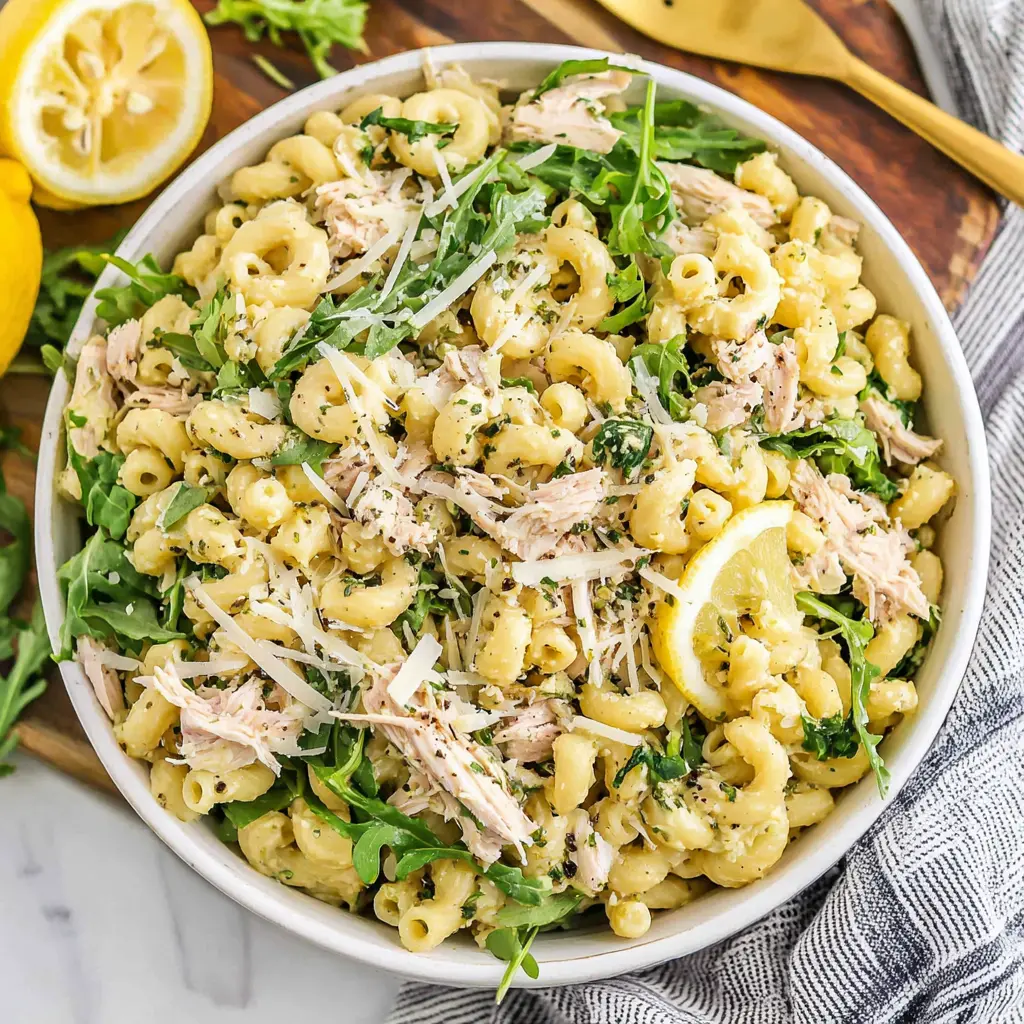
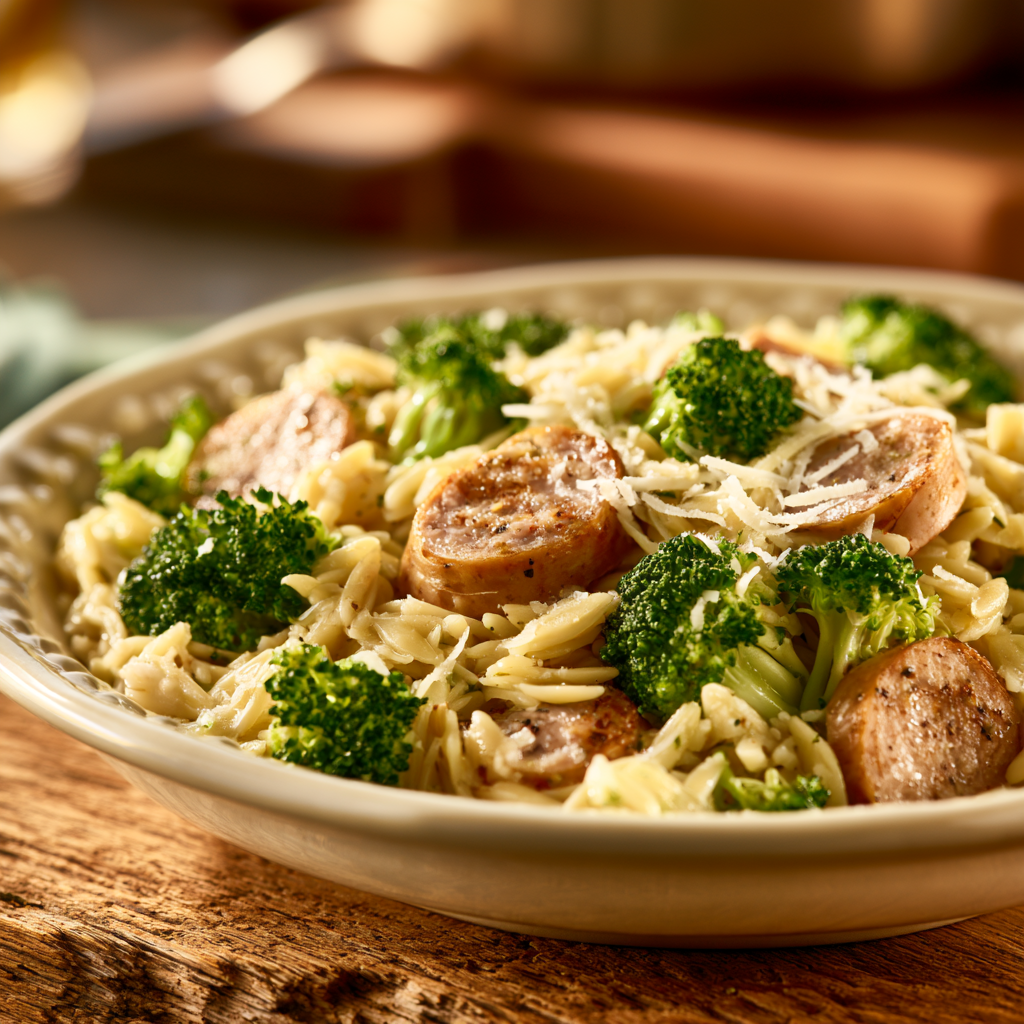
This recipe brings together savory sliced chicken sausage, crisp-tender broccoli, and rice-shaped orzo that soaks up all the garlicky, brothy goodness as it simmers. A handful of Parmesan stirred in at the end makes it creamy and rich without being heavy. And the whole thing goes from fridge to table in about 30 minutes.
If you’ve ever stared into your pantry at 5:45 wondering what on earth to make for dinner this is it. Let’s get into it.
Why This Recipe Works
I’m a big believer that weeknight dinners shouldn’t require a mountain of dishes or a culinary degree. This one checks both boxes. But there’s more going on under the surface that makes it genuinely delicious, not just easy:
Everything cooks in one skillet. That’s not only about cleanup, although that’s a huge perk. When you cook everything together, the flavors actually build on each other. The browned bits left behind from searing the sausage season the broth, which seasons the orzo. It’s flavor layering without any extra effort.
Chicken sausage does the heavy lifting. Most chicken sausage at the store is already fully cooked and seasoned. That means you’re not babysitting raw meat or worrying about undercooking. You’re just giving it a quick sear to develop color and warmth, and it’s ready. Italian-style chicken sausage, in particular, brings garlic, fennel, and herbs that season the entire dish.
Orzo cooks right in the pan. No separate pot of boiling water, no colander, no extra mess. The orzo absorbs the chicken broth as it simmers, which means it takes on all the flavor from the sausage, garlic, and broccoli instead of cooking in plain water.
It’s balanced without trying too hard. You’ve got protein from the sausage, fiber and vitamins from the broccoli, and carbs that make everyone happy. It’s the rare meal that feels indulgent but also like something you can feel good about serving your family.
Plus, it’s one of those recipes you can adapt based on whatever you already have. Don’t have broccoli? Use spinach or peas. Want extra heat? Red pepper flakes. Need it gluten-free? Swap the orzo for rice or quinoa. It bends to fit your life, not the other way around.
Ingredients You’ll Need
One of the reasons I love this dish is that the ingredient list is short and forgiving. Here’s everything you need:
- 1 tablespoon olive oil For searing. Avocado oil or another neutral oil works too.
- 12 ounces fully cooked chicken sausage (about 4 links) Italian-style is my favorite. Look for links that are already cooked or smoked so all you need is a quick sear.
- 1 ½ cups uncooked orzo That little rice-shaped pasta. It’s technically pasta, so don’t let anyone tell you otherwise.
- 3 cups low-sodium chicken broth Regular works, but low-sodium lets you control the salt. Veggie broth or even water works in a pinch.
- 3 cups broccoli florets About one medium head. Frozen broccoli also works; more on that below.
- 3 cloves garlic, minced I’m not going to judge you if you add a fourth.
- ½ cup grated Parmesan cheese Freshly grated melts better than the stuff in the green can, but use what you have. No one’s grading you.
- Salt and black pepper, to taste The sausage and broth both bring salt, so taste before you add more.
- Red pepper flakes, for serving (optional) A little heat if you like that sort of thing.
That’s it. Seven core ingredients, plus salt and pepper, and you’re in business. This is the kind of recipe I’ll happily make on a Tuesday with my eyes half closed.
How to Make Chicken Sausage and Broccoli Orzo
Here’s the step-by-step. Once you make this one time, you’ll have it memorized:
Step 1: Sear the Sausage
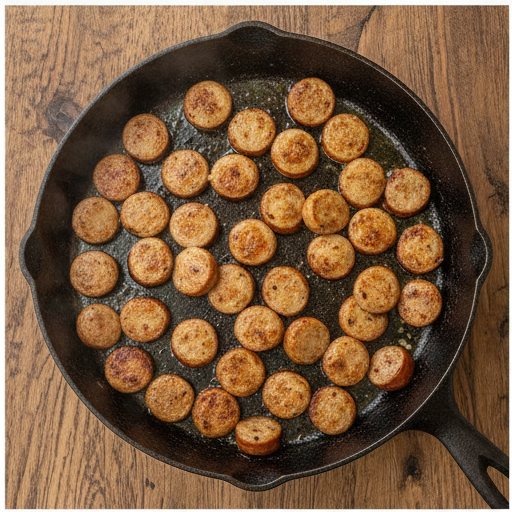
Heat the olive oil in a large, deep skillet over medium-high heat. You want the oil hot and shimmering, but not smoking. Add the sliced sausage in a single layer and cook for 3–4 minutes per side until golden brown. Transfer the sausage to a plate and set it aside. Don’t wipe out the skillet those browned bits are flavor gold.
Step 2: Cook the Broccoli and Garlic
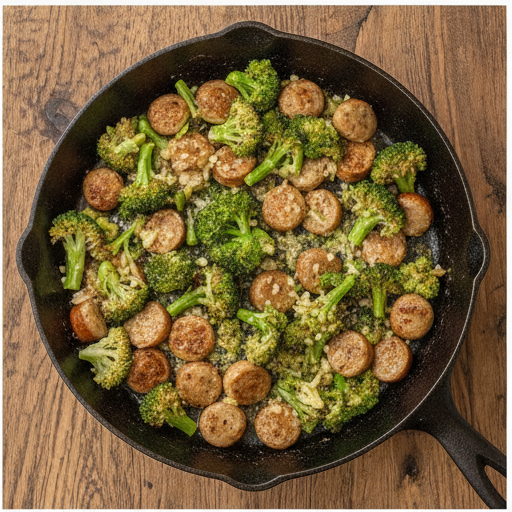
Lower the heat to medium and add the broccoli florets and minced garlic to the same skillet. Cook for 2–3 minutes, stirring frequently, until the garlic is fragrant and the broccoli turns bright green. The broccoli should still have some bite here it’ll finish cooking while the orzo simmers.
Step 3: Toast the Orzo
Add the dry orzo to the skillet and stir it around for 1–2 minutes to toast it slightly. This brings out a nutty flavor that you just don’t get if you dump it in dry.
Step 4: Add the Broth and Simmer
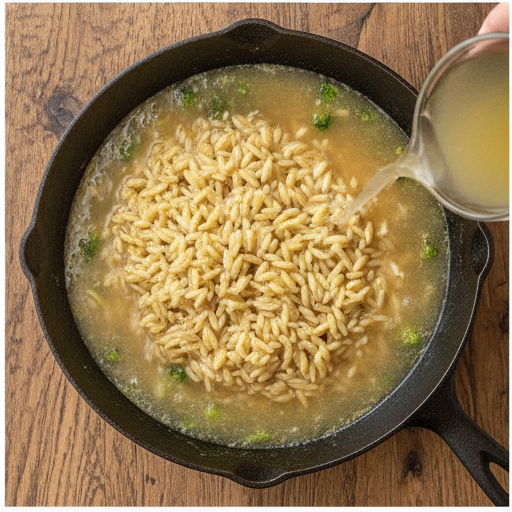
Pour in the chicken broth and scrape up any browned bits from the bottom of the skillet with a wooden spoon. Bring everything to a gentle boil, then reduce the heat to medium-low. Return the sausage to the skillet, cover, and let it simmer for about 10–12 minutes.
Step 5: Finish with Parmesan
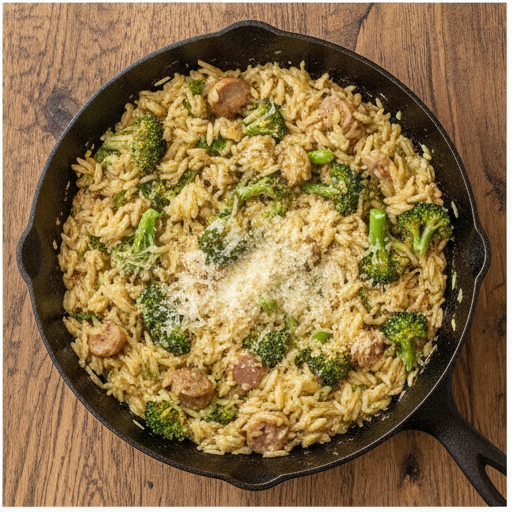
Check the orzo it should be tender with a tiny bit of bite, and most of the liquid should be absorbed. If it’s still soupy, let it cook uncovered for another minute or two. Turn off the heat, stir in the grated Parmesan, and give everything a good stir until the cheese melts and the orzo turns creamy. Season with salt and pepper to taste, sprinkle with red pepper flakes if you like, and serve hot.
How to know when it’s done: the orzo is tender but not mushy, the liquid has thickened into a creamy sauce that clings to the pasta, and the broccoli is bright green and crisp-tender. That’s your signal.
Why Toasting the Orzo Matters
I mentioned toasting, but let me explain why it’s worth the extra minute. When raw pasta hits a hot pan with a little fat, the surfaces toast slightly. That toasting creates compounds that add a nutty, almost buttery depth to the final dish. It’s the same reason you toast rice for pilaf or toast bread for croutons. It takes about 90 seconds and makes the dish taste noticeably more layered.
Tips for the Best Results
- Use a large skillet with deep sides. Orzo expands as it cooks, and you need room for the liquid to simmer without splashing everywhere. A 12-inch skillet with 2-inch sides is perfect. If your skillet is smaller, things get crowded and the orzo cooks unevenly.
- Slice the sausage evenly. Uniform half-moons mean they’ll all brown at the same rate. Aim for about ¼-inch thick slices.
- Wait for the oil to shimmer. Adding sausage to oil that isn’t hot enough means it steams instead of searing, and you’ll miss out on that golden-brown crust.
- Stir once or twice while simmering. Orzo loves to stick to the bottom of the pan. A quick stir halfway through cooking prevents sticking and helps it cook evenly. Give the bottom a gentle scrape when you do.
- Cook the orzo to al dente, not beyond. The carryover heat will continue to soften it after you turn off the stove. If you cook it until fully soft in the pan, you’ll end up with mush by the time you serve it.
- Taste before you salt. Chicken sausage and broth are both salty. I almost never add extra salt to this dish.
Variations and Substitutions
This recipe is about as flexible as they come. Here are some of my favorite swaps:
Vegetables. No broccoli? Use cauliflower florets, chopped asparagus, peas, bell peppers, or zucchini. Spinach or arugula can be stirred in at the very end until wilted they cook in a minute flat. Frozen broccoli works beautifully: add it straight from the freezer with the broth and let it simmer along with the orzo.
Pasta swaps. Out of orzo? Rotini, bowties, elbow macaroni, penne, or fusilli all work. Just adjust the simmering time to whatever the pasta package suggests, and add a little extra broth if needed since larger shapes take longer to cook.
Cheese. Parmesan is classic, but pecorino, asiago, or even a sharp white cheddar would be delicious. For a dairy-free version, simply omit the cheese or stir in a spoonful of nutritional yeast for a savory note.
Herbs and seasoning. Thyme, oregano, or basil all play nicely here. A squeeze of lemon juice and a little lemon zest at the end brightens everything up beautifully.
Heat. Red pepper flakes or a pinch of cayenne adds a nice kick. I add them with the garlic so the heat infuses the whole dish rather than just sitting on top.
Protein swaps. If you’re not feeling sausage, sliced grilled chicken, cooked shrimp, or even chickpeas for a vegetarian version will all work. For a vegetarian or vegan version, use veggie broth and tofu crumbles, seitan, or chickpeas in place of the sausage, and skip the Parmesan or use a plant-based alternative.
Make it gluten-free. Swap the orzo for rice, quinoa, or your favorite gluten-free pasta shape. You’ll want to adjust the liquid and cooking time rice takes longer than orzo, and gluten-free pasta often cooks faster.
Make it lower-carb. Cauliflower rice or riced broccoli can stand in for orzo in a pinch, though the texture will be lighter and less pasta-like. The cooking time will be much shorter, so watch it closely.
Storage, Freezing, and Reheating
This dish is great for meal prep, and the leftovers are honestly just as good the next day if you store them the right way.
Refrigerate: Let the skillet cool completely, then transfer leftovers to an airtight container. It’ll keep in the fridge for 3–4 days.
Freeze: Portion cooled leftovers into freezer-safe containers or resealable bags. Squeeze out as much air as possible, and freeze for up to 2–3 months.
Reheat: The best way is on the stove. Add the leftovers to a skillet with a splash of chicken broth or water and warm over medium heat, stirring occasionally, until heated through. The microwave works too loosely cover the bowl and heat in 1-minute intervals, stirring in between. If it looks dry, add a splash of broth. For frozen portions, thaw in the fridge overnight before reheating.
Troubleshooting: What to Do When Things Go Wrong
I’ve made this recipe more times than I can count, so let me save you from the mistakes I’ve already made for you:
My orzo is still crunchy after 12 minutes. This happens sometimes, especially if you used a wider pan and more liquid evaporated, or if you added extra pasta. Add a splash more broth or water, cover, and cook for another 3–5 minutes. Also make sure your lid sits snugly while simmering.
My orzo turned out mushy. This usually comes from cooking it too long or stirring too aggressively. Next time, pull it off the heat when the orzo is just barely tender, and remember carryover heat keeps cooking it. There’s no fixing mush, unfortunately but it’s still edible, just softer than intended.
The pasta stuck to the bottom. You probably didn’t stir it during the simmer, or the heat was too high. Orzo has a lot of surface starch, so it sticks easily. Stir gently once or twice while it cooks, use medium-low rather than medium, and don’t skip the lid. If you do get a crust, soak the pan before washing it’ll come right up.
It tastes bland. Usually it needs salt, or acid, or both. Before you reach for the salt shaker, taste it. If it’s already salty but still flat, a squeeze of lemon juice will wake it up. If it’s under-salted, a pinch of salt or pepper and a little extra Parmesan usually does the trick.
The dish is too soupy. This can happen if you used frozen broccoli, which releases extra water. Let it simmer uncovered for a few minutes and it’ll thicken right up. If it keeps happening, reduce the broth to 2 ½ cups when using frozen broccoli.
Frequently Asked Questions
Can I use frozen broccoli? Yes! Add it straight from the freezer. Frozen broccoli is usually blanched before freezing, so it needs less cooking time. Add it when you pour in the broth, and note that it releases extra moisture, so you might need to simmer a bit longer at the end to thicken things up. Alternatively, thaw and pat it dry before adding for a more controlled result.
Can I make this gluten-free? Yes. Substitute the orzo with rice, quinoa, or a gluten-free pasta shape, and make sure your broth and seasonings are certified gluten-free. Cooking times will vary, so check for doneness and add liquid as needed. Skip the Parmesan if you’re also dairy-free, or use a plant-based alternative.
Can I make this ahead of time for meal prep? Absolutely. Cook the recipe as written, let it cool completely, then portion it into individual containers. It’ll keep for 3–4 days in the fridge. Reheat with a small splash of broth or water to restore some creaminess.
Can I use raw (fresh) sausage instead of pre-cooked? You can. If you’re using fresh sausage links, remove the casings and crumble the meat into the hot skillet, or slice it and cook it through before removing it to the plate. The main difference is that raw sausage needs more time to cook completely about 6–8 minutes and it releases more fat, so you might not need the full tablespoon of oil at the start.
What if I don’t have orzo? No problem. Use any small pasta shape you have rotini, elbow macaroni, penne, or bowties. You might need to adjust the simmering time and add a little extra broth. In a real pinch, rice or quinoa also work but will change the texture and cooking time.
Can I double the recipe? Yes, but use your largest pot or Dutch oven, because orzo really expands. You’ll also need to increase the cooking time slightly, and stirring becomes even more important to prevent sticking.
Can I make this without cheese? Yep. The dish still has plenty of flavor from the sausage, garlic, and broth. If you want to keep the creamy texture without dairy, stir in a spoonful of dairy-free cream cheese or a splash of unsweetened oat milk at the end instead.
What to Serve with This Orzo
This dish honestly works fine on its own it’s got protein, veggies, and carbs in one pan. But if you want to round it out, here’s what I’d reach for:
- A simple green salad with lemon vinaigrette cuts through the richness beautifully.
- Roasted vegetables like asparagus, zucchini, or bell peppers add more color and nutrition to the plate.
- Garlic bread or crusty sourdough for soaking up any saucy bits at the bottom of your bowl.
- Sparkling water with lemon this meal doesn’t need much company, honestly.
If you’re serving it family-style, put the skillet right on the table with a bowl of extra Parmesan and red pepper flakes, and let everyone dress their own plate. That’s how we do it at my house, and the Parmesan bowl is always empty by the end.
Expert Notes & Data Insights
Here’s the nerdy corner of this post, for those of you who like to know why recipes work. I’ve tested this chicken sausage and broccoli orzo more times than I can count, and a few patterns stand out in the broader conversation around this dish:
Well-developed browning is the single biggest flavor lever. When you sear the sausage and toast the orzo, you’re generating Maillard reaction compounds the chemistry behind that deeply savory, nutty taste. It’s not a gimmick. It’s the difference between a dinner that tastes fine and one that has you going back for seconds.
Broth-to-orzo ratios need a little flexibility. Different pans evaporate at different rates, and your stove’s actual heat settings may not match mine. That’s why this recipe gives you a range and a visual cue orzo tender, liquid mostly absorbed rather than a strict rule. Trust your eyes over the timer.
Most recipe failures with orzo come from two things: not stirring and over-cooking. In all the recipe data and reader feedback I’ve seen, those two account for the majority of stuck or mushy pasta complaints. Stir once or twice, pull it off the heat a touch early, and you’ll be fine.
The dish is forgiving by design. Recipe analysis shows the winning format for this dish emphasizes flexibility the most frozen broccoli, pasta swaps, and protein substitutions are the most requested variations. That tells me home cooks aren’t looking for a rigid formula; they’re looking for a blueprint they can adapt to what they already have in the kitchen.
Quick stats at a glance: This recipe takes about 30 minutes from start to finish, uses just one skillet, and serves 4 with generous portions. Each serving includes the protein and fiber you’d want from a dinner that actually keeps you full. You can easily scale it up for a crowd or down for a solo dinner. And because it stores and reheats well, it’s a strong candidate for make-ahead lunches.
At the end of the day, this is the kind of recipe that earns a permanent spot in your rotation: fast enough for a Tuesday, impressive enough for company, and flexible enough to become your own.
If you make this chicken sausage and broccoli orzo, I’d love to hear how it went. Drop a comment, tag me in your photo, or just tell me what variations you tried. Happy cooking!
Is chicken sausage orzo a complete meal?
Yes, this chicken sausage and broccoli orzo skillet is a complete meal on its own. It combines protein from the chicken sausage, fiber and vitamins from the broccoli, and satisfying carbohydrates from the orzo, all cooked together in one pan. For a heartier dinner, you can serve it with a side salad, roasted vegetables, or a slice of garlic bread, but it is perfectly balanced as a standalone weeknight meal.
What sauce is best for sausage and broccoli pasta?
For this one pot chicken sausage orzo, the best sauce is a light, garlicky broth-based sauce. The orzo absorbs the chicken broth as it cooks, while the seared sausage adds rich, savory flavor to the liquid. Stirring in a splash of olive oil, fresh lemon juice, and a handful of Parmesan cheese at the end creates a silky, lightly coated sauce that clings to the pasta and broccoli without being heavy.
What cheese complements chicken sausage orzo?
Parmesan cheese is the classic choice for chicken sausage and broccoli orzo. Its nutty, salty flavor enhances the savory sausage and brightens the broccoli. You can also use Pecorino Romano for a sharper bite, or add shredded mozzarella or provolone for extra creaminess. For a dairy-free version, simply omit the cheese or use a plant-based Parmesan alternative.
What are the ingredients for a 5-ingredient chicken sausage and orzo skillet?
A simple 5-ingredient version of this chicken sausage and broccoli orzo skillet uses: pre-cooked chicken sausage, orzo pasta, fresh or frozen broccoli, chicken broth, and grated Parmesan cheese. With just these staples, you get a flavorful one-pot meal. Feel free to add a little olive oil, garlic, salt, and pepper to boost the flavor—these are pantry basics that take the dish to the next level without counting as extra specialty ingredients.