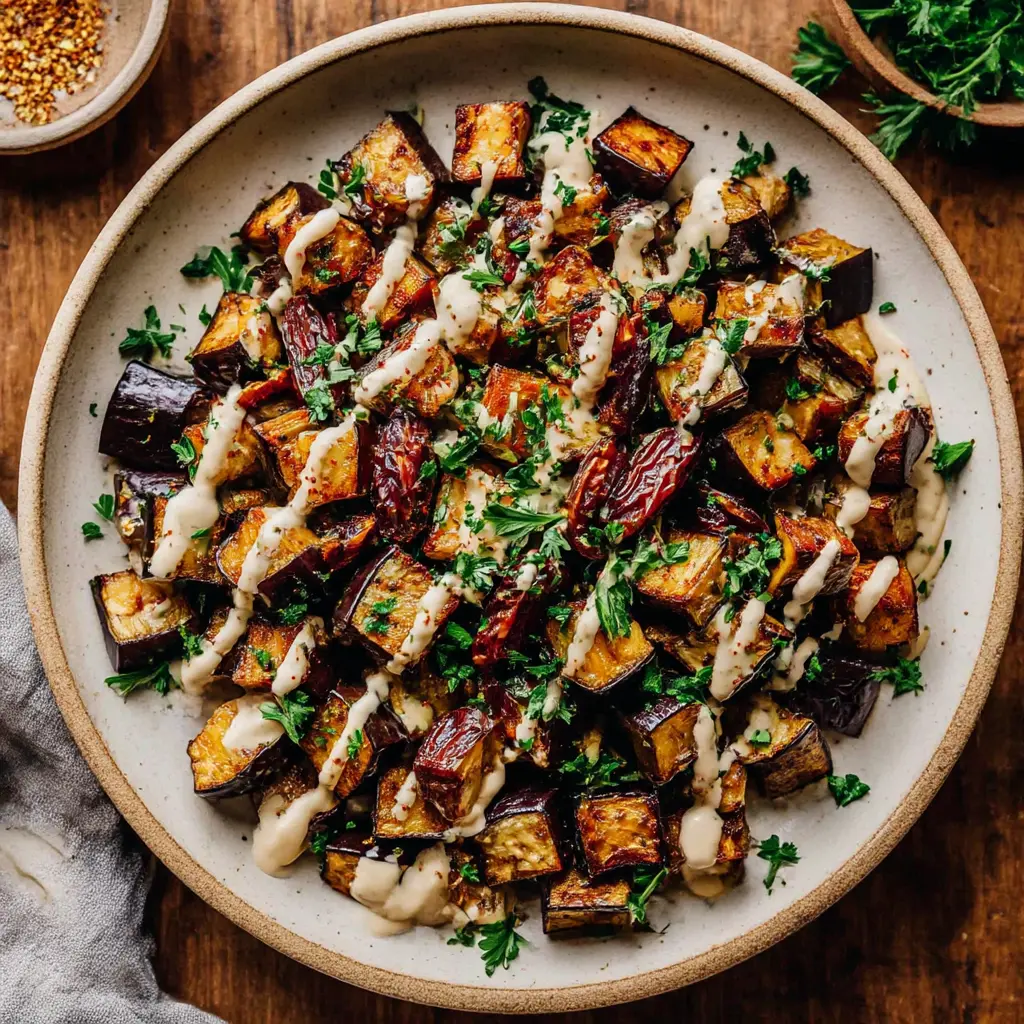
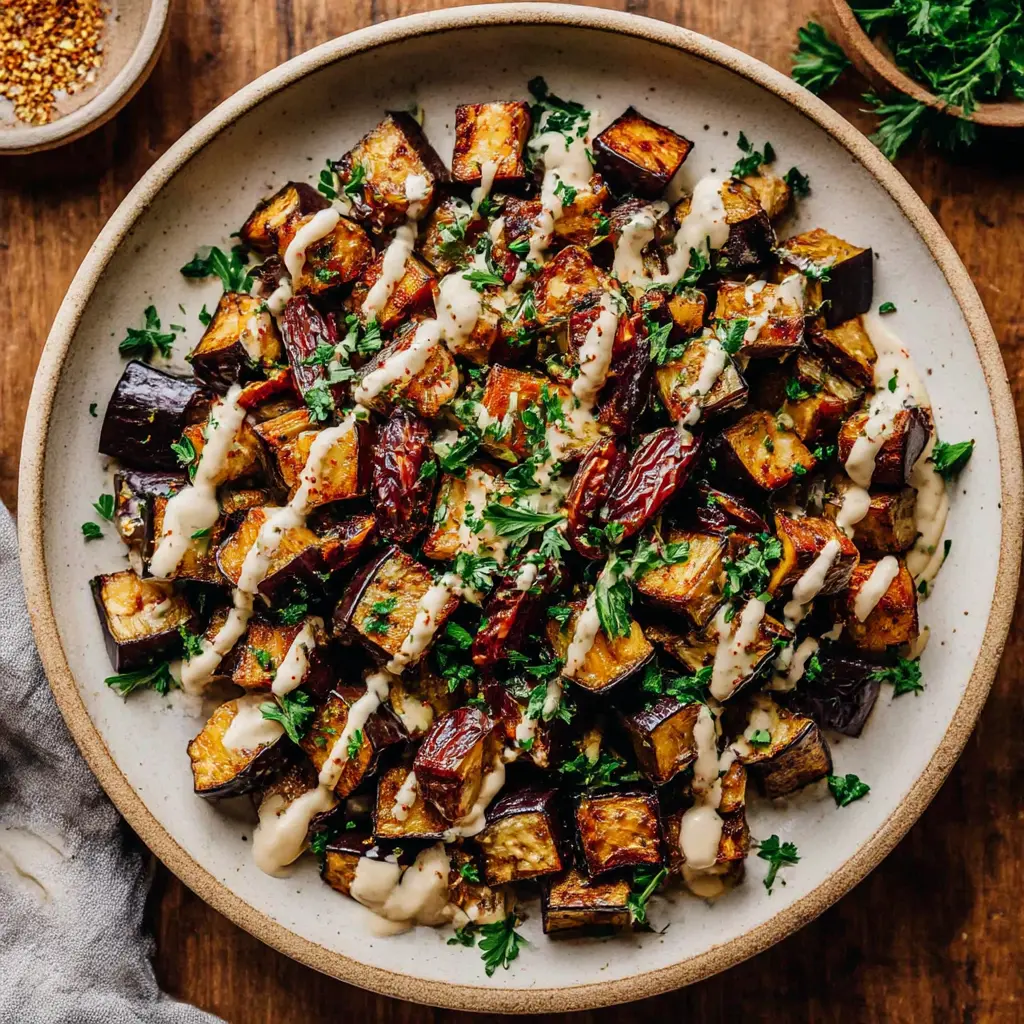
Mediterranean Roasted Eggplant with Tahini and Dates
Ingredients
Method
- Heat the oven to 450 degrees F. Line a rimmed baking sheet with parchment paper.
- Cut off the stem and base from the eggplant. Slice it into 1 1/2-inch thick rounds, then cut the rounds into evenly sized large cubes.
- Place the eggplant cubes in a large mixing bowl and drizzle with the olive oil. Toss until every piece is lightly coated.
- In a small bowl, stir together the salt, black pepper, cumin, coriander, cinnamon, cardamom, dried basil, oregano, and garlic powder.
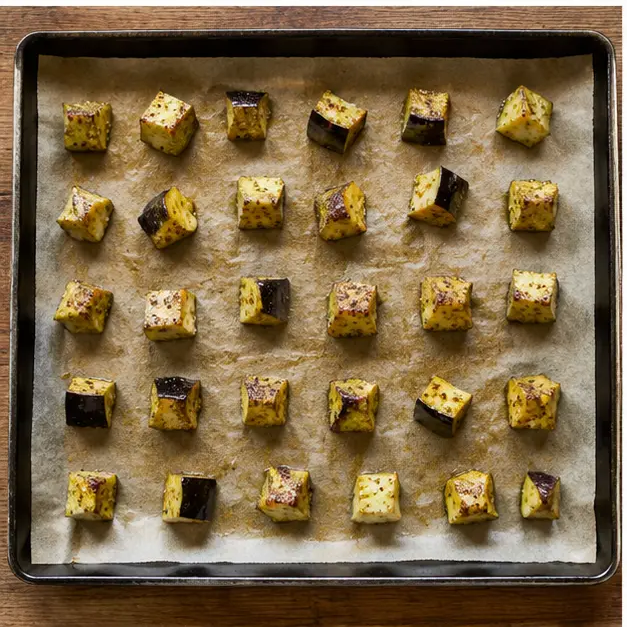
- Spread the eggplant cubes in a single layer on the prepared baking sheet. Sprinkle the spice blend over the top, then use your hands to rub the seasoning onto all sides. Use all or nearly all of the spice mix.
- Roast for 20 minutes. Remove the pan from the oven, flip or stir the eggplant with a thin spatula, and return to the oven for another 5 to 10 minutes, until tender and browned on the edges but not shriveled.
- While the eggplant roasts, make the tahini sauce. In a blender, food processor, or bowl, combine the tahini, 2 tablespoons warm water, lemon juice, and a pinch of salt. Whisk or blend until smooth, adding the remaining 1 tablespoon warm water if the sauce is too thick.
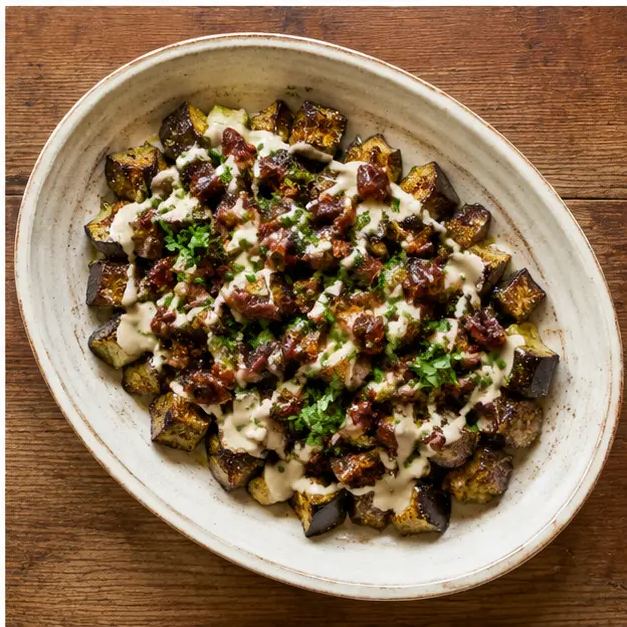
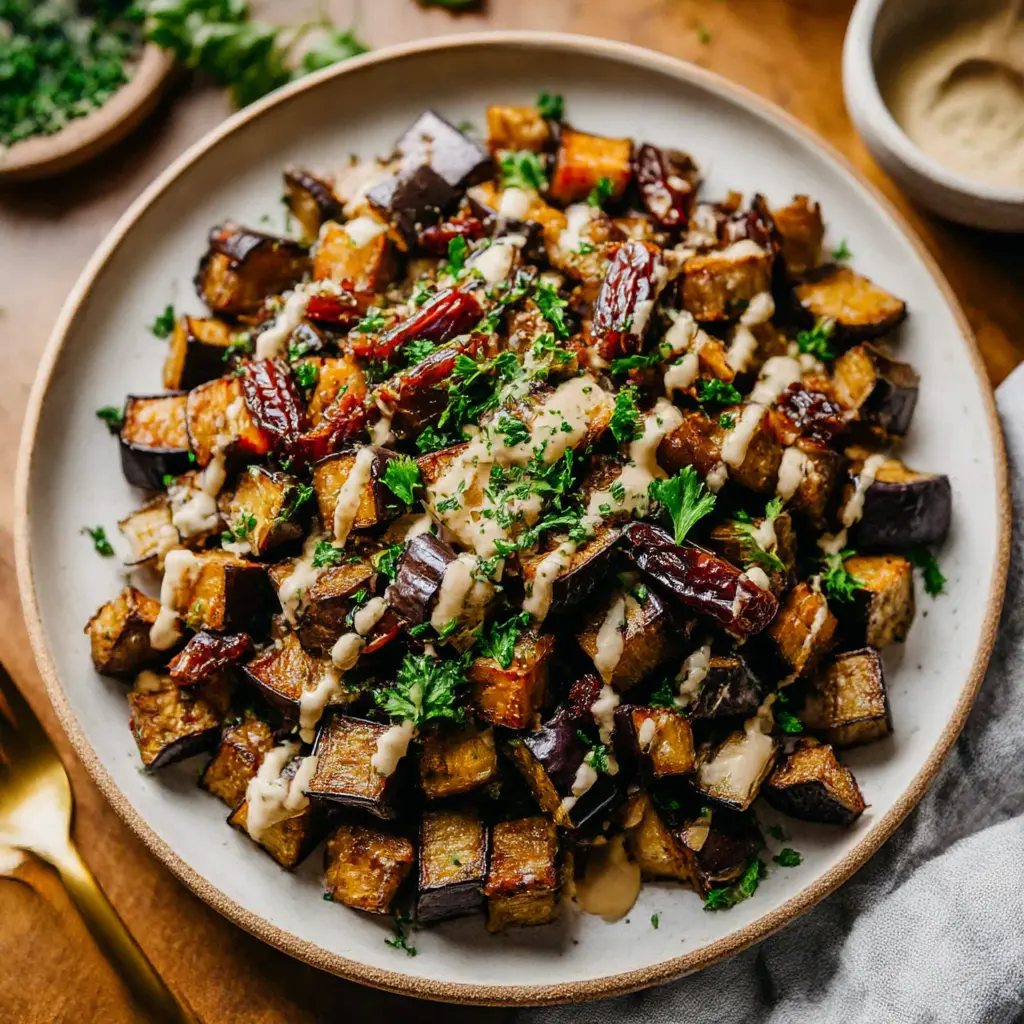
- Transfer the roasted eggplant to a serving dish. Drizzle with the tahini sauce, or serve it on the side if you plan to have leftovers. Top with fresh parsley and chopped dates, if using.
Nutrition
Notes
Tried this recipe?
Let us know how it was!Why This Mediterranean Roasted Eggplant Actually Works
Labor Day is six days away, and late August is peak eggplant season. Farmers markets are overflowing with glossy purple globes right now, which makes this the perfect moment for Mediterranean roasted eggplant. It’s the side dish that’ll steal the show at your last big cookout of the summer.
Full disclosure: I used to order roasted eggplant at restaurants but never dared make it at home. I was terrified of bitterness, sogginess, and greasy mush. Sound familiar? The secret is simpler than you’d think.
This Mediterranean roasted eggplant recipe leans into everything the Mediterranean diet does best: extra virgin olive oil, warm spices, bright lemon, and creamy tahini. The cubes turn golden and caramelized on the outside, jammy on the inside, and the whole thing comes together in about 30 minutes of mostly hands-off oven time.
Alright, let’s get this show on the road.
Ingredient Notes & Substitutions
You don’t need much for this Mediterranean roasted eggplant, and most of the ingredients are probably already in your pantry. Here’s what matters:
- Globe eggplant: The classic choice. Big, meaty, and forgiving. Japanese eggplant works too, but it’s thinner and roasts faster, so adjust the time.
- Extra virgin olive oil: Three tablespoons is plenty. You want each cube coated, not swimming.
- The spice blend: Cumin, coriander, cinnamon, dried oregano (Greek oregano if you’ve got it), dried basil, and garlic powder. The cinnamon and cardamom are subtle, but they’re what make this taste special.
- Tahini: Stir the jar well before measuring. The sesame paste settles at the bottom, and nobody wants a gritty sauce.
- Meyer lemon: Freshly squeezed only. Bottled juice won’t give you that bright pop at the end.
- Medjool dates: Finely chopped, they add a caramel-like sweetness that plays beautifully against the savory spices.
Out of dates? Swap in chopped dried apricots or golden raisins. Want a savory version? Skip them entirely. The tahini sauce can be made a day ahead and thinned with warm water whenever you’re ready to serve.
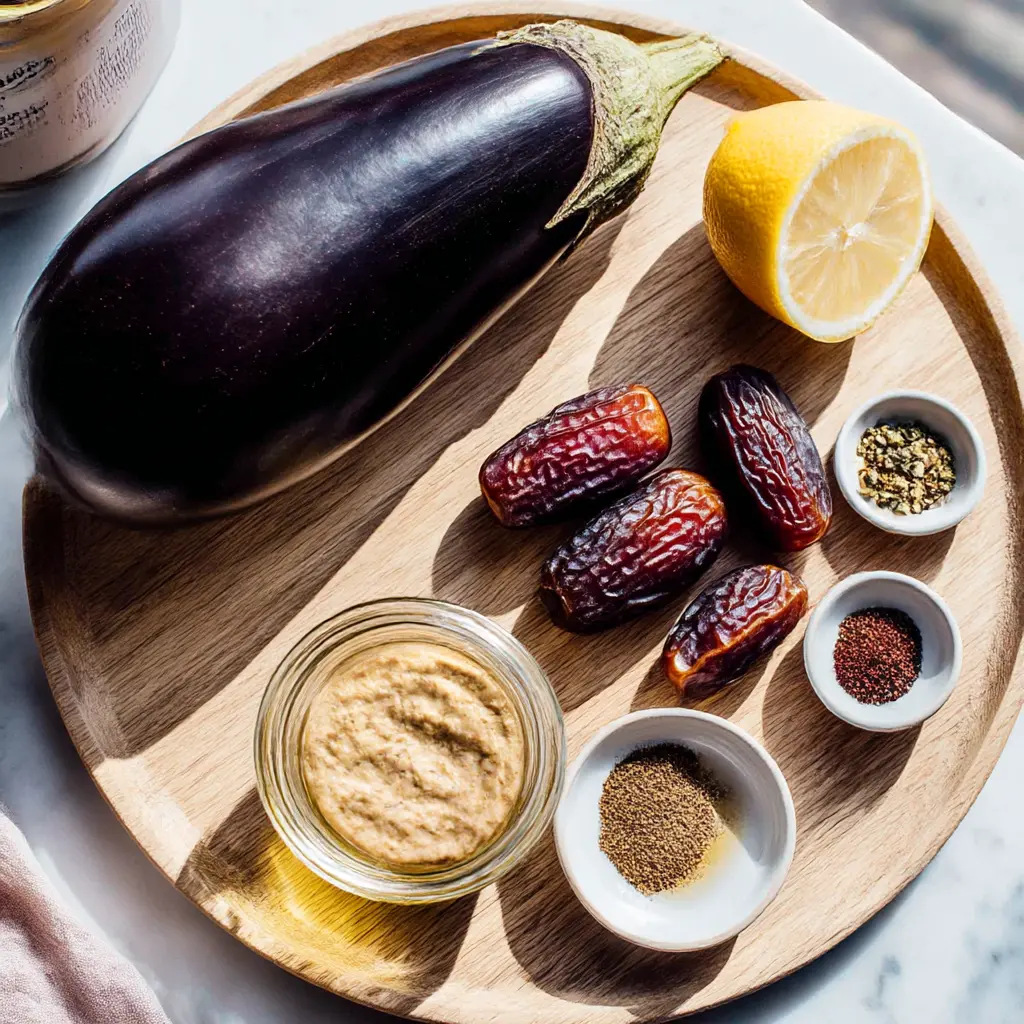
How to Pick and Prep Eggplant
How to Pick a Good Eggplant
I do my grocery shopping at the farmers market on Saturday mornings, and this is the time of year when I fill my canvas bag with eggplant. But you gotta choose wisely.
Look for an eggplant that feels heavy for its size with tight, glossy, unblemished skin. Give it a gentle squeeze: it should bounce right back. Soft spots or dents mean it’s past its prime, and a dry, brown stem means it’s been sitting around too long.
Helpful Tools
- Rimmed baking sheet (the rim matters, trust me)
- Parchment paper for easy cleanup
- Large mixing bowl for tossing
- Thin spatula for flipping without smashing
- A small bowl, jar, or blender for the tahini sauce
How to Prepare Eggplant
Here’s the big question everyone asks: do you need to salt eggplant before cooking? The honest answer? Not if it’s fresh. I skip salting for this recipe because high heat does all the work. If you’re worried about bitterness, taste a tiny piece of raw eggplant. Bitter? Salt the cubes, let them sit for 30 minutes, rinse, and pat dry. Fresh and sweet? Proceed straight to roasting.
Wash the eggplant, trim the stem and base, and slice it into 1 1/2-inch thick rounds. Then cut those into large, even cubes. No chef skills required, a basic chop is perfect. And no, you don’t need to peel it. The skin holds the cubes together and gets beautifully caramelized in the oven.
How to Roast Mediterranean Eggplant
Alright, the oven’s heating to 450°F and the eggplant is cubed. Here’s how the magic happens, in four stages.
Stage 1: Toss with olive oil. Drop the cubes into your big bowl, drizzle with the oil, and toss until every piece is lightly coated. This does double duty: it helps the spices stick and it encourages that gorgeous golden browning. I’ve made the mistake of skimping on oil before, and the result was dry, sad eggplant. Don’t rush the caramelization, buddy.
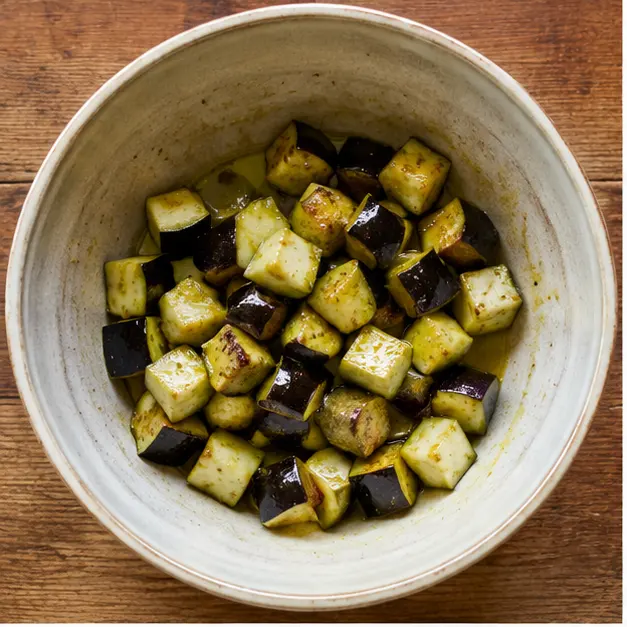
Stage 2: Season generously. In a small bowl, stir together the salt, black pepper, cumin, coriander, cinnamon, cardamom (if using), dried basil, oregano, and garlic powder. Sprinkle it over the eggplant and use your hands to rub the seasoning onto every side. Use all or nearly all of it. This is where that warm, aromatic crust starts to take shape.
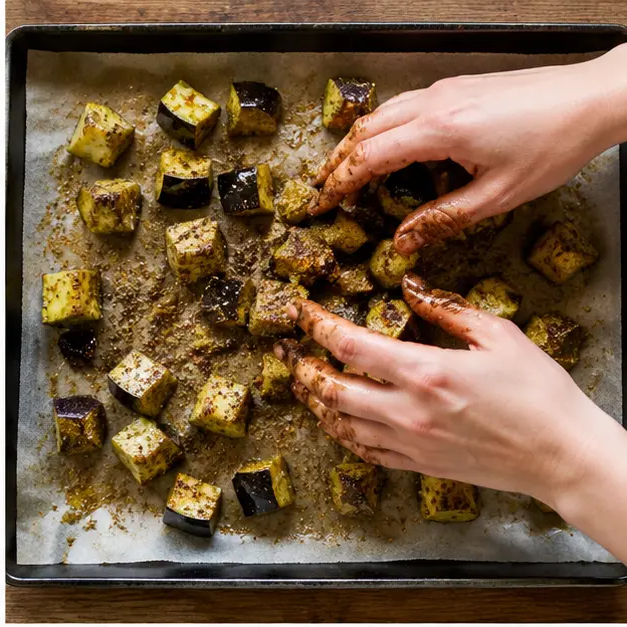
Stage 3: Roast hot and fast. Spread the cubes in a single layer on your parchment-lined baking sheet. Give each piece some breathing room. Crowding causes steaming, and steamed eggplant turns soggy instead of caramelized. Roast for 20 minutes, pull the pan, flip or stir with a thin spatula, then return for 5 to 10 more minutes. You’re looking for tender flesh with browned, crinkly edges that yields gently to a fork. Not shriveled, just golden.
Stage 4: Sauce and finish. While the eggplant roasts, whisk the tahini with warm water, lemon juice, and a pinch of salt until smooth and pourable. When the tray comes out, transfer the eggplant to a serving dish, drizzle with the tahini sauce, and shower with fresh parsley and chopped dates. That final lemon juice drizzle? Chef’s kiss.
The Lemon Tahini Sauce
This is honestly the sauce that makes the whole dish. Four tablespoons of tahini, a little warm water, fresh Meyer lemon juice, and a pinch of salt. If your tahini is very thick, whisk it with the warm water first, then add the lemon juice. You want it pourable but not watery, think heavy cream.
Too thick? Add the extra tablespoon of warm water. Too tangy? A tiny pinch more salt balances it out. Taste and adjust, that’s the whole secret. The sauce also keeps beautifully in the fridge for up to two weeks, which is dangerous knowledge to have.
Tips for the Best Roasted Eggplant
I’ve made every eggplant mistake in the book so you don’t have to. Here are the ones that matter most:
- ❌ Overcrowding the pan → ✅ Keep cubes in a single layer. Space equals caramelization.
- ❌ Skipping the flip → ✅ Flip or stir at 20 minutes for even color and tenderness.
- ❌ Using garlic salt instead of garlic powder → ✅ Garlic salt throws off the whole seasoning balance.
- ❌ Drizzling sauce over everything when you expect leftovers → ✅ Serve the tahini on the side so the eggplant stays crisp.
- ❌ Roasting too long → ✅ Start checking at 25 minutes total. Shriveled eggplant is sad eggplant.
Oh, and one more thing. Elena says I over-salt everything. She’s wrong, but I measured carefully here anyway. You can always add more salt, but you can’t take it out.
Variations Worth Trying
One of the things I love about this Mediterranean roasted eggplant is how flexible it is. Here are a few ways to change it up:
- Swap the dates for chopped dried apricots or golden raisins, or leave them out for a fully savory side dish.
- Make it a meal. Serve the eggplant over grains with fresh greens, or stuff it into warm pita with crunchy bell peppers and cherry tomatoes plus an extra drizzle of tahini.
- Grill instead of roast. On a hot evening when you can’t face the oven, brush thick eggplant slices with olive oil and grill until charred. Then brush with the spice mix and finish with the tahini sauce. Same flavors, cooler kitchen.
- Go full mezze. This dish fits right in on a mezze platter next to hummus, baba ganoush, and warm pita. It’s basically a deconstructed, roasted baba ganoush situation with extra texture.
If you love a za’atar spice blend, this same roasting method works beautifully with it swapped in. But the cumin-coriander-cinnamon combo here is special, so try it as written first.
Storage, Reheating & Serving
How to Store and Reheat
Leftover Mediterranean roasted eggplant keeps in an airtight container in the fridge for up to 3 days. Store the tahini sauce separately. If you drizzle the whole dish, the eggplant gets soggy and the sauce loses its brightness.
To bring back those crisp edges, reheat in a 375°F oven or air fryer for about 10 minutes. A microwave works in a pinch, but you’ll lose the caramelization, and that’s the best part.
Serving Suggestions
This eggplant side dish goes with just about everything. I love it next to grilled chicken or fish, over a bowl of chickpeas, or spooned onto a grain bowl with fresh greens. It’s also delicious at room temperature, which makes it perfect for a Labor Day cookout. No steamy plates on a hot evening, just good food on the table.
Frequently Asked Questions
Ready to Conquer Eggplant?
When you pull this Mediterranean roasted eggplant from the oven on Labor Day weekend, with the edges golden and crinkly and the scent of garlic and oregano filling your kitchen, you’ll wonder why you ever hesitated. The tahini sauce, the sweet dates, that bright pop of lemon. It all comes together like a mini vacation on a plate.
Try this once and you’ll never be scared of eggplant again. And if you make it, let me know how it goes. I want to hear about that golden tray. You can also find more recipe inspiration over on my Pinterest page if you’re hunting for your next summer side.
You’ve officially conquered eggplant. Now go enjoy the spoils.
Source: Learn More About This Dish
What’s the best way to roast eggplant?
Cut it into 1 1/2-inch cubes, toss with olive oil and spices, and roast at 450°F in a single layer on a parchment-lined sheet. Flip after 20 minutes and roast 5 to 10 minutes more, until the flesh is tender and the edges are golden and crinkly.
What are common mistakes when roasting eggplant?
Overcrowding the pan, which causes steaming and sogginess. Skipping the flip halfway through. And roasting too long until the cubes shrivel. Give each piece room, flip once, and start checking at 25 minutes total.
What is the best and easiest way to cook eggplant?
High-heat roasting in the oven. It’s hands-off, requires no fancy equipment, and brings out eggplant’s natural sweetness. This Mediterranean roasted eggplant with tahini is proof: about 10 minutes of prep and the oven does the rest.
Do you have to peel eggplant before you roast it?
Nope. The skin holds the cubes together, keeps the flesh moist, and turns beautifully caramelized in the oven. Just wash it well and trim the stem before cutting.
Do I need to salt eggplant before roasting?
Only if it’s bitter. Fresh farmers market eggplant rarely needs it. If you’re unsure, taste a tiny raw piece. Bitter? Salt the cubes, rest for 30 minutes, rinse, and pat dry. Otherwise, skip salting entirely and let the 450°F oven do the work.
How do I get crispy roasted eggplant?
High heat, enough oil, and space. Roast at 450°F in a single layer, don’t crowd the pan, and flip once halfway. The edges will turn golden and caramelized while the inside stays creamy. That contrast is the whole point.
Can I freeze roasted eggplant?
I don’t recommend freezing the roasted eggplant itself; the texture turns mushy once thawed. The tahini sauce, though, freezes beautifully for up to 3 months. Make extra sauce and thaw it overnight in the fridge when you’re ready.
Why is my eggplant bitter?
Bitterness usually means the eggplant is older or was picked past its prime. Large eggplants with lots of seeds tend to be bitter too. Choose a heavy, glossy, younger eggplant and you’ll rarely run into this problem.
How long does tahini sauce last?
Kept in a sealed jar in the fridge, tahini sauce stays good for up to 2 weeks. Stir it before using and thin with a little warm water if it thickens while chilled.
Can I make this ahead of time?
Yes. Make the tahini sauce up to a day ahead and keep it in the fridge. Roast the eggplant fresh for the best texture, or reheat leftovers in a 375°F oven for about 10 minutes to bring back the crisp edges before serving.