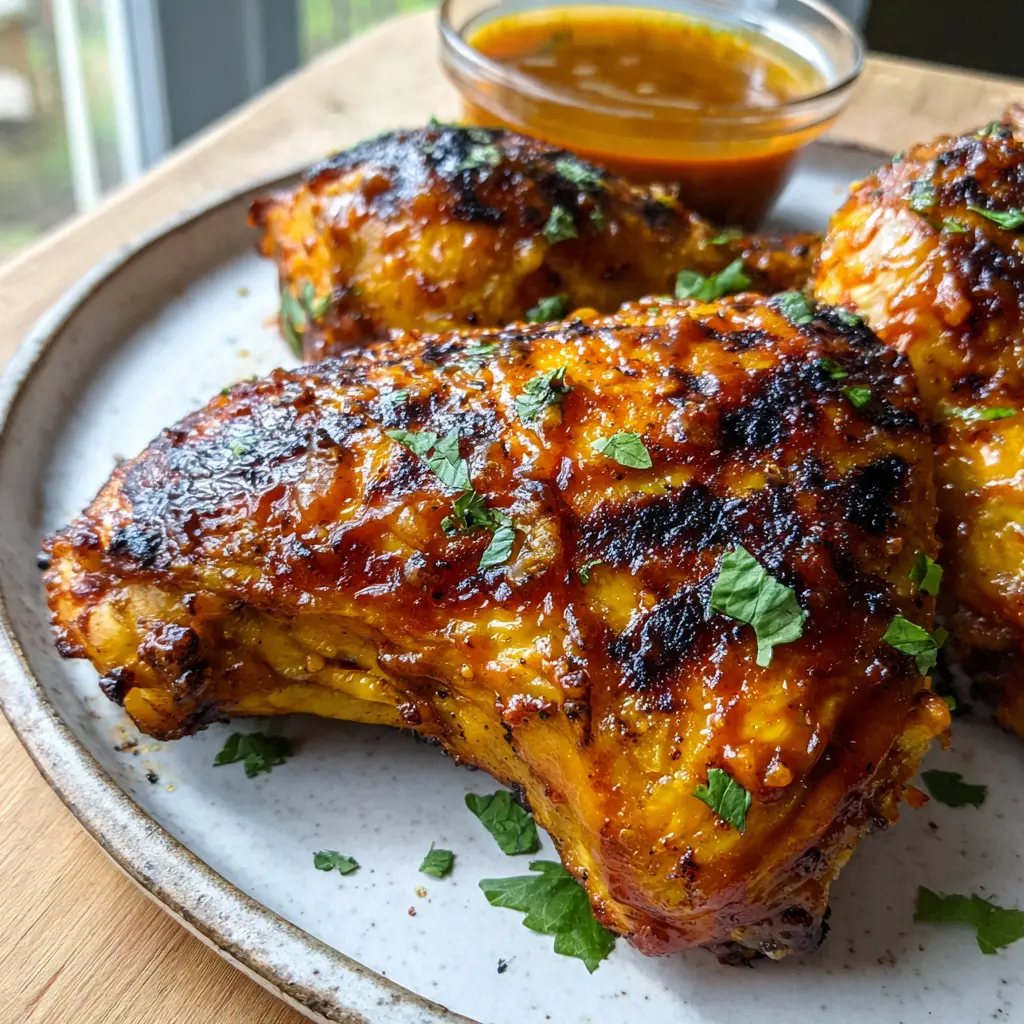
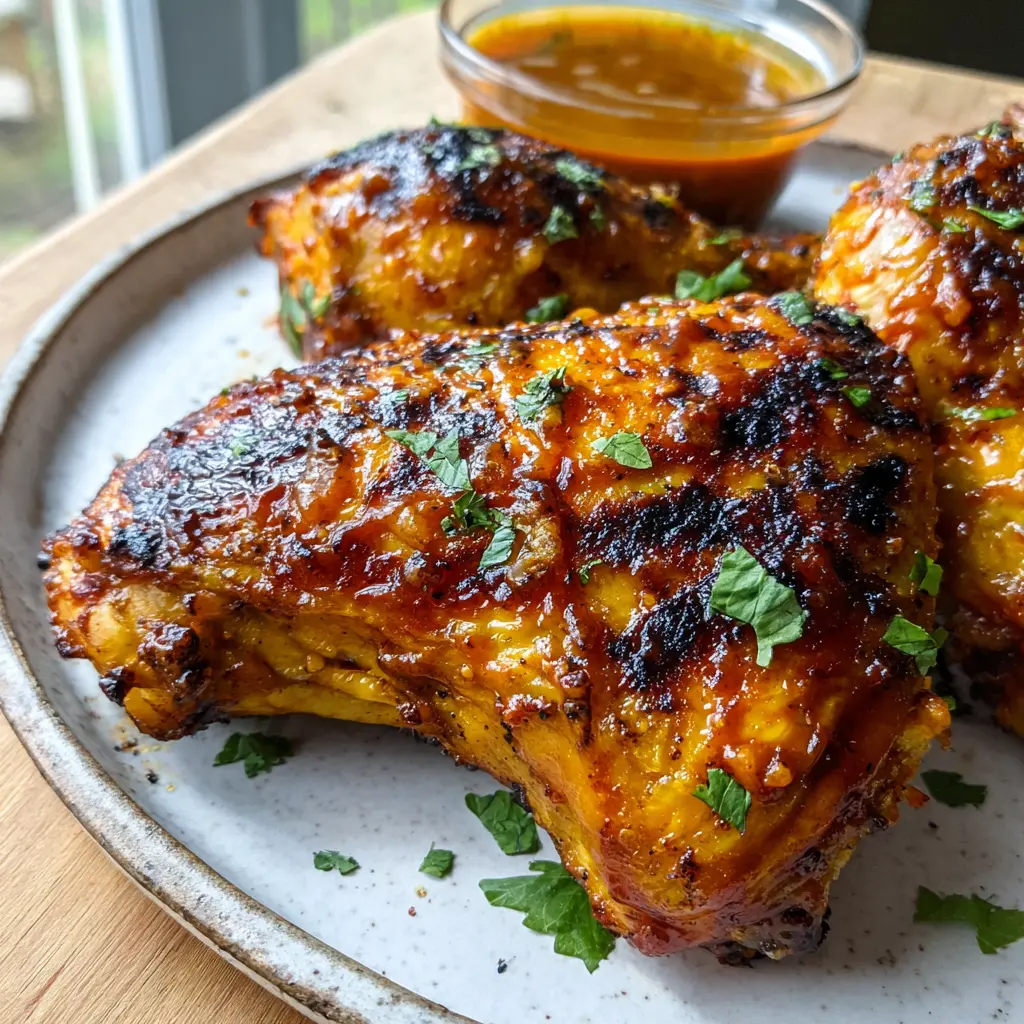
California Grilled Chicken Quarters with Apricot BBQ Sauce
Ingredients
Method
- Take the chicken out of the refrigerator and let it sit at room temperature for 20-30 minutes to take off the chill.
- Preheat your grill to medium-high heat, setting up both indirect and direct heat zones. Clean the grates and brush them with oil.
- In a small bowl, mix together the salt, smoked paprika, brown sugar, black pepper, onion powder, garlic powder, dried thyme, and cayenne pepper for the spice rub.
- Pat the chicken quarters dry with paper towels to remove any extra moisture from the skin.
- Brush the olive oil all over the chicken skin, then sprinkle the spice rub generously over the chicken. Rub the spices in, making sure every surface is evenly coated.
- Place the chicken quarters skin side down on the grill grates over the indirect heat zone.
- Grill the chicken over indirect heat for 20-25 minutes, then flip and cook the other side for another 20-25 minutes over indirect heat.
- Move the chicken to the direct heat zone and grill for 2-3 minutes per side, basting generously with the apricot barbecue sauce. If the skin starts to char too much, slide the pieces back to the cooler side of the grill.
- Use an instant-read meat thermometer to check the thickest part of the meat; the chicken is done when it reaches 165°F. Remove from the grill.
- Let the chicken rest for about 5 minutes before serving to allow the juices to redistribute. Serve warm with any leftover barbecue sauce on the side.
Nutrition
Notes
Tried this recipe?
Let us know how it was!Why This Recipe Works
I have a confession to make. The first time I tried grilling chicken leg quarters, I completely ruined them. Blackened skin, raw meat near the bone, the whole disaster. My family was polite about it, but I could see it in their eyes they were chewing cardboard.
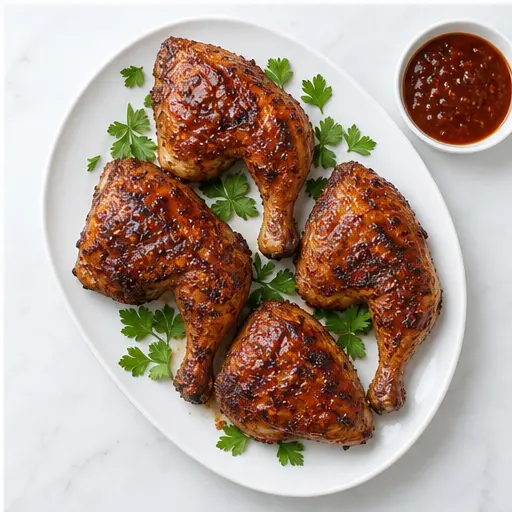
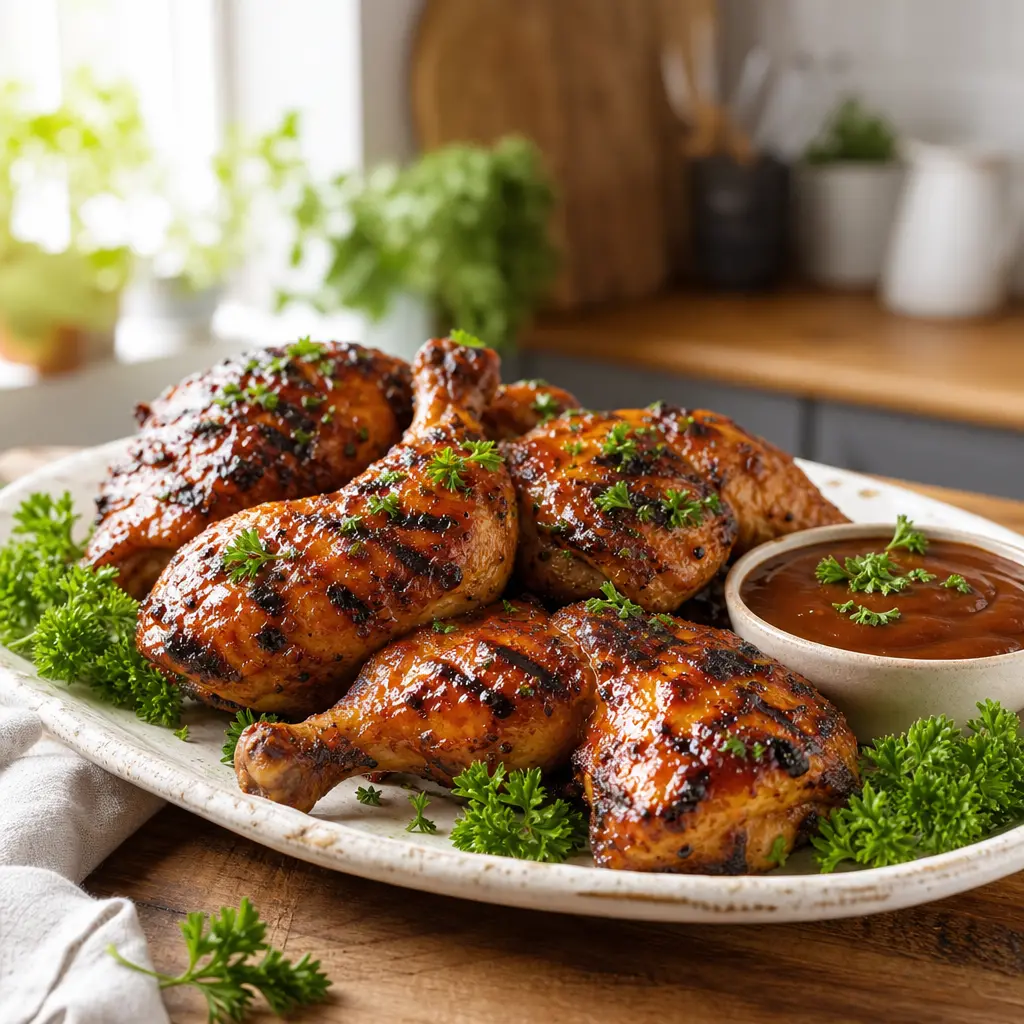
That was years ago. And honestly, that failure is exactly why I’m so excited to share this recipe with you. These grilled chicken quarters are everything those first attempts weren’t. The meat stays impossibly juicy, the skin gets that perfect crackling crisp, and the flavor? A smoky sweet California twist with apricot BBQ sauce that’ll have everyone asking for the recipe.
The secret is a two-zone grilling method and a simple dry rub that does all the heavy lifting. No complicated techniques, no fancy equipment. Just real, honest grilling that works every single time.
Ingredients You’ll Need
Let’s talk about what goes into these beauties. The ingredient list is short, but each component plays a specific role. Trust me, you probably have most of this stuff in your pantry right now.
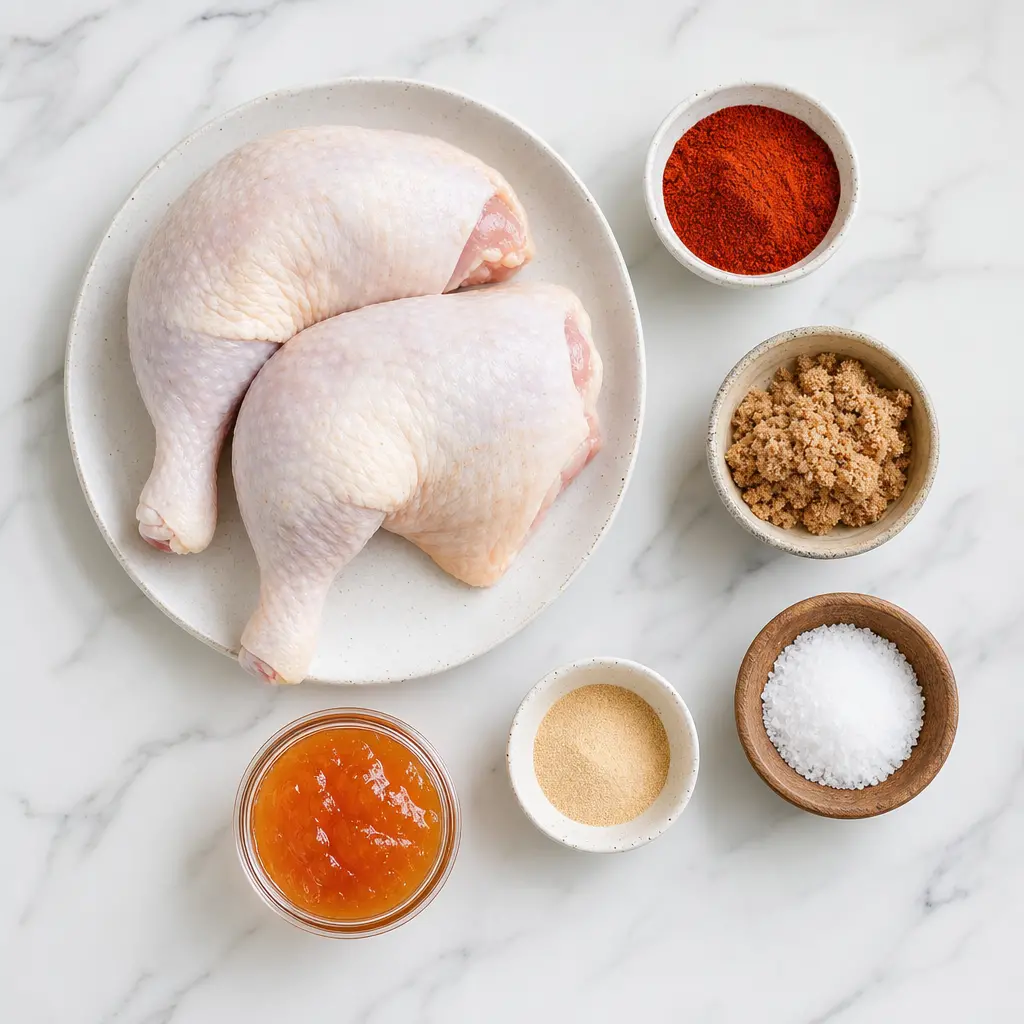
For the chicken, you’ll want bone-in, skin-on leg quarters. That’s the leg and thigh attached together. About 5 pounds gives you 4 to 6 good-sized pieces, perfect for a family dinner or a small gathering.
The dry rub is where the magic happens. We’re using:
- Smoked paprika gives that deep, smoky flavor without actually smoking the chicken
- Brown sugar adds sweetness and helps the skin caramelize
- Garlic and onion powder the savory backbone
- Dried thyme an earthy note that pairs beautifully with the apricot sauce
- Cayenne pepper just a touch for warmth, totally adjustable
- Kosher salt and black pepper the foundation
And then there’s the star of the show: Homemade Apricot Barbecue Sauce. If you’ve never tried apricot on grilled chicken, you’re in for a treat. The sweetness balances the smoky rub perfectly, and it glazes onto the skin like a dream.
How to Make Grilled Chicken Quarters
Alright, let’s get into the actual cooking. I’m going to walk you through each stage, sharing the little tricks I’ve learned along the way. No step-by-step instructions here those are in the recipe card above but I’ll explain the why behind each move.
Stage 1: Prep the Chicken
First things first: take the chicken out of the fridge about 20 to 30 minutes before you plan to grill. You don’t want cold meat hitting a hot grill, it’ll cook unevenly. While that’s happening, mix up your dry rub in a small bowl.
Here’s a tip I wish someone had told me years ago: pat the chicken completely dry with paper towels. I mean really dry. Any moisture on the skin will steam instead of sear, and you’ll end up with sad, rubbery skin instead of that glorious crispness we’re after.
Brush the chicken with olive oil, then sprinkle the rub generously over every surface. Use your hands to massage it in, getting into all the nooks and crannies. Don’t be shy with it.

Stage 2: Indirect Heat Grilling
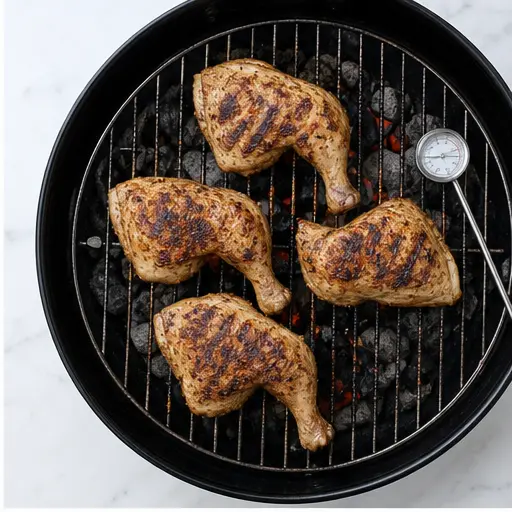
This is the technique that changed my grilling game forever. Set up your grill with two zones: one side hot (direct heat) and one side cooler (indirect heat). For a gas grill, that means lighting only half the burners. For charcoal, push all the coals to one side.
Place the chicken skin-side down on the indirect heat side. Close the lid and let it cook for 20 to 25 minutes. Then flip and cook another 20 to 25 minutes. The goal here is to cook the meat through gently without burning the skin. The internal temperature should be getting close to 165°F by the end of this stage.
I know it’s tempting to peek, but keep that lid closed as much as possible. Every time you open it, heat escapes and your cooking time stretches out.
Stage 3: The Sauce and Sear
Now for the fun part. Move the chicken to the direct heat side of the grill. This is where you’ll get those beautiful char marks and that crispy, caramelized skin. Brush each piece generously with the apricot BBQ sauce.
Grill for 2 to 3 minutes per side, watching carefully. The sugar in the sauce can burn quickly, so keep an eye on it. If you see it starting to char too much, just slide the pieces back to the cooler side for a minute.
Use an instant-read meat thermometer to check the thickest part of the meat. You’re looking for 165°F for safe eating, but honestly, dark meat is even better at 170 to 175°F. It stays tender and juicy at that higher temp.

Stage 4: Rest and Serve
This step is non-negotiable. Let the chicken rest for about 5 minutes before serving. I know you’re hungry, I know it smells incredible, but those juices need time to redistribute. Cut into it too soon and they’ll run all over the cutting board instead of staying in the meat.
Serve with any leftover barbecue sauce on the side. Watch everyone’s faces light up when they take that first bite.
Tips for Perfectly Grilled Chicken Quarters
After way too many trial-and-error sessions, here are the things I’ve learned that make the biggest difference:
- Use a meat thermometer. Seriously, this is your secret weapon. Guessing doneness by cutting into the meat lets all the juices escape. A good instant-read thermometer costs about $15 and saves you from ever serving dry chicken again.
- Trim excess skin and fat. Those big flaps of skin and fat will drip onto the coals and cause flare-ups. Just snip them off with kitchen shears before you start.
- Don’t flip too often. Let each side cook undisturbed for several minutes. Constant flipping prevents the skin from crisping up properly.
- Let the chicken come to room temperature. That 20 to 30 minute rest before grilling helps everything cook more evenly.
Direct vs. Indirect Heat: Which Is Better?
For these grilled chicken quarters, you actually need both. Here’s why:
Indirect heat cooks the chicken through gently without burning the skin. Think of it like a slow roast on the grill. The internal temperature rises steadily, the fat renders, and the meat becomes tender. Direct heat is for that final sear, when you want crispy skin and caramelized sauce.
If you tried to cook the whole thing over direct heat, you’d end up with burnt skin and raw meat near the bone. If you only used indirect heat, you’d miss out on that beautiful char and crackling texture. The two-zone method gives you the best of both worlds.
How to Get Crispy Skin on Grilled Chicken Quarters
This is the question I get asked most often. Crispy skin comes down to three things:
- Dry the skin thoroughly. Pat it with paper towels until it feels tacky, not wet.
- Use enough salt in your rub. Salt draws out moisture from the skin, helping it crisp up.
- Finish over direct heat. That final sear at high temperature is what transforms soft skin into something crackling and golden.
How to Know When Chicken Quarters Are Done
Your meat thermometer is your best friend here. Insert it into the thickest part of the meat, avoiding the bone. You’re looking for 165°F minimum, but I personally pull mine at around 170 to 175°F for dark meat. It stays juicier and more tender at that range.
Visual cues help too. The juices should run clear, not pink. The meat should start pulling away from the bone slightly. And the skin should be golden brown with some char marks.
Ingredient Substitutions and Variations
One of the things I love about this recipe is how flexible it is. Here are some easy swaps:
- Oil swap: Avocado oil works great instead of olive oil, especially if you’re grilling at higher temperatures. It has a higher smoke point.
- Rub shortcut: In a pinch, use your favorite store-bought chicken seasoning. Just skip the salt if the blend already has it.
- Sauce options: No time for homemade sauce? Use your favorite store-bought barbecue sauce. Honey BBQ or spicy varieties work beautifully. Or skip the sauce entirely and just enjoy the dry rub flavor.
- Heat adjustment: If you’re cooking for kids or spice-sensitive folks, reduce or omit the cayenne pepper. The rub is still incredibly flavorful without it.
What to Serve with Grilled Chicken Quarters
These grilled chicken quarters pair beautifully with all sorts of summer sides. Here are some of my favorites:
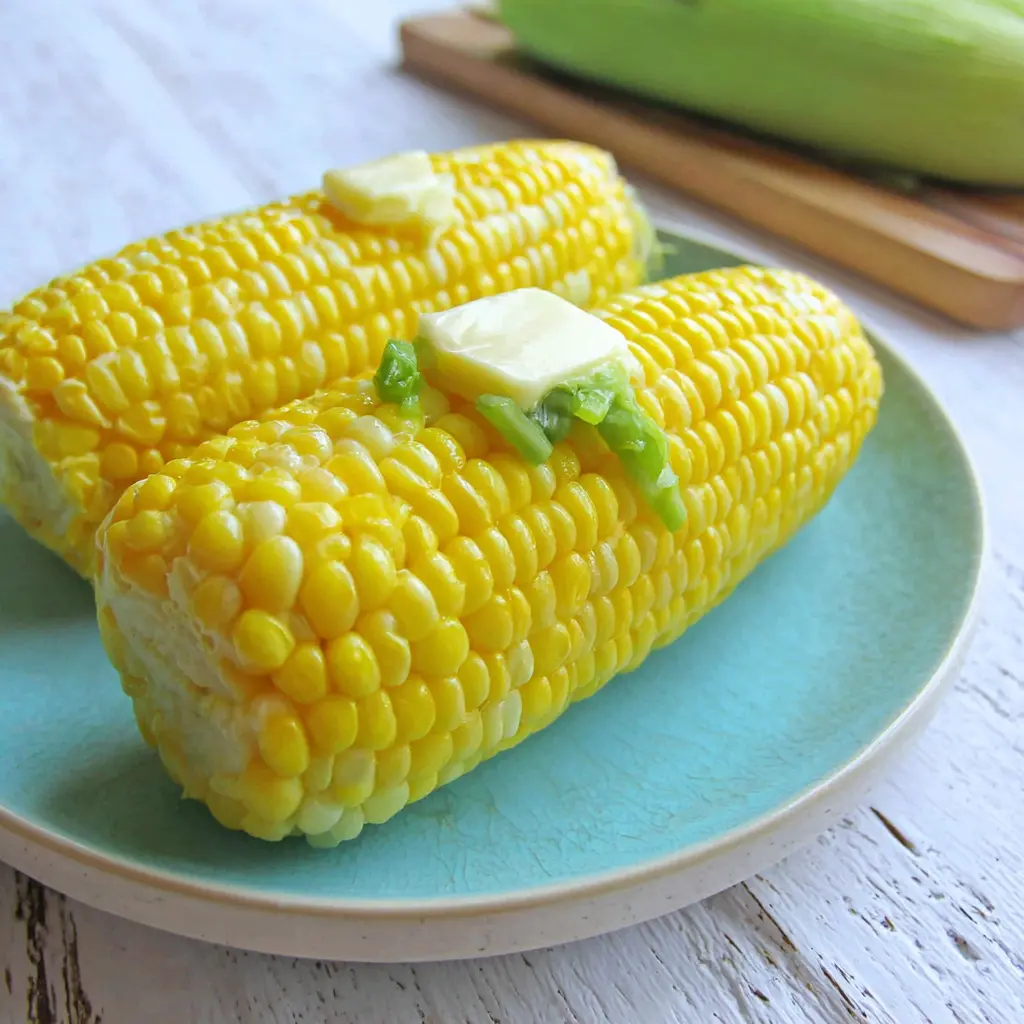
- Grilled vegetables corn on the cob, zucchini, and bell peppers, all kissed with the same smoky heat
- Potato salad creamy or vinegar-based, either works
- A crisp green salad something light to balance the richness of the chicken
- Baked beans classic barbecue pairing
- Fresh watermelon the sweetness and juiciness are perfect on a hot day
- Rice or couscous great for soaking up extra sauce
For a complete meal that feels effortless, I’ll often throw some corn on the cob and halved bell peppers on the grill alongside the chicken. Everything finishes at about the same time, and cleanup is minimal.
How to Store and Reheat Leftovers
If you somehow have leftovers (which, let’s be honest, doesn’t happen often in my house), here’s how to keep them tasting great:
Storage: Let the chicken cool within 2 hours of cooking. Store in an airtight container in the fridge for up to 3 to 4 days. You can also freeze it for up to 3 months in a freezer-safe bag or container.
Reheating: The oven is your best bet. Wrap the chicken in foil with a splash of water or extra sauce to keep it moist. Heat at 300 to 350°F for 15 to 20 minutes. An air fryer works great too 325°F for 7 to 10 minutes will get the skin crispy again. I don’t recommend the microwave, it tends to make the meat tough and rubbery.
Frequently Asked Questions
You’ve got this. Fire up that grill, get those grilled chicken quarters going, and get ready for the compliments to roll in. There’s nothing quite like watching someone take that first bite and seeing their eyes go wide. That’s the moment that makes all the effort worth it.
If you try this recipe, I’d love to hear how it goes. Share your photos and tag me on Pinterest I’m always looking for inspiration and love seeing your beautiful creations!
Source: Nutritional Information
Do you flip leg quarters while grilling?
Yes, you should flip them. Start skin-side down over indirect heat for 20 to 25 minutes, then flip and cook the other side for another 20 to 25 minutes. This ensures even cooking and helps the skin crisp up without burning.
Do you grill chicken quarters skin side up or down?
Start skin-side down over indirect heat. This lets the fat render and the skin begin crisping without direct flame hitting it. You’ll flip them later and finish over direct heat for that final golden crackle.
How long to cook chicken quarters on grill?
About 45 to 55 minutes total. Plan for 20 to 25 minutes per side over indirect heat, then 2 to 3 minutes per side over direct heat for the final sear. Always check internal temperature with a meat thermometer for accuracy.
Do you grill chicken legs with lid open or closed?
Keep the lid closed as much as possible. This maintains a consistent temperature and helps the chicken cook evenly. Only open it to flip the pieces or to check temperature near the end.
What temperature do I grill chicken leg quarters?
Preheat your grill to medium-high, around 375 to 400°F. Cook the chicken over indirect heat first, then finish over direct heat. The internal temperature of the meat should reach 165°F at minimum.
Should I brine chicken before grilling?
You don’t need to brine these chicken quarters. The dry rub and the two-zone grilling method keep the meat plenty juicy. If you want extra moisture, you can dry brine by salting the chicken a few hours ahead and letting it rest in the fridge.
How do I get crispy skin on grilled chicken?
Pat the chicken completely dry before applying the rub. Use enough salt in your rub to draw out moisture. Cook over indirect heat first, then finish over direct heat for that final crispy sear. Don’t flip too often.