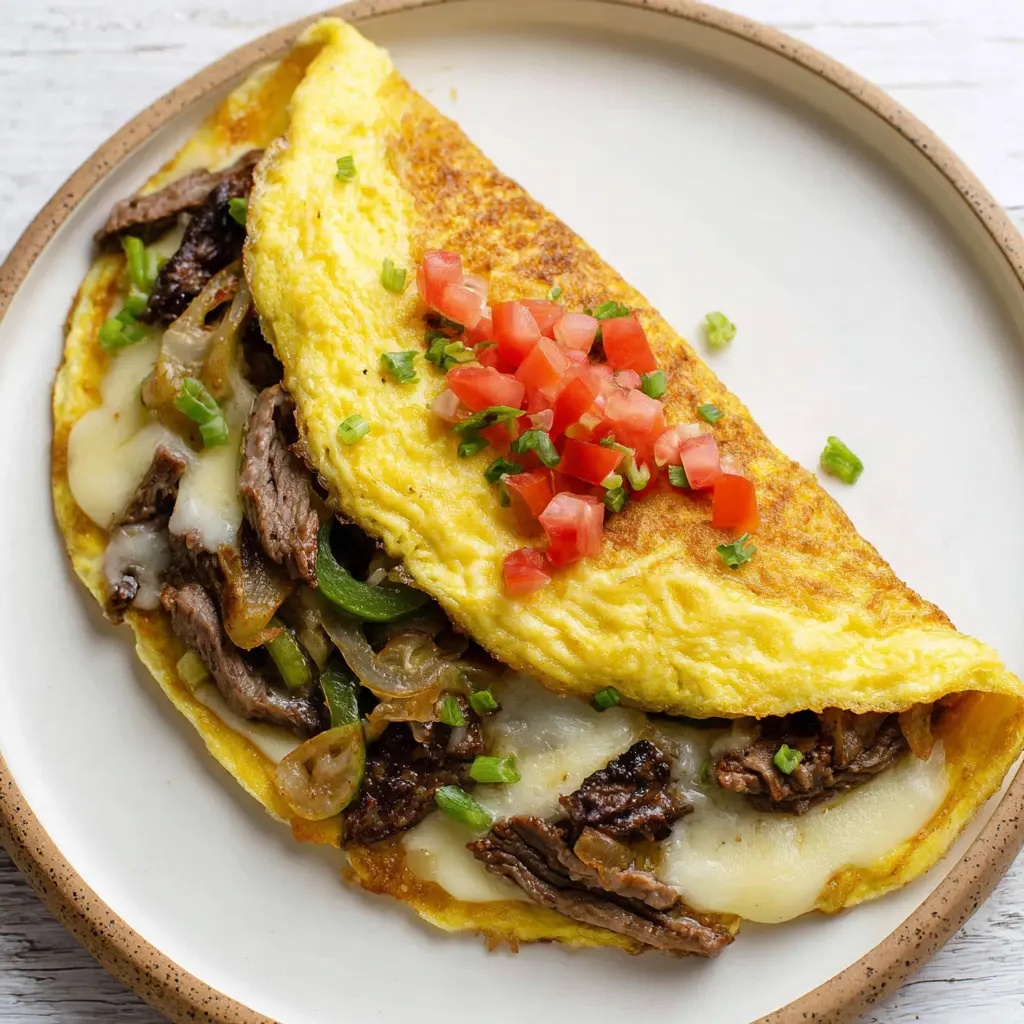
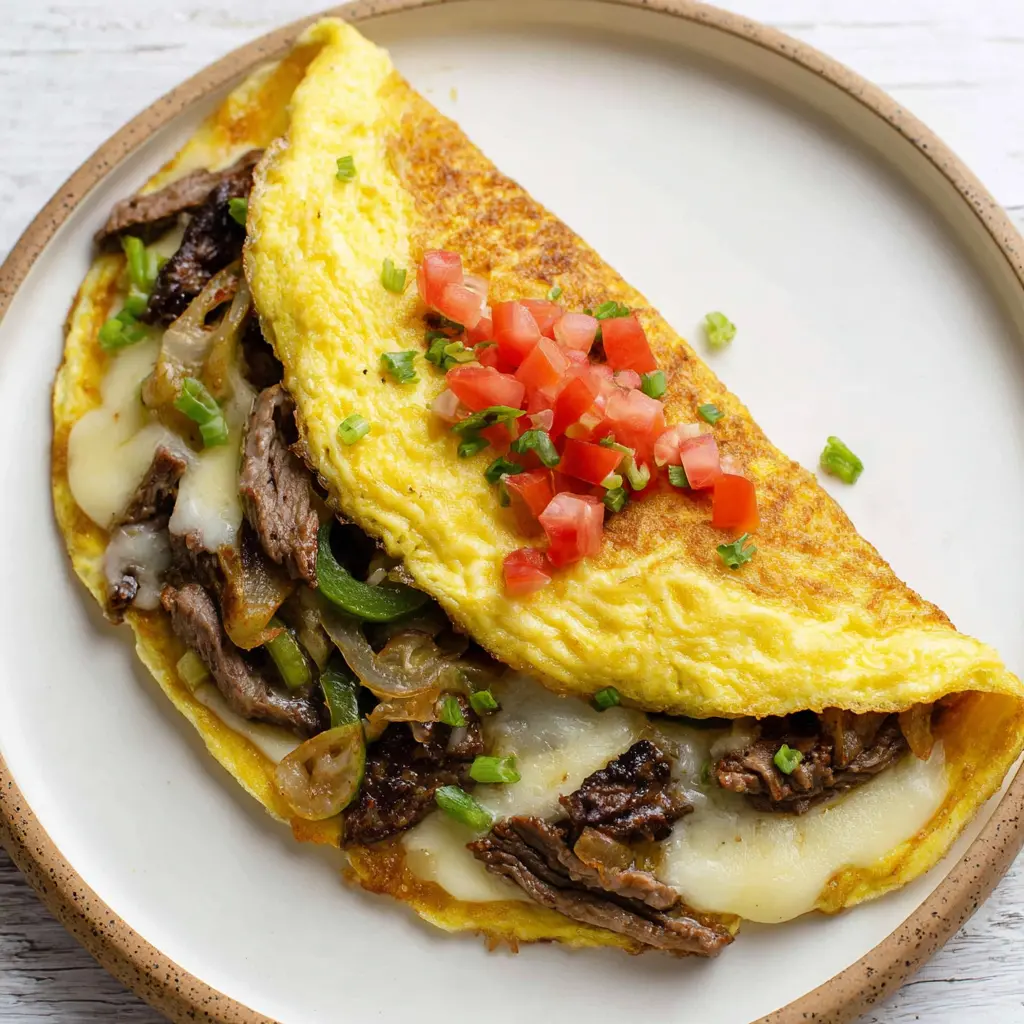
Philly Cheesesteak Omelette
Ingredients
Method
- Warm a medium nonstick skillet over medium heat. Add the olive oil, then toss in the sliced onion and green bell pepper. Sauté for about 5 minutes until softened.
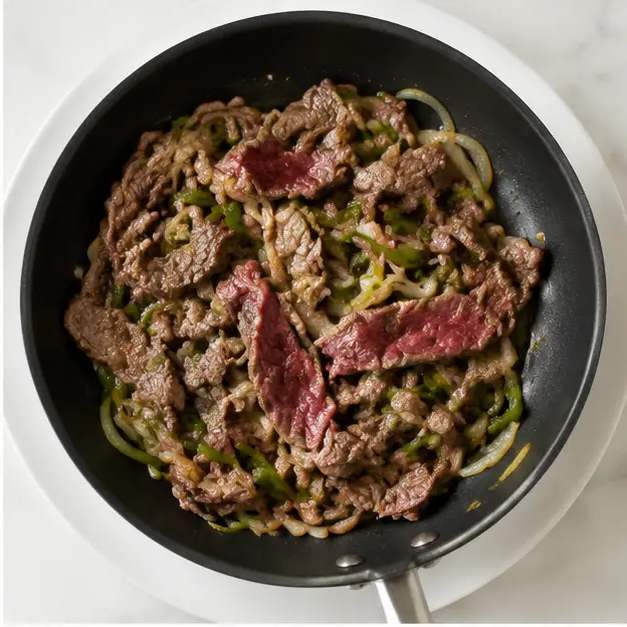
- Add the sliced steak to the skillet and cook for just 1 minute to warm through. Transfer the steak and veggie mixture to a plate and set aside.
- In a mixing bowl, beat the eggs until just combined.
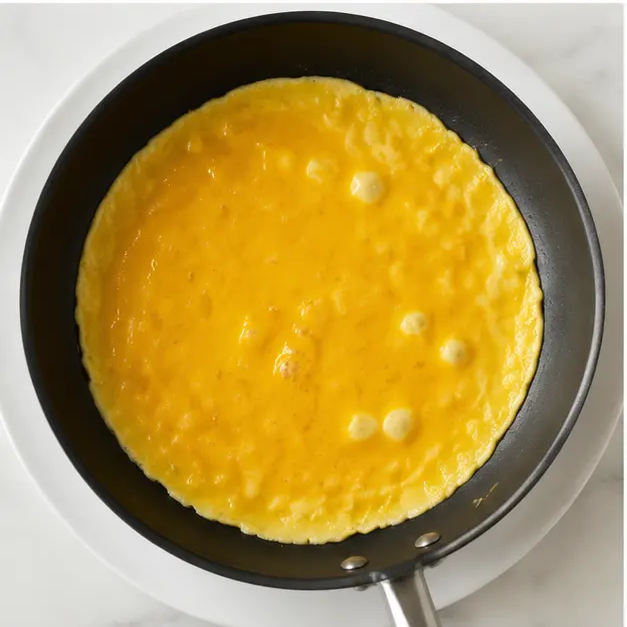
- Pour about 1/4 of the beaten eggs into the skillet, tilting to cover the bottom evenly.
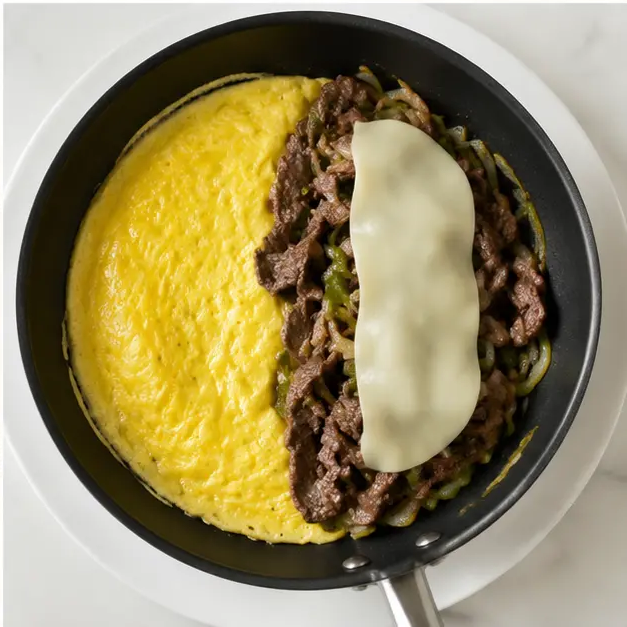
- Spoon some of the steak and veggie mixture onto one half of the omelette, then top with a slice of provolone.
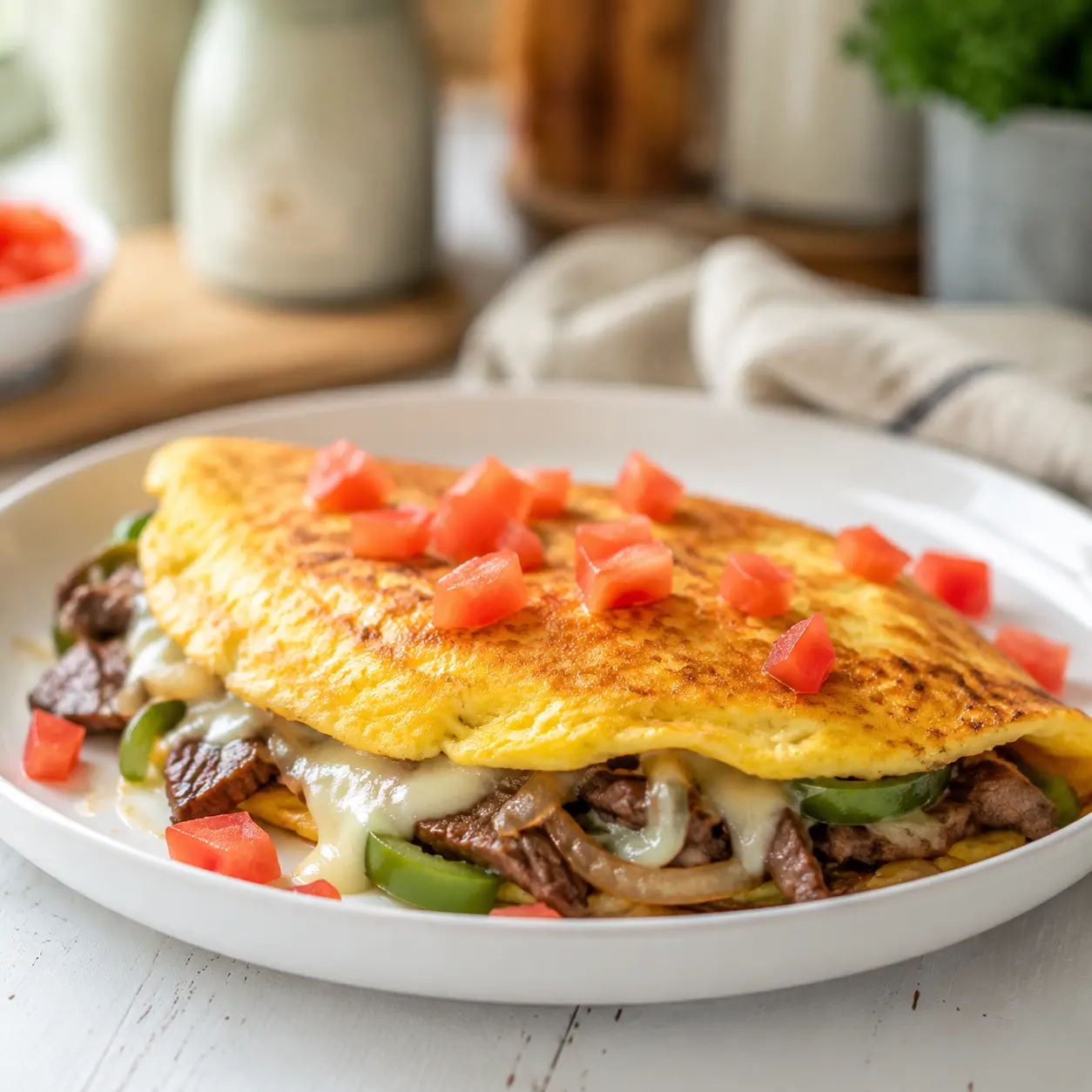
- Fold the empty half of the omelette over the filling, then carefully flip it over. Cook for 1 to 2 minutes until the cheese melts and the eggs are set. Slide onto a plate.
- Repeat with the remaining egg mixture to make 4 omelettes total.
- Season each omelette with a pinch of salt and pepper, and garnish with diced tomato.
Nutrition
Notes
Tried this recipe?
Let us know how it was!What Is a Philly Cheesesteak Omelette?
You know those mornings when only a Philly cheesesteak will do, but it’s 8 AM and you’re pretty sure the steak shops aren’t open yet? Yeah, me too. That’s exactly how this whole thing started. I was sitting there craving that savory, salty, melty goodness, but I needed eggs. And thus, the Philly cheesesteak omelette was born.
It’s exactly what it sounds like. A fluffy, tender omelette wrapped around the classic filling of thinly sliced steak, sautéed peppers and onions, and gooey provolone cheese. All the flavors of the iconic sandwich, but in breakfast form. No bread, no fuss, just pure savory satisfaction. I was skeptical the first time I tried it, honestly. But that first bite changed my mind completely.
This isn’t just a gimmick. The savory steak, the sweet caramelized onions, the slight bitterness of the green peppers, and that rich, melty provolone all work beautifully with the eggs. It’s a high-protein breakfast that feels indulgent but is totally doable on a weekday. And I promise it’s easier than it sounds.
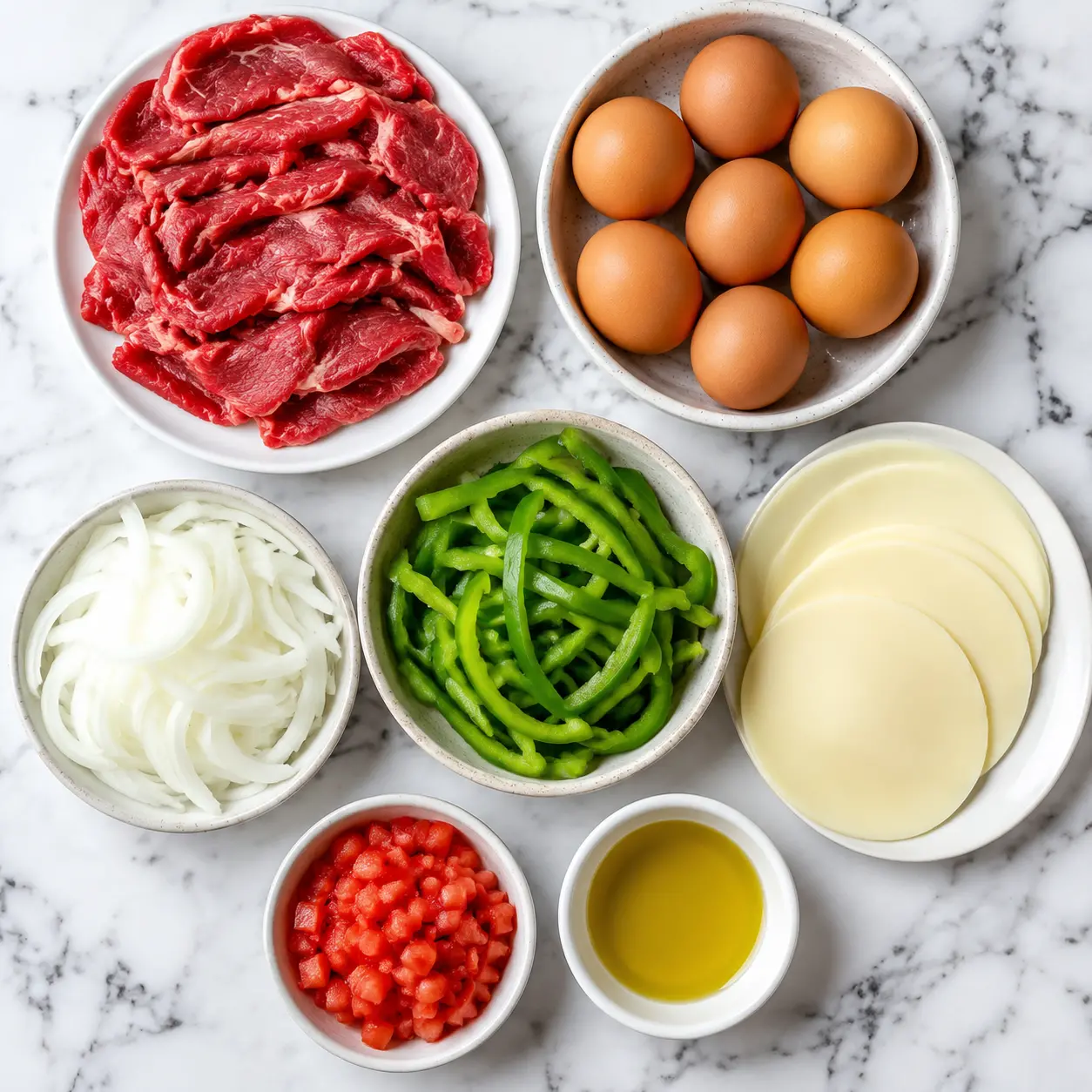
Ingredients You’ll Need
The beauty of this cheesesteak omelette recipe is the short, straightforward list. You probably have most of these in your kitchen right now. Let’s walk through what you need and why each ingredient matters.
- Olive oil – I prefer California-grown for that clean, fruity flavor. It’s what we use to sauté the veggies and steak.
- White onion – Thinly sliced so it softens quickly. Yellow onion works too, but white has a sharper, more classic Philly vibe.
- Green bell pepper – Also thinly sliced. This is non-negotiable for the authentic flavor. It adds that slight crunch and freshness.
- Sirloin steak – Half a pound, thinly sliced against the grain. Ribeye is the traditional cheesesteak cut, but sirloin is leaner and works great here. More on that below.
- Eggs – Eight large eggs. This makes four generous omelettes, perfect for a family or meal prep.
- Provolone cheese – Four slices. It melts beautifully and has that mild, slightly tangy flavor that’s classic for a reason.
- Salt and black pepper – Freshly ground black pepper makes a difference here.
- Tomato – One medium, diced. This is your fresh garnish. It cuts through the richness perfectly.
See? Simple. No weird ingredients, no long trips to a specialty store. You can find everything at your local Ralphs or Vons without breaking a sweat.
How to Make a Philly Cheesesteak Omelette
Alright, let’s get cooking. I’m going to walk you through the four major stages. Don’t stress if your first fold isn’t perfect – it’ll taste amazing anyway. The key is to move with confidence and keep the heat low for the eggs.
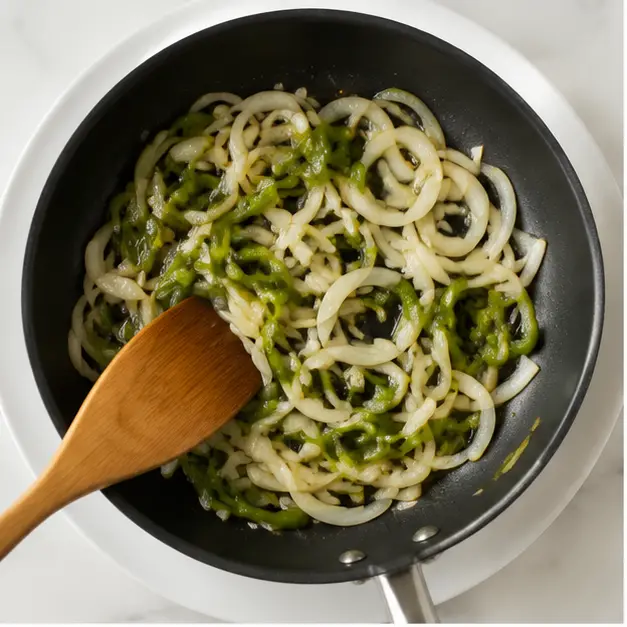
Stage 1: Sauté the Veggies
Warm a medium nonstick skillet over medium heat. Add the olive oil, then toss in the sliced onion and green bell pepper. Let them cook for about 5 minutes, stirring occasionally. You want them softened but not browned. The sizzle of those veggies hitting the hot oil is the smell of breakfast about to get serious.
You’ll notice the onions turn translucent and the peppers soften. That’s exactly what we’re after. Don’t rush this step – properly softened veggies mean a better texture in the final omelette.
Stage 2: Cook the Steak
Add the thinly sliced sirloin steak to the skillet with the veggies. Cook for just 1 minute to warm through. That’s it. Seriously. You’re not trying to brown it or get a crust – you just want it heated through so it stays tender in the omelette.
Here’s a little trick: if you pop the steak in the freezer for about 15 minutes before slicing, it firms up and makes getting those paper-thin slices so much easier. A mandolin works great for this, but a sharp knife and a steady hand will do the job just fine.
Once the steak is warmed, transfer the whole mixture to a plate and set aside.
Stage 3: Beat the Eggs and Start the Omelette
In a mixing bowl, beat the eggs until just combined. You don’t want them frothy – just uniform in color. A few streaks of white are fine.
Pour about a quarter of the beaten eggs into the same skillet (no need to wash it – the residual flavor is a bonus). Tilt the pan to cover the bottom evenly. Keep the heat on medium-low now. Low and slow is the secret to a fluffy omelette that doesn’t brown or get rubbery.
Let the eggs cook undisturbed for about a minute until the edges start to set. The center should still look slightly wet.
Stage 4: Fill, Fold, and Finish
Spoon some of the steak and veggie mixture onto one half of the omelette. Don’t overdo it – about 2-3 tablespoons is plenty. Top with a slice of provolone.
Now for the moment of truth. Using a spatula, gently fold the empty half of the omelette over the filling. Then carefully flip the whole thing over so the seam is on the bottom. Cook for 1 to 2 more minutes until the cheese is melted and the eggs are fully set.
Slide it onto a plate. Season with a pinch of salt and pepper, and garnish with that fresh diced tomato. Repeat with the remaining egg mixture to make four omelettes total.
If your omelette tears a little, don’t panic. Just call it a scramble – same taste, less pressure. I’ve been there more times than I’d like to admit.
Pro Tips for the Best Omelette
After making this Philly cheesesteak omelette more times than I can count, I’ve picked up a few things. Let me share the ones that make the biggest difference.
- Use a nonstick skillet. This is non-negotiable. A good nonstick pan makes folding effortless and cleanup a breeze. I love my Calphalon or even a well-seasoned cast iron if you’re confident.
- Keep the heat low for the eggs. High heat turns eggs rubbery and brown. Low and slow gives you that silky, fluffy texture. Patience pays off here.
- Don’t overfill. I know it’s tempting to load it up, but too much filling makes folding impossible and the omelette will tear. Less is more.
- Slice the steak against the grain. This breaks up the muscle fibers and ensures every bite is tender, not chewy.
- Season the eggs lightly. The filling has plenty of flavor, so go easy on the salt in the eggs. You can always add more at the table.
One more thing: if you’re short on time in the morning, cook the steak and veggies the night before. Just reheat them in the skillet while you beat the eggs. It shaves off a solid 5-7 minutes.
Recipe Variations
One of the best things about this cheesesteak omelette recipe is how flexible it is. Here are a few ways to switch it up based on what you have or what you’re craving.
- Cheese swap: Provolone is classic, but you can use mozzarella for a stretchier melt or American cheese for that creamy, diner-style vibe. Some folks love Cheez Whiz for the true Philly experience – I won’t judge.
- Meat alternatives: Ribeye or flank steak work beautifully. If you have leftover steak from last night’s dinner, slice it thin and use it here. Even deli roast beef works in a pinch for a super quick version.
- Add mushrooms: Sautéed mushrooms are a fantastic addition. Just cook them with the peppers and onions.
- Make it spicy: Add a pinch of red pepper flakes to the eggs or use hot giardiniera as a topping.
- Low-carb option: This recipe is already pretty low in carbs, but you can skip the tomato garnish to save a few more grams.
The base recipe is solid, but don’t be afraid to make it your own. That’s the fun of cooking, right?
Storage and Reheating Leftovers
This recipe makes four omelettes, which is perfect for a family. But if you’re cooking for one or two, you’ll have leftovers. Here’s how to handle them.
Let any leftover omelettes cool completely on the plate. Wrap each one individually in plastic wrap or aluminum foil, then place them in an airtight container. They’ll keep in the fridge for up to 3 days.
To reheat: The best method is in a nonstick skillet over low heat. Just place the omelette in the pan, cover with a lid, and warm for 2-3 minutes per side. This helps the cheese re-melt without drying out the eggs. You can also use the microwave, but the texture won’t be as good – it’ll be a bit rubbery.
I don’t recommend freezing these. Eggs get watery and weird when thawed. Better to just make a fresh batch when the craving hits.
Common Mistakes to Avoid
Let’s be real for a second. Not every omelette comes out perfect. I’ve had my share of disasters. Here are the most common pitfalls and how to dodge them.
- ❌ Mistake: Overcooking the eggs. High heat or too much time in the pan makes the omelette dry and rubbery. ✅ Solution: Cook on medium-low heat and pull the omelette off while the center is still slightly soft. Carryover cooking will finish it.
- ❌ Mistake: Watery filling. If your veggies release too much moisture, the omelette gets soggy. ✅ Solution: Sauté the peppers and onions until they’re dry, not just soft. Let them cool slightly before adding to the eggs.
- ❌ Mistake: Omelette tearing when folding. This usually happens from overfilling or undercooking. ✅ Solution: Use a generous 1/4 cup of egg per omelette, keep the filling light, and wait until the eggs are set around the edges before folding.
- ❌ Mistake: Bland filling. The steak and veggies need seasoning. ✅ Solution: Season the steak with a pinch of salt and pepper while cooking. A dash of Worcestershire sauce in the steak mixture adds that savory depth, though it’s not in the base recipe.
- ❌ Mistake: Sticking to the pan. ✅ Solution: Make sure your nonstick skillet is in good condition. A little extra olive oil or butter never hurts.
Remember, even a messy omelette tastes amazing. Don’t let perfectionism stop you from enjoying breakfast.
Frequently Asked Questions
Go ahead, make your breakfast legendary – you’ve got this! And if you love this recipe, I’d love for you to follow me on Pinterest for more breakfast inspiration. I’m always pinning new ideas to make your mornings better.
Source: Health & Nutrition Research
What is a cheesesteak omelette?
A cheesesteak omelette is a breakfast dish that combines the classic flavors of a Philly cheesesteak sandwich with a fluffy omelette. It’s filled with thinly sliced steak, sautéed peppers and onions, and melted provolone cheese, all wrapped in tender eggs.
Is an omelette good for diabetics?
Omelettes can be a good option for diabetics because they’re high in protein and low in carbohydrates. This Philly cheesesteak omelette has only 8 grams of carbs per serving, making it a blood sugar-friendly breakfast choice when paired with non-starchy vegetables.
Can you put Philadelphia in an omelette?
Yes, you can use Philadelphia cream cheese in an omelette for a creamy, tangy filling. However, for an authentic Philly cheesesteak omelette, provolone cheese or Cheez Whiz are more traditional choices that better replicate the sandwich’s flavor.
Can you make a steak omelette?
Absolutely. A steak omelette is made by cooking thinly sliced steak and folding it into beaten eggs along with cheese and vegetables. This Philly cheesesteak omelette recipe uses sirloin steak for a tender, flavorful filling that comes together in minutes.
What is the secret to a great Philly cheesesteak?
The secret is thinly sliced, tender steak, properly sautéed onions and peppers, and melty provolone or Cheez Whiz. For the omelette version, keeping the eggs fluffy and the filling not too wet ensures every bite is perfect.
Does Waffle House have a cheesesteak omelette?
Waffle House does not currently have a cheesesteak omelette on their regular menu. You can order a custom omelette with steak, peppers, onions, and cheese, but this homemade version gives you more control over the ingredients and quality.
Can a diabetic eat two eggs a day?
Yes, most diabetics can safely eat two eggs per day as part of a balanced diet. Eggs are low in carbohydrates and high in protein, which helps stabilize blood sugar levels. This recipe uses two eggs per omelette, making it a diabetes-friendly option.
Will a boiled egg raise your blood sugar?
No, boiled eggs have a negligible effect on blood sugar because they contain virtually no carbohydrates. The protein and fat in eggs actually help slow digestion and prevent blood sugar spikes when eaten as part of a meal.
Does egg omelette spike blood sugar?
An egg omelette generally does not spike blood sugar because eggs are very low in carbohydrates. However, what you add to the omelette matters. Stick with protein and non-starchy vegetables like peppers and onions to keep it blood sugar friendly.
What does Gordon Ramsay put in his omelette?
Gordon Ramsay’s famous omelette uses eggs, butter, crème fraîche, chives, salt, and pepper. He cooks it slowly over low heat, stirring constantly for a silky, creamy texture. It’s a French-style omelette, quite different from this hearty Philly cheesesteak version.
Are 4 eggs too much for an omelette?
Four eggs is a large omelette, suitable for a very hungry person or as a shared dish. For a standard serving, 2-3 eggs per omelette is more common. This recipe uses 2 eggs per omelette, which is a perfect single serving size.
What is the most expensive egg dish in the world?
The most expensive egg dish is the “Zillion Dollar Lobster Frittata” at Norma’s in New York, priced at $2,000. It’s made with lobster, caviar, and gold leaf. This Philly cheesesteak omelette is a much more affordable way to enjoy a luxurious breakfast.
What’s in the big steak omelette?
A big steak omelette typically contains beaten eggs, thinly sliced cooked steak, cheese, and often vegetables like onions, peppers, and mushrooms. This Philly cheesesteak version specifically uses sirloin steak, provolone, and sautéed peppers and onions.
What is the healthiest meat to put in an omelette?
Lean cuts like sirloin steak, chicken breast, or turkey are the healthiest meat options for an omelette. Sirloin is a great choice because it’s high in protein and lower in saturated fat compared to ribeye, while still being tender and flavorful.
What are some good fillings for omelettes?
Good omelette fillings include cheese, cooked meats, and vegetables. Popular combinations are ham and cheese, mushroom and Swiss, spinach and feta, and of course, this Philly cheesesteak version with steak, peppers, onions, and provolone.