
How to Cut a Bell Pepper: 4 Easy Techniques
Ingredients
Method
- Place the bell pepper on its side and slice off the top (stem end) and the bottom. Discard the stem if it stays attached. Stand the pepper upright and cut down one side. Slide your knife along the inner walls to release the core, leaving a single long strip of pepper.
- With the core removed, lay the pepper strip skin-side down on your cutting board. Carefully trim away any white pith to ensure even thickness.
- Cut the trimmed pepper into thin strips about 1/8 inch by 1/8 inch by 1.5 to 2 inches long.
- After removing the core, lay the pepper flat on your board and slice it into thick strips, about 1/2 inch wide.
- Gather a few strips together and cut perpendicular to the strips into even squares or chunks.
- Once the core is removed, lay the pepper on its side and use a sharp knife to cut thin cross-sections, creating perfect bell pepper rings.
- Cut off only the top (stem end) of the pepper. Run your knife around the inside walls to remove the core, keeping the sides intact.
- Trim the bottom slightly so the pepper sits upright. Fill the hollowed pepper as desired.
Nutrition
Notes
Tried this recipe?
Let us know how it was!How to Cut a Bell Pepper Without Making a Huge Mess
I used to dread cutting bell peppers. Honestly, I did. The seeds would fly everywhere, I’d end up with uneven chunks, and half the pepper would be stuck to the core. It was frustrating. I’d watch cooking shows where chefs would have these perfect little cubes in seconds, and I’d be standing there with a chaotic cutting board, wondering what I was doing wrong.
Turns out, it’s not that hard once you know the trick. Actually, there are a few tricks. And once you learn how to cut a bell pepper the right way, it becomes one of those kitchen skills that makes you feel like you actually know what you’re doing. I promise.
This guide covers four different ways to cut a bell pepper. Strips for fajitas. Dice for salsa. Rings for salads or burgers. And a special cut for stuffed peppers. I’ll walk you through each one, share the mistakes I made so you don’t have to, and give you the confidence to tackle any recipe that calls for bell peppers.
So grab a pepper, a sharp knife, and let’s get to it.
What You’ll Need
Before we start cutting, let’s talk about what you need. It’s not much, but having the right stuff makes a world of difference.
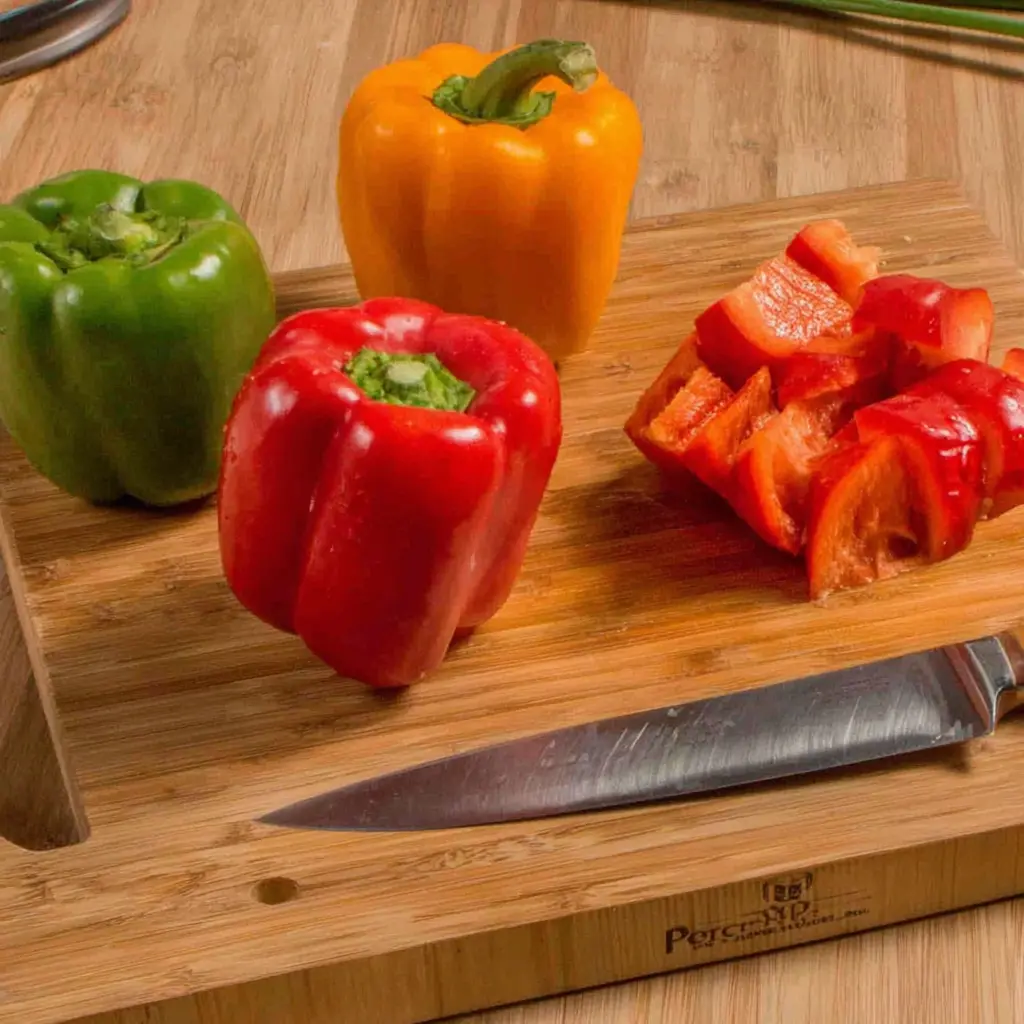
- A sharp chef’s knife. This is non-negotiable. A dull knife will crush the pepper rather than slice through it. You don’t need anything fancy, just something sharp. A 6-inch or 8-inch chef’s knife works great.
- A stable cutting board. Place a damp paper towel under your cutting board to stop it from sliding around. Trust me, this is a game-changer for safety.
- One bell pepper. Any color works. Red, yellow, orange, or green. They all cut the same way, though the flavor is a bit different. More on that later.
- A small bowl for scraps. You’ll thank me later when you’re not chasing seeds across the counter.
That’s it. No special gadgets needed. No fancy tools. Just you, a knife, and a pepper.
Option 1: How to Cut a Bell Pepper into Halves (for Stuffed Peppers)
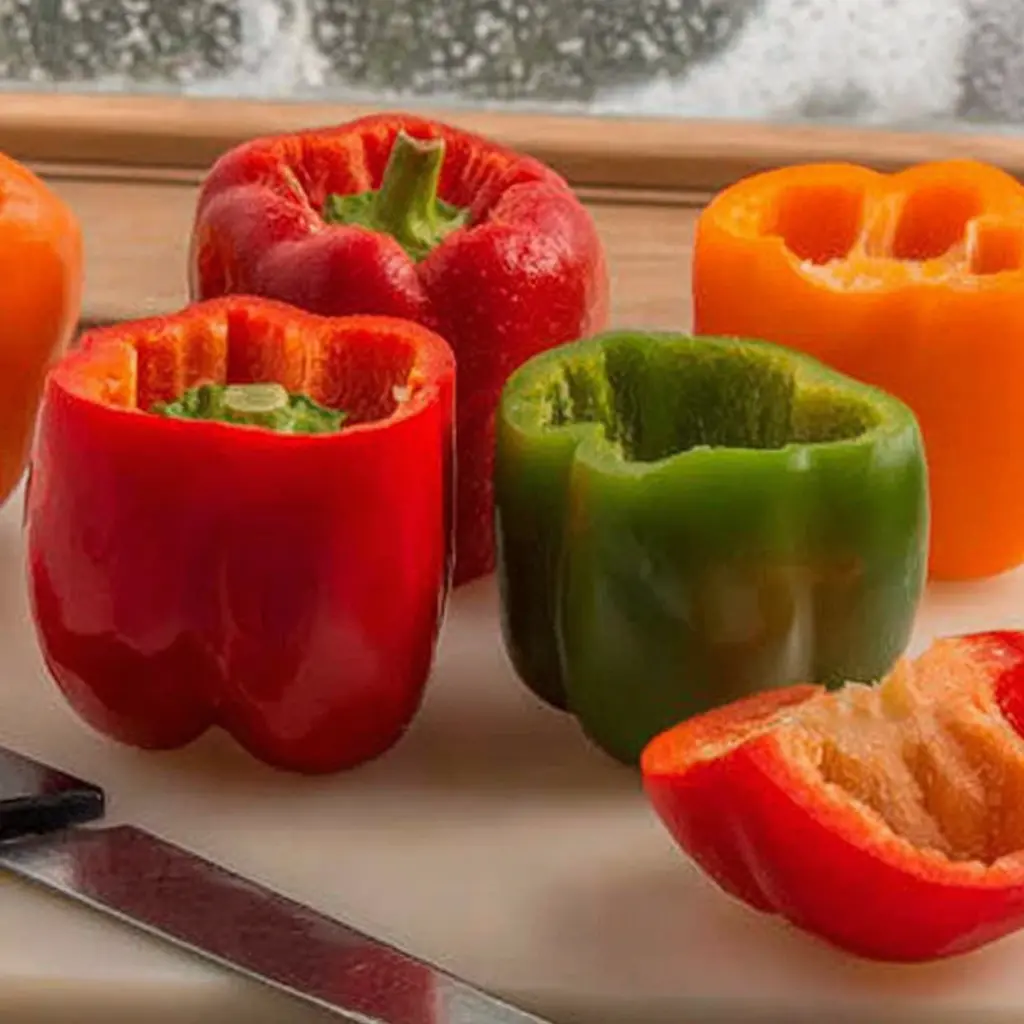
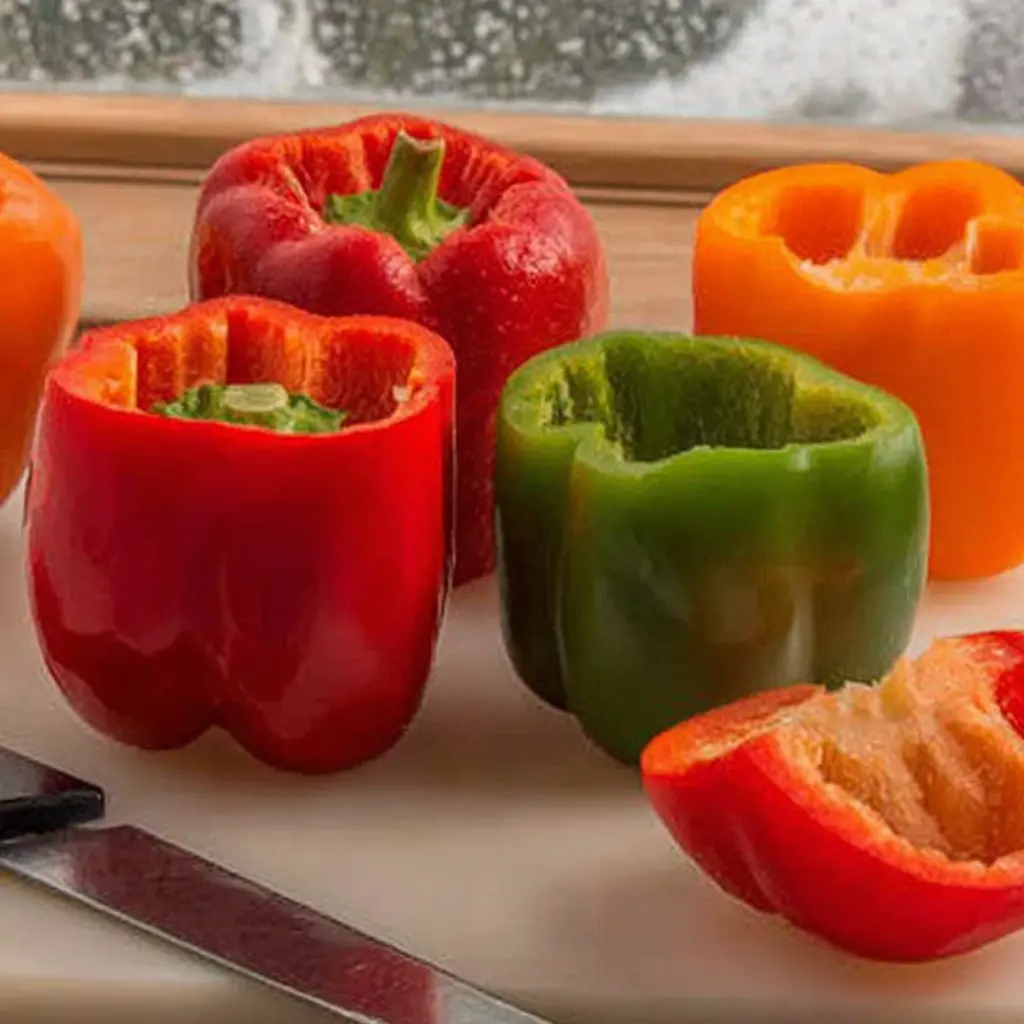
This is my favorite method when I’m making stuffed peppers. You want the pepper to stay intact so you can fill it with all that good stuff.
Start by washing your bell pepper. Give it a good rinse under cool water and pat it dry. Remove any stickers (we’ve all missed one and found it in the pan later).
Place the pepper on its side on your cutting board. Using your sharp knife, slice off the top, about half an inch below the stem. Then slice off the bottom, just enough to create a flat base. If the stem stays attached to the top piece, that’s fine. Just discard it.
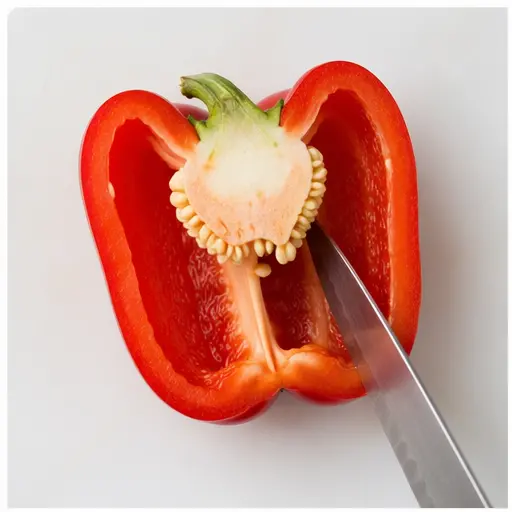
Now stand the pepper upright. You’ll see the white core and seeds inside. Carefully run your knife along the inner walls to release the core. You should end up with a single long strip of pepper and a hollowed-out shell. Discard the core and seeds.
For stuffed peppers, you want to keep the sides intact. So just trim the bottom slightly so it sits upright, and you’re ready to fill it. This method gives you a perfect little pepper cup.
Pro Tip
Save the scraps: Don’t throw away the top, bottom, and core pieces. Toss them in a freezer bag and save them for making vegetable stock later. It’s a no-waste win.
Option 2: How to Cut Bell Pepper Rings
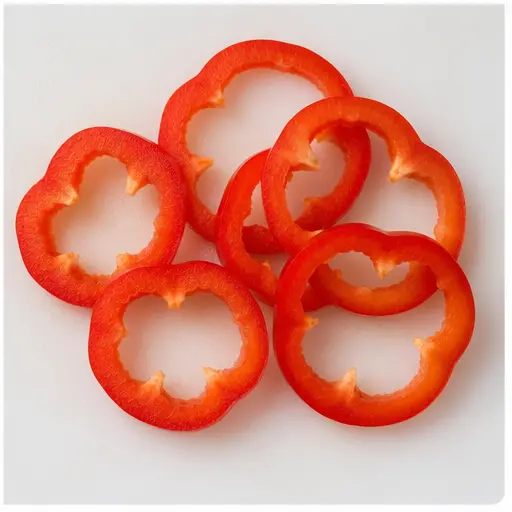
Pepper rings are perfect for burgers, salads, or just snacking with hummus. They look impressive but are actually the easiest cut of all.
Start the same way. Wash and dry your pepper. Place it on its side. Instead of cutting off the top and bottom, just slice off the stem end. You want to keep the pepper as intact as possible.
Now, lay the pepper on its side and use your sharp knife to cut thin cross-sections. Think of it like slicing a loaf of bread. Each slice will be a perfect ring. The thickness is up to you, but about a quarter-inch works well for most recipes.
As you cut, the seeds will fall out naturally. You might need to tap out a few stubborn ones. That’s fine. If a ring breaks, no big deal. Just use it for something else.
You’ll get about 6-8 rings from a medium pepper, depending on how thick you cut them. Not bad for a few seconds of work.
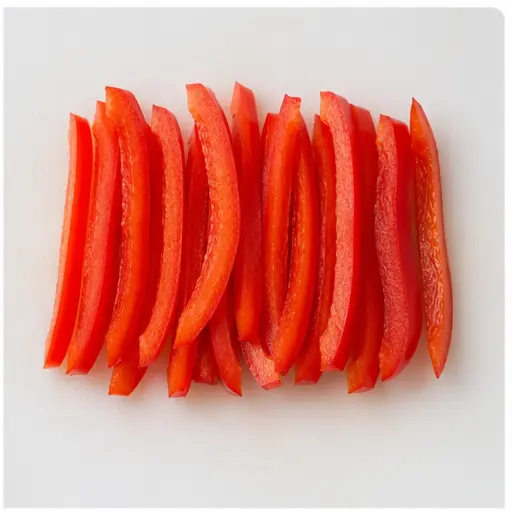
Option 3: How to Cut Bell Pepper into Strips (Julienne)
This is the cut you want for fajitas, stir-fries, or any dish where you want long, thin pieces. It’s also the foundation for dicing, so pay attention.
Start by removing the core. Place the pepper on its side and slice off the top and bottom. Stand it upright and cut down one side. Slide your knife along the inner walls to release the core. You’ll end up with a single long strip of pepper.
Lay that strip skin-side down on your cutting board. Carefully trim away any white pith. This is the bitter part, and getting rid of it makes your pepper taste sweeter.
Now, cut the trimmed pepper into thin strips. Aim for about 1/8 inch wide. Don’t stress about being perfect. Close enough is good enough. The strips should be about 1.5 to 2 inches long.
The satisfying part? When you make that first cut through the pepper flesh, there’s a quiet snap. It’s a good sound. It means your knife is sharp and you’re doing it right.
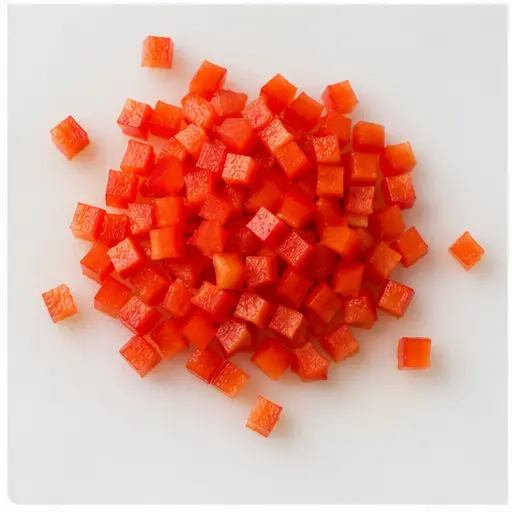
Option 4: How to Dice a Bell Pepper
Diced bell peppers are a staple in so many recipes. Salsa, salads, soups, chili, you name it. This is probably the cut you’ll use most often.
Start the same way as the strips. Remove the core and trim the pith. Lay the pepper flat on your board, skin-side down.
Instead of cutting thin strips, cut them thicker. About half an inch wide. Don’t worry if they’re not perfectly even. We’re about to fix that.
Now, gather a few strips together. You can stack them if you want, or just line them up. Cut perpendicular to the strips into even squares or chunks. That’s it. You’ve just diced a bell pepper.
The key to even dice is keeping your fingers curled under. Use your knuckles as a guide for the knife. It feels awkward at first, but you’ll get the hang of it. If a few pieces are different sizes, that’s okay. They’ll cook at the same rate as long as they’re close.
Tips for Cutting Bell Peppers Like a Pro
Over the years, I’ve picked up a few tricks that make cutting bell peppers easier and safer. Here are the ones I use every single time.
- Use a sharp knife. I know I said this already, but it’s worth repeating. A sharp knife is safer than a dull one because it requires less force. You’re less likely to slip.
- Cut with the skin side down. The skin is smooth and can be slippery. Cutting with the skin side down gives you more grip on the cutting board.
- Keep your fingers curled. This is the number one safety tip. Tuck your fingertips under and use your knuckles as a guide. Your fingertips will thank you.
- Don’t chase seeds. If seeds scatter, just sweep them into your bowl. No need to pick them out one by one. They’re not dangerous, just annoying.
- Save the scraps. The tops, bottoms, and cores are perfect for vegetable stock. Store them in a freezer bag and add to your stock pot when you have enough.
- Wash before cutting. Always wash your peppers before cutting, even if you’re going to cook them. You never know what’s on the surface.
How to Pick Perfect Bell Peppers
Not all bell peppers are created equal. Picking the right one makes a big difference in how they cut and taste.
Look for peppers that are firm and heavy for their size. They should feel solid, not spongy. The skin should be smooth and glossy, without wrinkles or soft spots.
Color matters too. Green peppers are harvested earlier and have a more bitter, grassy flavor. Red, orange, and yellow peppers are riper and sweeter. Red peppers are actually just green peppers that have been left on the vine longer. They’re the sweetest of the bunch.
If you’re using peppers for a raw dish like salad or salsa, go for the sweeter colors. For cooked dishes like stir-fries or fajitas, green peppers hold up well and add a nice contrast.
And here’s a little secret: organic peppers are worth the extra cost if you can swing it. Bell peppers are on the Dirty Dozen list, meaning they tend to have more pesticide residue. If you’re buying conventional, just wash them extra well.
Storing Bell Peppers
You’ve cut your peppers. Now what? Proper storage keeps them fresh and crisp for days.
Whole peppers: Store them in the crisper drawer of your fridge. They’ll keep for about two weeks. Don’t wash them until you’re ready to use them, as moisture can cause mold.
Cut peppers: Place them in an airtight container or zip-top bag. Line the container with a paper towel to absorb moisture. They’ll stay fresh for 3-4 days. If the paper towel gets wet, just replace it.
Freezing: Cut peppers freeze beautifully. Spread them on a baking sheet in a single layer and freeze for an hour. Then transfer to a freezer-safe bag or container. They’ll keep for at least 6 months. No need to thaw before cooking. Just toss them in the pan straight from the freezer.
Frequently Asked Questions
Recipes Using Bell Peppers
Now that you know how to cut a bell pepper, what are you going to make? Here are a few ideas to get you started.
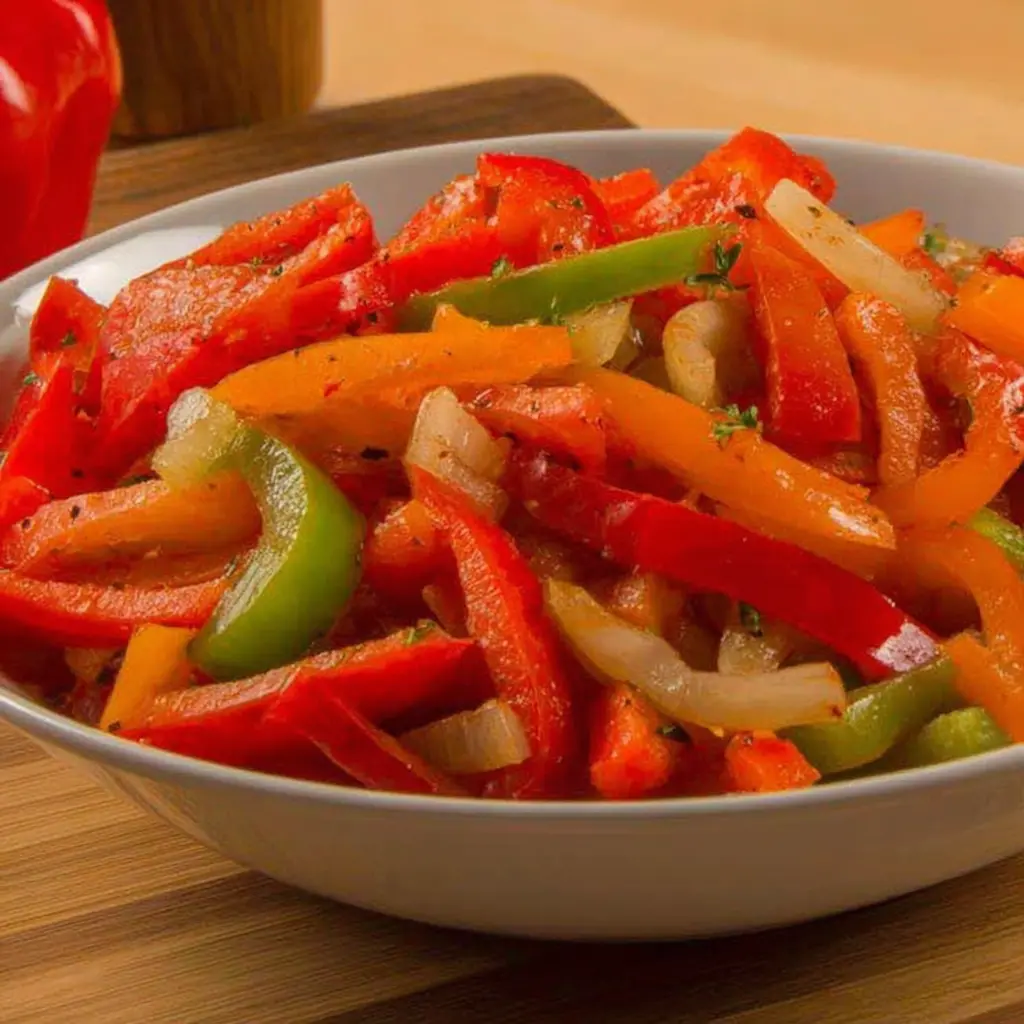
- Strips: Perfect for fajitas, stir-fries, or topping a salad. Toss them in a hot pan with some onions and chicken for a quick weeknight dinner.
- Dice: Great for salsa, chili, soups, or adding to ground meat for burgers or meatloaf. They add sweetness and texture.
- Rings: Ideal for burgers, sandwiches, or a crudité platter with hummus. They also look beautiful on a charcuterie board.
- Stuffed peppers: Use the halves method to create little cups. Fill them with rice, ground meat, and cheese for a classic comfort meal.
Summer is the perfect time to practice your bell pepper preparation skills. Peppers are at their peak, cheap, and abundant at farmers markets. Grab a few different colors and experiment with each cut.
And hey, if you mess up a few slices, that’s okay. Toss them in a salad or eat them as a snack. No one’s judging. The more you practice, the faster and more confident you’ll get.
Now go make that stir-fry like you own the place.
For more tips and inspiration, check out my Pinterest board for quick meal prep ideas.
Source: Health & Nutrition Research
What is the difference between green, yellow, and red bell peppers?
Green peppers are harvested early and have a more bitter, grassy flavor. Yellow and orange peppers are sweeter and milder. Red peppers are fully ripe and the sweetest of all. They’re all the same plant, just at different stages of ripeness.
Can I freeze cut peppers?
Absolutely. Spread cut peppers on a baking sheet and freeze for an hour. Then transfer to a freezer-safe bag. They’ll keep for at least 6 months. Use them straight from frozen in cooked dishes like stir-fries or soups.
Is it worth paying more for organic bell peppers?
Bell peppers are on the Dirty Dozen list, so organic is a good idea if your budget allows. They tend to have less pesticide residue. If you buy conventional, just wash them thoroughly before cutting.
Do you have to peel bell peppers?
No, you don’t need to peel bell peppers. The skin is edible and adds texture and nutrients. Some recipes call for roasted peppers where the skin is removed, but for most dishes, just wash and cut them as is.
Why do you have to remove the seeds from bell peppers?
The seeds and white pith can be bitter and have a slightly unpleasant texture. Removing them gives you a sweeter, cleaner flavor. Plus, the seeds can be messy if they scatter during cooking.
How should you store bell peppers?
Store whole peppers in the crisper drawer of your fridge for up to two weeks. Cut peppers go in an airtight container with a paper towel to absorb moisture. They’ll keep for 3-4 days. Don’t wash peppers until you’re ready to use them.
Can I freeze cut peppers and for how long?
Yes, cut peppers freeze well. Flash freeze them on a baking sheet, then transfer to a freezer-safe bag. They’ll keep for at least 6 months. No need to thaw before using in cooked dishes.




3 Responses
I’ve always struggled with getting clean cuts on bell peppers, especially the rings. Your tip about using a sharp chef’s knife really made a difference—I tried it tonight and got perfect rings for my burger! Thanks for the clear instructions.
Great guide! I’m curious—when you cut the pepper into strips for fajitas, do you recommend removing the white membrane inside first? I find it adds a bit of bitterness, but maybe I’m being too picky.
Great question, Mark! Yes, I always recommend removing the white membrane for the best flavor, especially if you’re sensitive to bitterness. It’s easy to slice off with your knife after you’ve cut the sides off the pepper. Glad you enjoyed the guide!